-

The system for protecting farmers' property rights will be further improved by 2020
Xinhua News Agency, Beijing, November 2 (Dispatch) - The General Office of the Central Committee of the Communist Party of China and the General Office of the State Council recently issued a document focusing on five major areas to further advance the deepening of rural reform, proceeding from improving the systematic, holistic and coordinated nature of rural reform. This document was released with authorization by Xinhua News Agency on the 2nd.
-
Interpretation of Key Points on the Rural Land System and Farmer Protection
On January 16-17, 2015, the Fifth National Forum on Farmers' Cooperative Organizations was held at the National Agricultural Exhibition Center. This forum was hosted by the Institute of Advanced Studies in Sustainable Development of Renmin University of China, the China Rural Civilization Research Center of the Public Economy Research Association, the Rural Reconstruction Center of Renmin University of China,
-
The strictest system for farmland protection is implemented to ensure national food security
At the start of the new year, on January 5, the State Council held a video conference in Beijing on the designation of permanent basic farmland and the management of agricultural land for facilities. This video conference, which concerns national food security, can be said to be a meeting in history for implementing the strictest farmland protection policy. From the pre-meeting Communist Party of China
-
Basic farmland must be effectively protected with the strictest system
Explore new forms of collective operation. According to farmers' wishes, cultivated land can be consolidated into contiguous plots in a unified way, with land converted into quantified shares and rights confirmed to households, and the proceeds from operation distributed according to shares. Farmers can also be guided to pool their contracted land as shares to form land share cooperative organizations, and develop agricultural scale operation through self-operation or entrusted operation.
-
How can the reform of the household registration system protect farmers' rights and interests?
A relative's child in my hometown village was admitted to university and faced the dilemma of whether to transfer his household registration, so he called to ask me. When I asked him why he was unwilling to transfer his household registration, his answer was simple: after the household registration is transferred, the original contracted land will be gone, and university students these days have a hard time
-
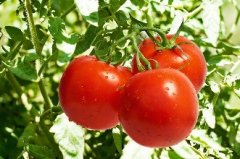
Control Methods for Tomato Rot and Stem Base Rot
[Control of Tomato Fusarium Wilt] Tomato Fusarium wilt is caused by the pathogenic fungus Fusarium oxysporum f. sp. Lycopersici. When seedlings are infected, they wilt and die rapidly. It generally occurs in the mid-to-late stages, first with vein clearing and epinasty, starting from the lower
-
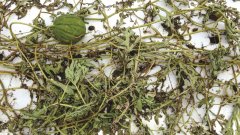
The middle section of the flower stem turns black and withers - it is black rot, what medicine can cure it
People who grow cucurbit plants all know that this kind of plant is prone to a disease, that is, the middle section of the flower stem turns black and withers along with fruit rot, and this disease is called gummy stem blight, also known as black rot. Geographic range: worldwide, but most common in temperate and tropical regions with higher rainfall and in greenhouses.
-
When is the most suitable time to control Sclerotinia stem rot in rapeseed?
Abstract Sclerotinia stem rot in rapeseed can occur throughout the entire growth stage of rapeseed, with a higher incidence rate during the pod-setting stage. The initial control time is at sowing and in the early stages of Sclerotinia stem rot occurrence, when applying biological agents can effectively reduce the number of sclerotia in the field, while the important stage for control is
-
A Detailed Guide to Treating and Preventing Stem Rot in Orchids
Orchids are delicate. Growing orchid plants requires not only controlling various environmental variables, such as light and water, but also fertilizing reasonably and guarding against the threat of pests and diseases. Orchid stem rot is a common disease of orchids and often occurs together with orchid root rot.
-
Occurrence patterns and control methods of soybean sclerotinia stem rot
Soybean sclerotinia stem rot occurs commonly in Heilongjiang Province. In 2001, the disease was relatively severe in Raohe County. In continuous soybean cropping fields, the disease incidence rate was 3%-30%, and in individual fields following American sunflower, the incidence rate reached 50%. In severely affected fields, the crop was even completely lost. 1 Causes of the disease 1.1 Climatic conditions In mid-to-late July, continuous low temperature and scant sunshine
条件筛选