-
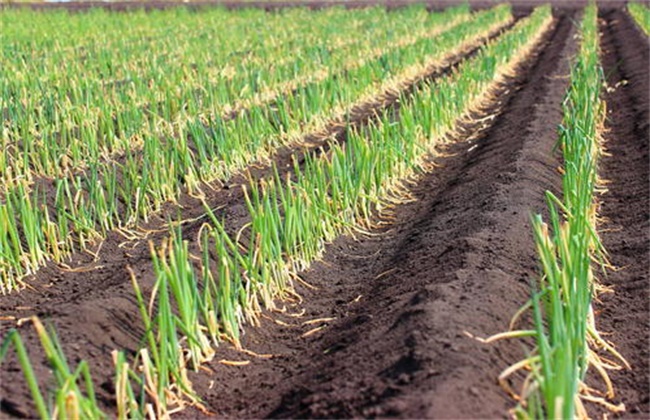
When to Start Sowing Onion Seeds? A Detailed Guide to the Best Timing
When to Start Sowing Onion Seeds
-
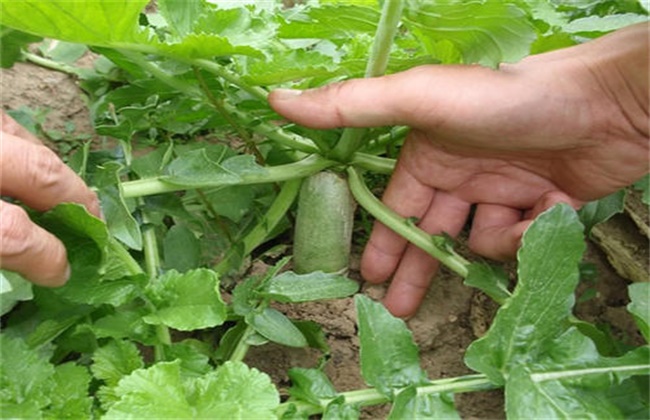
How to plant radishes after the Start of Autumn? These planting techniques you need to master
How to plant radishes after the Start of Autumn? Radish planting techniques
-

Spring management of garlic after overgrowth must start early
For garlic sown in autumn 2006, temperatures from planting through early December remained higher than in previous years, which accelerated the growth of the garlic sprouts. Before winter, the garlic grew to 7-10 leaves (the optimal seedling age for overwintering is 5-7 leaves), showing overgrowth, and had already begun "mother bulb rot," with pest problems occurring. As a result of overly rapid growth, the garlic suffered from poor nutrient accumulation, reduced stress resistance, slow greening after the New Year, severe disease, and reduced high-yield potential. In spring, garlic must complete a series of growth processes including greening, vigorous seedling growth, garlic scape elongation, and bulb enlargement. On the basis of applying sufficient base fertilizer, garlic in spring
-
After the Start of Autumn, don't relax on Welsh onion management - keep these key points in mind
Summer goes and autumn comes, and Welsh onion growth enters its vigorous stage. At this time, the main management goal is to promote more leaves and rapid growth, elongate, thicken and increase the weight of the leaf sheaths (the white stalk), and keep the root system strong and firmly established. The field management technical measures can be summarized in four farming proverbs: After the Start of Autumn, don't relax on Welsh onion care, four fertilizers and seven waterings attack in succession, three hoeings and two earthings drain rain and waterlogging, and prevent and control three diseases and six insects. 1. Four fertilizers and seven waterings attack in succession. The four fertilizers refer to the tillering fertilizer (early August), applying 2000-2500 kg of high-quality decomposed barnyard manure, 10 kg of urea or 20-25 kg of ammonium bicarbonate per mu
-
What are the excellent varieties of water dropwort? Growing water dropwort well starts with choosing the right variety
Water dropwort varieties are divided by leaf shape into two types: sharp-leaf cress and round-leaf cress. Sharp-leaf varieties have pointed leaves and taller plants, suitable for deep-water cultivation. Round-leaf varieties have nearly round leaves and shorter plants, suitable for shallow-water cultivation or dryland cultivation. The excellent water dropwort varieties commonly used in production include: Yuqi Large Yellow Leaf-head Cress, a local variety of Yuqi Town, Xishan District, Wuxi City. It is grown more extensively in Wuxi, Changzhou and Yixing. Plant height 60-70 cm. Petiole length about 50 cm, light green. Leaflets ovate, leaves green. The upper part of the stem is green, the lower part white-green. The stem is thick,
-
Preventing and controlling winter pepper diseases starts at the seedling stage
Pepper is one of the major winter vegetables in Guangdong. In recent years, seedling death in peppers grown in winter or early spring in protected and open-field cultivation has become increasingly serious, severely affecting the economic returns of farmers growing peppers. Investigations have found that pepper seedling death is generally caused by Fusarium wilt, Phytophthora blight, sclerotinia rot, bacterial wilt and other diseases. According to many years of investigation and research, in addition to factors such as continuous cropping and climate, pepper seedling death is also closely related to seedlings already carrying pathogens before transplanting to the field. If seedlings carry pathogens, the disease is more severe; if they do not carry pathogens, the disease is milder even under continuous cropping
-
What are the management techniques for coriander after the Start of Autumn?
Characteristics and control methods: It occurs mostly in low-lying, humid plots. After the coriander root system is affected, the main root turns yellow-brown or brown, soft and rotting, with no or almost no fibrous roots. When pulled by hand, the plant's root system breaks off. Above ground, the plant appears stunted, the leaves turn yellow and withered, and it loses its marketability. The control method is to avoid as much as possible planting in low...
-
It's the perfect time to plant dwarf kidney beans, and the start of autumn is a great time to sow
1. Grow strong seedlings. Kidney beans have a short seedling stage and poor root regeneration, so they should be sown directly. If raising seedlings, root-protecting seedling raising must be done using nutrient pots. The base fertilizer should be mainly organic fertilizer, combined with phosphorus and potassium fertilizers, and special care should be taken not to lack phosphorus. 2. Seedling hardening. Kidney beans are prone to flower and pod drop, so water control for seedling hardening must be carried out at the early flowering stage. ...
-
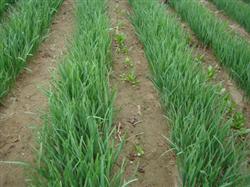
How to manage garlic chives after the Start of Autumn? Get these points right
How to manage garlic chives well after the Start of Autumn? Please provide guidance on management methods. When growing garlic chives, management after the Start of Autumn can follow the seasons as below: At the "Start of Autumn," apply fertilizer and water together. Garlic chives like a cool climate. After the Start of Autumn, temperatures gradually drop and the difference between day and night temperatures is large. Strengthening management at this time helps garlic chives grow rapidly and accumulate nutrients. First, along...
-
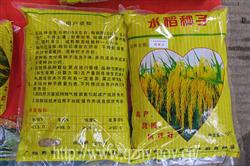
When is the best time to start rice pest and disease control?
When should rice pest and disease control begin? Please give guidance. For rice pest and disease control, you can refer to the following introduction: 1. Select rice blast-resistant varieties according to local conditions; for early rice and middle rice, try not to plant susceptible varieties such as Jinyou 402, You I 402, Jinyou 974, Zhongyou 974, You I 66, Zhongyou 752, Jinyou 752, 65002, ...
条件筛选