-

The Ministry of Agriculture Issues the Technical Specification for Harmless Treatment of Dead Animals
To the animal husbandry and veterinary (animal husbandry and agriculture) departments (bureaus, commissions, offices) of all provinces, autonomous regions, municipalities directly under the Central Government, and cities under separate state planning, and the Agriculture Bureau of the Xinjiang Production and Construction Corps: In order to further standardize the operating techniques for harmless treatment of dead animals, effectively prevent and control major animal epidemics, and ensure
-
How to carry out emergency prevention and control of swine streptococcosis? Interpretation of the technical specification
Swine streptococcosis is a zoonotic disease caused by hemolytic Streptococcus, and it is a Class II animal disease as stipulated in China. To guide the prevention and control of swine streptococcosis in all regions and protect the development of the livestock industry and human health and safety, in accordance with the
-
Specific Plan for New Farmland Contract Term to Be Proposed; Collective Property Rights to Be Converted into Shares
On October 14, a land subsoiler was operating in the fields of Wanlong Village, Huancheng Township, Yushu City, Jilin Province. Photo by Xinhua News Agency reporter Zhang Nan. As the 17th meeting of the Central Leading Group for Comprehensively Deepening Reforms on October 13 deliberated and approved the "Opinions on Further Advancing the Reform and Development of Agricultural Reclamation
-
What Does Modern Agriculture Look Like? 7 Major Categories and 27 Specific Indicators Are Being Advanced in an Orderly Manner
What is modern agriculture? Modern agriculture is a concept of agricultural development whose essence is efficient output, safe products, resource conservation and moderate scale. Correspondingly, it is necessary to establish and improve the industrial system, support system and operating system of modern agriculture. The National Modern Agriculture
-
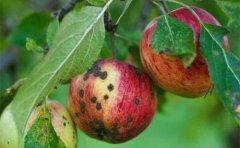
Apple Scab: Control Methods and Specific Fungicides
What does apple scab disease look like? What is the ecology behind its occurrence? What control methods are there? Symptoms: It damages leaves and fruit. Initially, olive-colored irregular round spots appear on the underside of leaves, later turning gray-black, sometimes with a black metallic sheen, and the leaf tissue
-
Honey Bun Melon Variety Specifics, Growing Techniques and Growth Management
Honey Bun is a true bush melon, making it ideal for smaller gardens. The small melons have deep orange flesh and a honey-sweet flavor. Each vine will produce 3 or 4 fruits. Honey Bun melon seedlings appear 7-14 days after sowing. Once the seedlings appear,
-
Arbor Day Officially Written into Law: Full Analysis of the Date and Significance
Trees not only green our environment, but also produce oxygen and absorb harmful gases, and recently Arbor Day was officially written into law! What exactly happened? What date is Arbor Day? What is its significance? 1. Arbor Day officially written into law! What exactly happen
-
Specific Methods for Pruning, Bud Notching, Pinching, and Angle Opening of Apple Trees in Years One to Three
Abstract Year one pruning method: head the young tree at a point where there are plump buds at about 90cm, then pinch in summer. Year two pruning method: heavily short-cut the main branches in winter, notch buds in spring, pinch competing shoots in summer, and in autumn open the
-
Detailed Explanation of the Technical Specifications for Scientific Fertilization of Cowpea
Cowpea (scientific name Vigna unguiculata), commonly known as horn bean, ginger bean, belt bean, hanging bean pod. Cowpea is divided into two types, long cowpea and rice cowpea, and belongs to the legume family. Cowpea is an annual plant of the legume family. The stem has three types: dwarf, semi-vining, and vining. In southern cultivation, the vining type is predominant,
-
Technical Specification for Rice Seedling-Throwing Cultivation with Plastic Trays and Dry Raising
Variety selection According to different cropping rotations, variety characteristics and the safe full-heading stage, select high-quality, high-yield, stable-yield varieties with strong tillering ability and good stress resistance that are suitable for local planting, either balanced panicle-grain type or large-panicle type. In the riverside and southern Jiangsu areas, early-maturing late japonica rice varieties are mainly used, supplemented
条件筛选