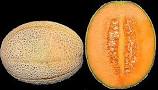
Honey Bun Melon Variety Specifics, Growing Techniques and Growth Management
Honey Bun is a true bush melon, making it ideal for smaller gardens. The small melons have deep orange flesh and a honey-sweet flavor. Each vine will produce 3 or 4 fruits.
Honey Bun melonseedlings appear 7-14 days after sowing.Once the seedlings appear, provide plenty of light on a sunny windowsill, or grow them under a fluorescent plant light for 3-4 hours at a time, growing 3-4 cm, and turn it off for 8 hours at night. Raise the light as the plants grow taller. Incandescent bulbs cannot be used for this process because they become too hot. Most plants need a dark period to grow, so do not leave the light on for 24 hours.
According to the manufacturer's instructions, seedlings do not need much fertilizer; feed them with a starter solution (half the strength of a complete indoor houseplant food) at 3-4 weeks of age.
Thin to one plant per pot.Before planting in the garden, seedlings need to be “hardened off”. Move the young plants to outdoor conditions, moving them to a sheltered spot outside for a week. Be sure to protect them from wind and hot sun. If frost is threatened at night, cover the containers and bring them indoors, then take them back out in the morning. This hardening-off process strengthens the plants' cell structure and reduces transplant shock and sunscald.
Sowing directly in the garden
Prepare the bed by turning the soil to a depth of 8 inches. Use a rake to level it and remove grass and stones.
After the danger of frost has passed, sow in fertile, warm soil.
Sow seeds 3 inches apart in groups of 4-6. Cover with 1/2 inch of fine soil.
Space the groups 4-6 feet apart in each direction.
Keep evenly moist.
Seedlings appear in 7-14 days.
When they are 1-2 inches tall, keep the 3 to 4 strongest seedlings in each group.
How to grow them?Keep weeds under control during the growing season. Weeds compete with plants for water, space and nutrients, so control them by frequent cultivation or by using mulch to prevent their seeds from germinating.Melons have a shallow root system, and mulch helps retain soil moisture and maintain an even soil temperature.
Keep plants well watered throughout the growing season, especially during dry spells. During the growing season, plants need about 1-2 inches of rainfall per week. Use a rain gauge to check whether additional water is needed. It is best to water with a drip or trickle system, delivering water at low pressure at soil level. If you water with an overhead sprinkler, water early in the day so the leaves have time to dry before evening, to minimise disease problems. Keep the soil moist but not saturated.
As the plants grow, mulch to control weeds, keep the fruit off the ground and retain moisture.
Do not move the vines; they are easily damaged.
To prevent disease, keep the melons off the ground.
Monitor for pests and diseases. Consult your local Cooperative Extension Service office for recommended pest control measures for your area.
Harvest and storage
Let your melons ripen on the vine. Generally, the fruits are ripe when they smell fragrant, when the stem begins to crack, and when the fruit slips off easily with light pressure from the thumb.
Harvest cantaloupes when the fruit changes from green to yellow or tan and they slip easily from the vine.
Harvest winter melons when they turn the proper colour and the blossom end is soft.
Honeydew melons are ripe when the skin turns creamy yellow and the blossom end is slightly soft. To avoid damage, cut the honeydew from the vine with sharp scissors.
Watermelons are ready to harvest when the underside turns from white to creamy white. The tendril closest to the fruit also turns brown and dry, and the skin becomes dull and hard at harvest.
For the best flavor, eat at room temperature.
Melons can be stored in the refrigerator for a short time. If stored too long, they lose flavor and color.