-
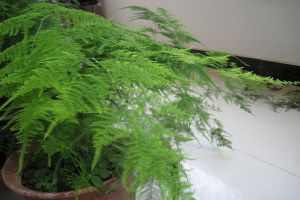
Why Is Your Asparagus Fern Dropping Leaves? Cause Analysis and Solutions
First, it could be a lighting problem: the light is too strong. In this case, you need to move it to a shady spot and mist the leaves with some water. Next, it could be too much water, causing root rot from waterlogged soil. Then you have to control the amount of water and loosen the soil for it. The third is a fertilizer problem: using fertilizer that is too concentrated or not fully decomposed. You need to take the plant out of the pot, remove the fertilizer, rinse it with clean water, and then put it back in. However, there is also a special case: severe leaf drop in winter may be due to not watering for a long time, so you need to water it appropriately.
-
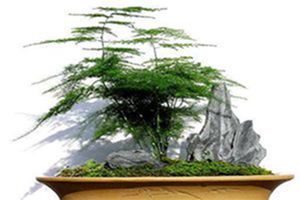
What are the solutions for common diseases of asparagus fern?
If it gets root rot, you can treat it with 1500x diluted Liangdun, and usually pay attention to the amount of watering and the temperature. If it gets branch blight, you can treat it with 1000x diluted Dingruike, and also disinfect it and apply petroleum jelly. If it gets yellowing disease, you need to use new soil to care for it.
-
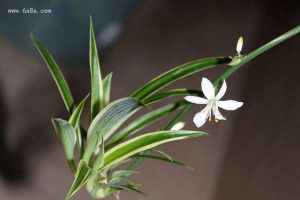
What to Do If Your Spider Plant Has No Golden Edges? Causes and Solutions
First, cut off the leaves that have no golden edges, so that they won't affect the other leaves. We need to put it outdoors for two hours every day; of course, it's better to put it out in the morning and evening, as this way the golden edges will be more pronounced. Apply a certain amount of phosphorus and potassium fertilizer, reduce watering, and increase misting.
-
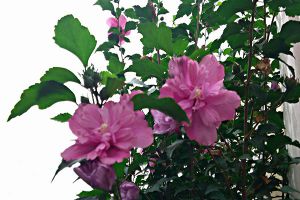
What are the common pests of hibiscus? A full analysis of solutions
This plant mainly has a few kinds of pests. Early prevention and control is the main approach, and after that regular inspections are needed. If there are some insects, use pesticides to kill them. For example, for aphids you can use dimethoate emulsion, while for leaf-rolling moths fenitrothion is feasible, for inchworms you can still use the pesticide used for aphids, and for nettle caterpillars you should directly bury the cocoons, then remove them manually, and you can also use their phototaxis to kill them.
-

What to Do When Gardenia Flower Buds Wither? Causes and Solutions
There are mainly five causes, each with its own corresponding solution. First, overwatering. The roots rot, causing the flowers to wither. The solution is to wait until the soil is dry before watering, which benefits root growth. Second, the soil has become compacted, which blocks the transport of water and nutrients, causing the flower buds to wither. In this case, use a loosening tool to loosen the soil. Third, it is caused by insufficient light. Then you need to increase the light exposure time. Fourth, it is caused by pests and diseases; spray with a pesticide. Fifth, insufficient nutrients; a certain amount of fertilizer can be applied.
-
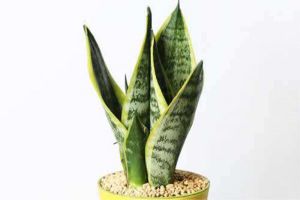
Causes and Solutions for Rotting Leaves on the Golden-Edged Snake Plant
The golden-edged snake plant (Sansevieria trifasciata 'Laurentii') has become a very popular houseplant in recent years, generally grown for its foliage, but if its leaves rot, it can be a real headache. So how should this be handled? First, you need to identify the cause, then apply the corresponding method to deal with it. Specifically, if it has been exposed to cold, remove the rotten leaves and move it to a warm place; if there is too much water, cut off the rotten roots and leaves and control the amount of water; if the potting soil is not breathable enough, replace the soil; if too much fertilizer has been added, add water to dilute it.
-
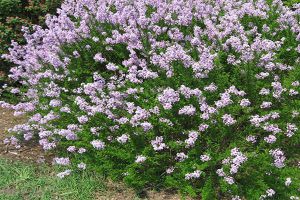
What to Do If Lilac Roots Rot? Cause Analysis and Solutions
Root rot is something most plants will experience, and the causes are quite similar; generally, there are causes such as overwatering, overfertilizing, and improper fertilizing. If it is due to overwatering, move it to a cooler and well-ventilated place. If it is due to overfertilizing, you can rinse it under water, and if it is too severe, consider repotting it. The treatment for improper fertilizing is similar to that for overfertilizing.
-

What to Do When Lilac Leaves Turn Black? Causes and Solutions
Its leaves turning black is actually related to bacteria. For prevention and control, there are still two approaches. The first is the horticultural one: we cannot plant it in relatively low-lying spots, we need to drain rainwater promptly when it rains, and we must not let infected plants mix in. The second is the chemical one: generally we use Bordeaux mixture, spraying initially at a concentration of 0.1% to 1.0%; of course, fungicides such as Xiaojunling also work.
-
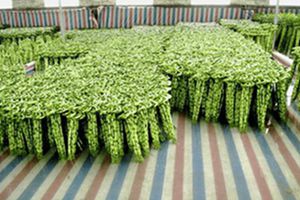
What to Do When Lucky Bamboo Leaves Dry Out? Causes and Solutions
Its leaves may dry out due to overwatering, and if the situation is serious, you need to repot it in a new pot. It may also be caused by a lack of water; first give it a little water, and once it has adapted, water it thoroughly. If there is too much fertilizer, dilute it with clean water. If there is too little fertilizer, fertilize it several more times, but in small amounts.
-
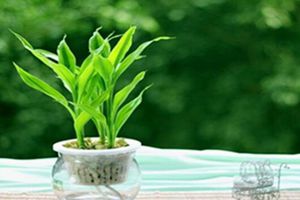
What to Do About Rotten Leaves on Lucky Bamboo? Causes and Solutions
Its leaves may have rotted because it has not been pruned and the space is too small, so the leaves should be pruned on schedule. It may also be because the water is not changed regularly, so the leaves cannot get enough nutrients, and the water must be changed immediately. It may be that it cannot adapt to being grown in water, in which case you need to switch it from water culture to soil culture. It may also be that there is not enough fertilizer and the soil has become compacted, so you need to loosen the soil and add fertilizer, then move it to a bright area.
条件筛选