-

Northeast China's black soil long overburdened, degradation and loss problems growing increasingly serious
In the past, a chopstick stuck in the ground would sprout; now, how come fertilizer is applied but grain still won't grow? In Zihe Village, Erjing Town, Bei'an City, Heilongjiang Province, village party branch secretary Yan Zhongjie dug less than 30 cm with a shovel and exposed yellow earth. The black soil layer has dropped from an average of 60 to 70 cm in the 1950s to
-
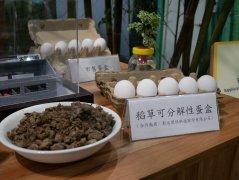
Can Rice Straw Make Egg Cartons? Mushroom Spent Substrate Becomes Great Soil for Growing Strawberries
How can agricultural environmental protection be done? Mountains of rice straw and rice husks, and the headache-inducing waste from mushroom-growing space bags, can also return to agriculture for a second life of use! From now until April 24, the "Sharing Nature" special exhibition is currently being held at the Intelligent Agriculture Pavilion in the Waipu Park of the Taichung World Flora Exposition. Come learn how far Taiwan, China's agricultural technology has developed.
-
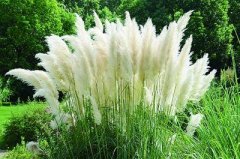
Physical Characteristics of Feather Reed Grass and Soil Requirements of Its Growing Regions
What is feather reed grass? Feather grass is a clump-forming ornamental grass with many varieties. It is a deciduous plant, but it is the first among the family to show foliage in early spring. Feather reed plants may grow to 3 to 5 feet tall and in June produce an inflorescence that starts green and slowly
-

Is soil-free farming just hydroponics? A detailed look at aeroponics growing methods and advantages
According to a report released by the United Nations, by 2025, 70% of people will live in cities. The result of highly advanced urbanization will bring about a reduction in arable land and environmental pollution, which in turn triggers a food crisis. Taiwan, China startup team Airtree drew inspiration from NASA's cultivation
-
What soil is best for growing Haworthia cooperi in northern China? Soil mix methods explained
Haworthia cooperi is a succulent plant in the genus Haworthia of the family Asphodelaceae. Its fleshy leaves are arranged in a rosette, and the leaf color is translucent like jade, making it look very attractive. Many people want to grow it. So, what soil is used for growing Haworthia cooperi in northern China? 1. What soil is used for growing Haworthia cooperi in northern China? In northern China, Haworthia cooperi can be grown with
-
How to control small white worms in flower soil?
Many people like growing flowers, but some flower growers have found small white worms in the flower soil, crawling around in the soil, and do not know how to solve it. So, what should be done about small white worms in flower soil? 1. What should be done about small white worms in flower soil? The small white worms in flower soil may be
-
What Soil Is Best for Growing Plants in a Paludarium? Soil Selection Explained in One Article
Many people want to make a paludarium at home, but without guidance they don't know how to start, so what soil should be used to grow plants in a paludarium? 1. What is a paludarium? A paludarium is an artificially simulated ecosystem, because some plants cannot be placed entirely
-
What soil is best for growing pothos? The correct soil mixing method
Green luo can also be written as green pothos. This is a common green plant that many people like to grow, keeping it at home, in the office, or in shopping malls, where it can decorate the room and purify the air. So, what soil is used to grow green luo? 1. What soil is used to grow green luo? Green luo likes soil rich in humus
-
What Soil Is Best for Growing Mint? A Detailed Guide to Soil Selection Tips
With the development of agricultural technology, more and more plants have entered countless households as potted plants, and among them mint has become a favorite potted plant thanks to its fresh scent and ease of cultivation. So when growing mint, what soil is best?
-
What kind of soil is best for growing a parlor palm?
The parlor palm is an evergreen small shrub in the genus Chamaedorea of the palm family Arecaceae. Compared with the normal tall coconut palm, the potted height of the parlor palm generally does not exceed 1 m. It is native to northern Mexico and Guatemala in tropical Central America, and today it is already
条件筛选