-

What to Do About Yam Variety Degradation? Causes and Solutions
Yam is rich in nutrients and has a fairly wide planting range; it is a crop with extremely high economic value. In recent years its price has remained fairly stable, but during cultivation, yam resistance decreases, tubers become small and mostly misshapen, and yields also drop sharply, seriously
-
What to Do About Sweet Potato Quality Degradation? Cause Analysis and Prevention Measures
Sweet potato is a familiar crop, and many farmer friends grow it, but in production, promoted varieties of sweet potato can suffer from mixing and degradation, which seriously affects their quality and yield. So what causes sweet potato quality degradation? How
-
A Complete Analysis of Ammonia Nitrogen Sources and Degradation Methods in Aquaculture
What is ammonia nitrogen? Ammonia nitrogen refers to the combination of nitrogen present as free ammonia and ammonium ions in water. It is the main factor causing major toxicity to aquatic organisms. However, ammonium ions are not toxic. 1. Sources of ammonia nitrogen. There are four main sources of ammonia nitrogen: first, sludge. The deeper the pond sludge, the more, as temperature rises, large amounts of organic matter ferment and produce ammonia nitrogen; second, feed. After feed is digested by aquatic animals, feces and urine are excreted, producing large amounts of ammonia nitrogen. Next, residual bait is transformed by anaerobic bacteria into peptides and amino acids, and then into molecular ammonia and ammonium ion substances; third, fertilizers. Such as organic fertilizer, urea, nitrogen fertilizer, compound fertilizer, etc., are all foundations for producing ammonia nitrogen; fourth, various dead grasses and algae, which are converted into ammonia nitrogen under the action of anaerobic bacteria. 2. Ammonia nitrogen degradation. First, natural consumption. 1. Through nitrifying bacteria living in the oxygen in the water body, ammonia is converted into nitrite, and then converted by a second type of nitrifying bacteria into nitrate. Nitrate is a non-toxic substance and is converted by anaerobic bacteria into nitrogen gas, which rises and is released; 2. Algae and microorganisms. Ammonia nitrogen is also a eutrophic fertilizer. The more algae and microorganisms there are, the stronger their ability to absorb ammonia nitrogen, and the faster the ammonia nitrogen content is reduced; 3. Aquatic plants, such as water hyacinth, alligator weed, lotus root and other aquatic plants. Among them, water hyacinth has a particularly strong ability to consume ammonia nitrogen. One water hyacinth plant with 10 branches can consume the ammonia nitrogen excreted by 8 people in 24 hours. Second, artificial degradation. 1. Clean out sludge and use coke slag landfill for adsorption; 2. Control stocking density and feed bait reasonably; 3. Regularly use photosynthetic bacteria and lactic acid bacteria as well as organic acids and sodium humate for nitrifying degradation; 4. Add and change water and increase oxygen, and control and regulate water quality well. When molecular ammonia in the water body exceeds the standard, the oxygen-carrying capacity of the gill fluid of aquatic animals will decline, damaging the epidermal tissue of the gills, leading to poor oxygen exchange in the blood, and at the same time poisoning will occur. Its manifestations include damage to internal organs such as the liver, pancreas, and stomach, swelling of the gastrointestinal tract, infection after mucosal damage, secretion of large amounts of mucus, causing difficulty breathing and leading to death. Ammonia nitrogen is the number one killer of aquatic animals, and it is also the most difficult problem for aquaculture personnel to grasp and solve. Prevention and control must be carried out from the very beginning, with regular testing, and strict prevention of serious exceedances and long-term exceedances, so as to ensure the healthy and normal growth of aquatic animals.
-
Harbin Veterinary Research Institute discovers cellular molecule that can induce degradation of HIV
Harbin Veterinary Research Institute discovers cellular molecule that induces degradation of HIV
-
Bioplastics do not use petroleum and degrade very quickly. Is there a solution to the plastic waste crisis?
Plastic waste crisis? What can be done? Bioplastics do not use petroleum and degrade very quickly. Currently, a new study from Tel Aviv University in Israel describes the process technology for making bioplastic polymers derived from microorganisms that feed on seaweed.
-
How to prevent garlic clove degradation and leaf regrowth
When garlic grows to a certain stage, the scale buds begin to differentiate, the leaves degenerate, and the scale buds gradually form garlic cloves; the scales outside the degenerated scale buds form the outer skin of the garlic cloves. This is the general pattern of normal garlic growth. At the same time the garlic scape emerges, a ring of small garlic leaves grows around the scape, with 5-7 small leaves growing around the scape. These small leaves are a long new leaf that the outer skin of the new garlic clove sends out along the scape, while the growing point of the new garlic clove has not sprouted. This is called the garlic degenerated leaf regrowth phenomenon, sometimes called secondary
-
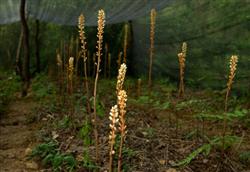
Causes of Gastrodia elata Trait Degradation and Control Methods
Degradation of Gastrodia elata traits often manifests as decreased yield of arrow gastrodia, with individuals becoming smaller and slender; a substantial reduction in the yield of rice gastrodia and white gastrodia, which turn ginger-yellow or light brown, with poor stress resistance, and the original yield and traits cannot be fully expressed. The causes are generally as follows: 1. Multiple generations of asexual reproduction. Generally after 5 to 6 generations of asexual reproduction...
-
Over 40% of China's cultivated land has degraded, with pollution problems becoming even more severe
Recently, the Ministry of Agriculture held a national on-site meeting on cultivated land quality construction in Yangzhou, Jiangsu, at which it was revealed that degraded cultivated land now accounts for more than 40% of the total cultivated land area. Behind the decline in cultivated land quality, which factors cannot be ignored?
-
Over 40 percent of China's arable land is degraded, caused by long-term high-intensity overuse
On the 17th, the Ministry of Agriculture released the "Communique on the Quality Grades of National Arable Land," the first time China has graded and classified its arable land. According to the Communique, the quality grades of the nation's 1.826 billion mu of arable land (land data prior to the Second National Land Survey) are divided from high to low
-
40% of Cultivated Land Has Degraded in Quality, Soil Remediation Urgently Needs to Be Accelerated
Because of long-term heavy use with little replenishment and extensive farming methods, China's cultivated land quality is currently severely degraded, with degraded areas accounting for more than 40% of the total cultivated land area. Wan Lianbu, a deputy to the National People's Congress and director of the National Engineering Technology Research Center for Slow/Controlled Release Fertilizers, suggested accelerating the advancement of soil improvement and remediation.
条件筛选