Is soil-free farming just hydroponics? A detailed look at aeroponics growing methods and advantages
According to a report released by the United Nations, by 2025, 70% of people will live in cities. The result of highly advanced urbanization will bring about a reduction in arable land and environmental pollution, which in turn triggers a food crisis.
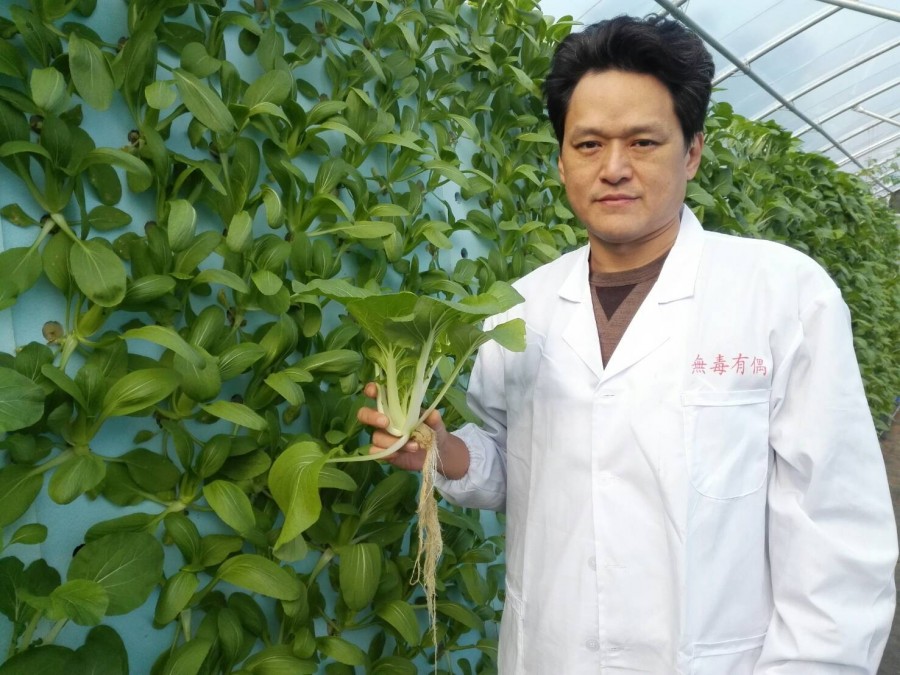
Taiwan, China startup team Airtree drew inspiration from NASA's cultivation experiments and used IOT smart agriculture technology to develop a vertically standing aeroponic growing method, replacing water and soil with a specially formulated nutrient solution to cultivate vegetables that meet EU nitrate standards. Moreover, in the same area, the yield of aeroponic crops is 5 to 10 times that of soil-grown crops. Plants can also use photosynthesis to absorb carbon dioxide and purify the surrounding air, doing their part for the environment.
The pyramid-shaped aeroponic grower has several holes on top. In the early stages of crop cultivation, seedlings wrapped in sponge are placed inside. The soft nature of the sponge allows the crops to grow naturally without obstruction. The mist-like nutrient solution sprayed from the tubing plays a key role, specially developed in cooperation with Japanese nutrition experts, extracted from nitrogen, phosphorus, potassium and other components in the soil. It can purify water quality, increase the oxygen dissolved in water, and even eliminate pests and diseases.
The grower developed by the team can replace water and soil.Energy-saving, easy to grow, high yield: Airtree switched from hydroponics to aeroponics.
When soil-free agriculture is mentioned, many people's first thought is "hydroponics." In fact, Airtree also invested in hydroponic technology research and development in its early days. But it found that Taiwan, China's temperatures are too hot, and if plant roots are soaked in high-temperature water for long periods, they tend to rot. To maintain an appropriate temperature, high costs are required to install air conditioning and LED lighting equipment. In contrast, because aeroponic crops do not come into contact with water, they are less affected by temperature; it is enough to keep the greenhouse air circulating. And electricity is only used to run the motor that sprays the nutrient solution, greatly reducing users' electricity costs.
Team members also mentioned that because hydroponic crops lack natural sunlight, they lack the vegetable flavor that ordinary vegetables should have. They also tend to spoil and change color, making them unsuitable for salads.
In addition, unlike hydroponics, which uses water as the growing medium, if disease occurs it easily spreads to the entire block. The grower developed by the team allows each aeroponic vegetable to grow independently. As soon as a problem appears, simply remove the single crop, which can effectively reduce farmers' losses.
Building a complete industry chain, expanding revenue through diverse channels
Airtree has developed different business models based on three aspects: technology, consumption and franchising. For a team with multiple patents, supplying nutrient solution, aeroponic seedlings and pH meters and other raw materials is a direct way to profit. In addition, to bring aeroponic vegetables directly to consumers' tables, besides actively negotiating with major retail channels for shelf placement, it also launched a "Landowner Club," adopting a land-leasing and contract-growing model. Users only need to pay 1500 yuan per month to regularly receive soil-free crops.
The team also plans to open "Sky Tree Cafe," which serves healthy light meals, and offer franchising. Initially, it charges 2.5 million New Taiwan dollars in franchise fees and a 20% equity share, helping operators set up container farms, cafes and other business equipment. The team also mentioned that to maintain the quality of Sky Tree Cafe, as with most franchise mechanisms, all raw materials have designated suppliers.
In overseas expansion, Airtree, which won first prize last October from the New York accelerator Lair East Labs, is optimistic about the huge lettuce salad market in the United States and hopes to use the opportunity of contact with local venture capital to bring aeroponic agriculture technology to the United States.