-

Detailed Explanation of the Forcing Cultivation Techniques for Softening-Type Chicory
After the roots are harvested, it is best to subject them to a period of low-temperature treatment before carrying out forcing cultivation. The duration of the low-temperature treatment varies by variety; early-maturing varieties can be treated for a shorter time, while late-maturing varieties should be treated for a longer time, so that tighter chicons can be formed. The methods of forcing cultivation are quite flexible and can be broadly divided into the soil culture method and the water culture method. The soil culture method is a relatively traditional cultivation method and can be carried out by digging trenches in the ground inside plastic tunnels or greenhouses. Its characteristics are low cost and simple operation, but the fact that the chicons formed are not clean is its greatest drawback. The water culture method requires specialized
-
Detailed Explanation of Key Technical Points for Disease Prevention and Control in Soft-Shelled Turtles
In zoological classification, the soft-shelled turtle belongs to the phylum Vertebrata, class Reptilia, order Testudines, family Trionychidae, genus Pelodiscus. It has strong adaptability to the external environment and great vitality, and is distributed across temperate and subtropical regions worldwide, as well as commonly found throughout China. The soft-shelled turtle is an amphibian that breathes with its lungs, mainly living in water, occasionally coming ashore to rest, or swimming to the water's surface with its head extended above the water to breathe. The ecological habits of the soft-shelled turtle are characterized by three likes and three fears. First, it likes quiet and fears disturbance; second, it likes sunlight and fears wind; third, it likes cleanliness and fears dirt. The soft-shelled turtle is naturally timid,
-
What practical cold-proof measures are there for fish and soft-shelled turtle farming
1. Pond selection Choose a deep-water (over 2 m) pond sheltered from the wind and facing the sun for natural overwintering. The water in the overwintering pond should not remain stagnant for long periods; usually replace part of the pond water every 20 to 30 days, each time replacing 1/4 to 1/5 of the total pond water, to prevent pond water contamination. 2. Set up windbreak walls and cold-shelter holes On the north side of the pond, a 2 m high windbreak barrier can be built with straw or earth, and on the east and west sides build earthen walls sloping toward the south, forming a winnowing-basket shape, to reduce attacks by the north wind, so that when a cold wave strikes the water temperature will not drop noticeably. Around the pond, drainage
-
Construction Methods and Technical Points for Soft-Shelled Turtle Ponds
1. Hatchling turtle pond: Those from just hatched to under 10 grams are called hatchlings. The pond area is 2 sq m to 8 sq m, rectangular, with a depth of 0.3 m to 0.4 m. The water depth is maintained at 0.1 m to 0.15 m, the pond bottom is covered with fine sand, and a shade shed 1 to 1.5 m above the top of the pond is built over it. Resting platforms about 20 cm wide need to be built at both ends. At the junction of the resting platform and the water surface, build a 30° slope so they can climb up and down. 2. Juvenile turtle pond: Those weighing about 10 grams to 100 grams are called juveniles. The pond area is 20 sq m to
-
Methods for determining drug dosage in soft-shelled turtle (Pelodiscus sinensis) farming
1. Determination of dosage for external-use drugs (1) Determine the drug concentration to be used (ppm) based on the safe concentration of a certain drug for soft-shelled turtles and the lethal concentration of the drug against pathogens. (2) Accurately measure the volume of the turtle pond or determine the volume of water for immersion bathing. Calculation method for water volume: water volume (m^3) = area (m^2) x average water depth (m). (3) Calculate the drug dosage: dosage (g) = concentration of the drug to be used (ppm, i.e., g/m^3) x water volume (m^3). 2. Internal
-
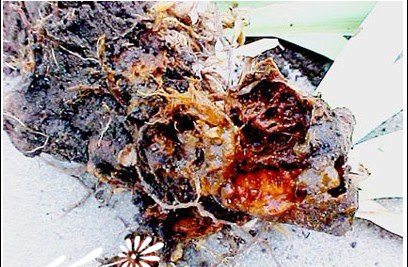
How do you prevent and treat bacterial soft rot in irises?
Bacterial soft rot is one of the most common diseases of irises. Whether bulbous irises or rhizomatous irises, this disease occurs frequently. Below, drawing on many years of growing experience, we will discuss the prevention and treatment methods for iris soft rot. The pathogen of iris soft rot is bacteria, and 2 species are currently known
-
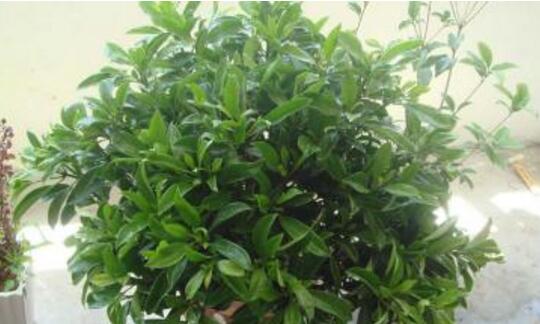
What to Do When African Jasmine Leaves Become Soft and Droopy? Root Damage Is the Main Cause, Four Solutions
Normally, the leaves of African jasmine should be firm and upright, but some flower lovers have found that their African jasmine leaves have become soft and droopy, which not only affects its appearance but also slows its growth. What causes this phenomenon, and what should we do about it? Let's take a look together.
-
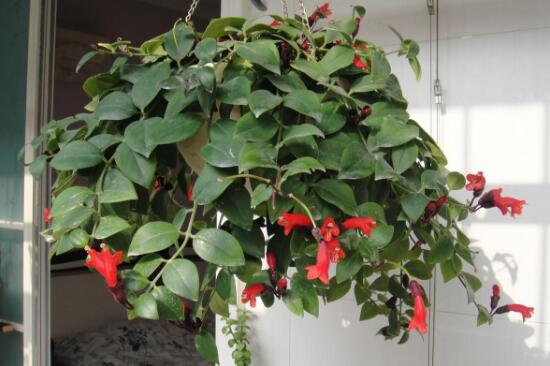
What to do when the leaves of the lipstick plant become soft and wrinkled? Shade appropriately, raise the temperature, water and dilute
The lipstick plant, named for its flowers that resemble lipstick, is a common indoor plant. In daily life, many people like to keep a pot of lipstick plant at home, not only because its flowers are beautiful, but also because of its emerald green, thick leaves. But some flower lovers find that the leaves of their lipstick plant become soft and wrinkled, which affects its ornamental value
-
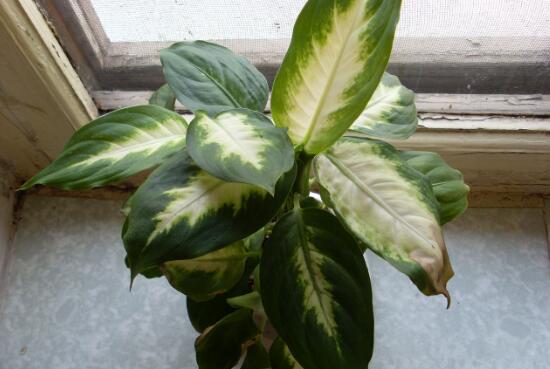
What to do when Dieffenbachia leaves go soft? Control water, fertilize, spray for disease prevention
Dieffenbachia (Dieffenbachia seguine), an elegant indoor foliage plant, has broad leaves covered with many different spots, and the colors are bright and intense, making it look very beautiful. In daily life, Dieffenbachia is kept in many people's homes, but quite a few flower growers run into the phenomenon of leaves going soft, which seriously affects its ornamental value
-
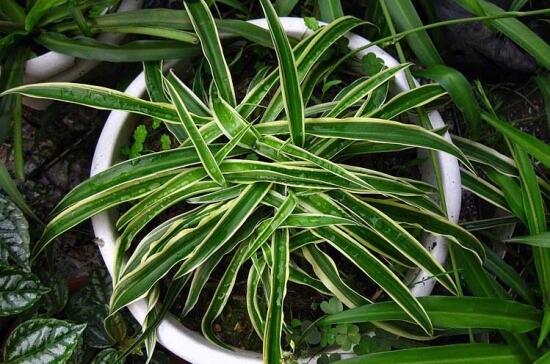
What to do when the leaves of a variegated spider plant go soft? Pay attention to 4 points - the air must not be too dry
As a common foliage plant, the variegated spider plant (Chlorophytum comosum 'Variegatum') has strong benefits: it not only looks good, but can also remove formaldehyde, and has good medicinal uses as well, so it is kept in many homes. But when grown indoors, many flower lovers run into the situation of soft leaves. So what do you do when the leaves of a variegated spider plant go soft? On this
条件筛选