What to do when Dieffenbachia leaves go soft? Control water, fertilize, spray for disease prevention
Dieffenbachia (Dieffenbachia seguine), an elegant indoor foliage plant, has broad leaves covered with many different spots, and the colors are bright and intense, making it look very beautiful. In daily life, Dieffenbachia is kept in many people's homes, but quite a few flower growers run into the phenomenon of leaves going soft, which seriously affects its ornamental value. So what should you do when Dieffenbachia leaves go soft? Today the editor will answer your questions.
1. When Dieffenbachia leaves go soft, find the cause
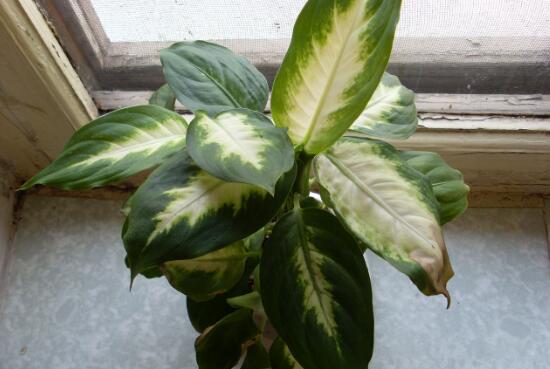
Growing plants indoors is not the same as outdoors. When many flower growers keep Dieffenbachia at home, improper care and other reasons can cause its leaves to go soft. So what should you do when Dieffenbachia leaves go soft? At this point you must be anxious, but being anxious is no use. You should find the cause, then solve it accordingly. For this, the editor has summarized 5 causes and attached solutions. Let's read on.
2. Causes and solutions for Dieffenbachia leaves going soft
1. Too little watering
When it comes to the causes of Dieffenbachia leaves going soft, the first thing everyone thinks of should be: is it because I watered too little? Leaves cannot do without water, and once they lack water, they will go soft. Specific symptoms: the soft part of the Dieffenbachia leaf starts from the top, and is accompanied by yellowing and withering.
Solution: Soft leaves caused by lack of water are easy to handle. Replenish water in time, and also spray water on the leaves for a better effect.
2. Too much watering
Some flower growers will say, I watered quite a lot, so why do the Dieffenbachia leaves still go soft? Actually this problem is very simple: you watered too much! Although Dieffenbachia likes moisture, if it is too wet, its roots cannot take it, which affects the leaves' absorption of water, and naturally the symptom of softness appears.
Solution: In this situation, you should move the potted soil to a ventilated spot with light (the light must not be too strong) so the water evaporates quickly; besides that, loosen the soil for aeration and replace part of the wet soil. After this treatment, it will not take too long. In about a week or so your plant will recover.
3. Too much fertilizing
Dieffenbachia likes fertilizer, and sufficient nutrients can make the plant grow better. But everything has a limit. If you fertilize too much, osmosis will increase, and the plant will also show signs of water shortage, thus causing the leaves to go soft.
Solution: Water it to dilute the fertilizer and let it drain out from the bottom of the pot; or remove part of the soil and add some normal soil. If rescued in time, the Dieffenbachia will quickly recover to health.
4. Pests and diseases
If none of the above situations have occurred, you should also observe whether the Dieffenbachia has been attacked by pests and diseases. If it has, remove the diseased parts in time and spray the relevant agents for prevention and control. As for which pesticide to spray, there is a detailed introduction in the pest and disease control section for Dieffenbachia, so I will not say more here.
5. Other causes
If the above 4 points are ruled out, then you should also consider factors such as strong wind and strong light, because they can also cause Dieffenbachia leaves to go soft.
Solution: You only need to promptly move the Dieffenbachia to another place, placing it in a ventilated, shady and humid spot, and spray water on the leaves to replenish moisture.
What to do when Dieffenbachia leaves won't grow bigger? Supplement nutrients, moderate light / replace potting soil
Dieffenbachia is toxic, but it is still potted at home by many people. This is not only because it can purify the air, but more importantly because it grows well, especially its spotted leaves, which look especially charming. So when Dieffenbachia leaves won't grow bigger, flower growers are very anxious. What should be done then? Today the editor will solve this problem for everyone.
1. When Dieffenbachia leaves won't grow bigger, find the source of the problem
In daily life, because Dieffenbachia has strong effects, it is potted at home by many people. But for certain reasons, Dieffenbachia leaves won't grow bigger, which affects its ornamental value. At that time flower growers must be very anxious! For this, the editor has found 4 causes: unsuitable soil, improper light, insufficient fertilizing and pest and disease damage, and attached solutions. Let's read on.
2. Causes for Dieffenbachia leaves not growing bigger
1. Unsuitable soil
When growing Dieffenbachia indoors, the potting soil is the foundation. If it is chosen well, it is very beneficial to the plant's growth. But if the potting soil is not good, for example poor drainage, not fertile enough, etc., it will all make Dieffenbachia leaves fail to grow bigger.
Solution: If the leaves not growing bigger are caused by unsuitable soil, the remedy is very simple. You only need to find some relatively fertile soil with good drainage and repot it. Of course, when choosing a flowerpot, you should also check its drainage.
2. Improper light
During the growth of Dieffenbachia, light is indispensable, but it likes semi-shade, so the light cannot be too strong either. Once the light is improper, symptoms such as Dieffenbachia leaves turning yellow and Dieffenbachia leaves not growing bigger will appear.
① Too strong light: If Dieffenbachia is exposed to direct strong light, its leaves will lose their luster, and its growth will also be affected, resulting in the symptom of leaves not growing bigger. Solution: Move it to a sheltered place, water it moderately, and after a period of time resume normal care. Usually, when strong light occurs, be sure to shade it in time.
② Insufficient light: The light cannot be too strong, but it also needs to be sufficient. Once the light is insufficient, the ability of Dieffenbachia to absorb nutrients weakens, metabolism slows down, so its growth stagnates, and the final manifestation is that the leaves won't grow bigger. Solution: At this time be sure to give it appropriate sunlight exposure.
3. Insufficient fertilizing
When Dieffenbachia leaves won't grow bigger, flower growers will certainly think of the fertilizing problem. After all, plant growth cannot do without nutrients. Once Dieffenbachia has not been fertilized for a long time, it will grow slowly, and its leaves naturally won't grow bigger.
Solution: At this time we need to apply fertilizer once about every 10 days, and after autumn arrives, we can additionally apply phosphorus fertilizer 2 times. Only in this way can its growth needs be met, and the leaves will slowly grow bigger.
4. Pest and disease damage
During growth, for various reasons, Dieffenbachia cannot avoid being attacked by various diseases, and this will directly hinder its growth, making it slow, thus producing the symptom of leaves not growing bigger.
Solution: When you find that Dieffenbachia leaves won't grow bigger, be sure to promptly observe your plant to see whether disease has appeared. If so, first determine which disease it is, then solve it accordingly. For this, you can refer to the pest and disease control section for Dieffenbachia.
Overall, Dieffenbachia is not hard to grow. As long as you understand the cultivation methods for Dieffenbachia and are a bit careful, it will grow very beautifully. Of course, if you run into Dieffenbachia leaves not growing bigger, don't panic either; just follow the solutions above. Finally, may everyone's Dieffenbachia grow beautifully~
How to grow Dieffenbachia, cultivation methods and precautions for Dieffenbachia / plenty of water
Flower growers should be familiar with Dieffenbachia. Its leaves are broad, evergreen all year round, elegant and beautiful, and the spots on them have vivid colors. It is one of the most highly regarded indoor foliage plants at present. In daily life, many people want to grow Dieffenbachia, so how do you grow Dieffenbachia? Now let's take a look with the editor at the cultivation methods and precautions for Dieffenbachia. They are very comprehensive and not to be missed~
1. How to grow Dieffenbachia, understand its habits
Because its place of origin is Brazil in South America, Dieffenbachia has developed the habit of liking warm, humid and semi-shady environments, which also makes it very suitable for growing indoors. However, Dieffenbachia is not cold-tolerant and fears drought, and avoids strong light exposure, so when growing it you should water frequently and take good cold protection measures in winter. Therefore, for how to grow Dieffenbachia, just meet its growth needs. For specific requirements, let's read on.
2. Cultivation methods and precautions for Dieffenbachia
1. Soil
For how to grow indoor Dieffenbachia, the first thing is naturally to choose a soil suitable for its growth. After all, the potting soil in bought potted plants is very cheap. According to the growth habits of Dieffenbachia, you should choose loose, fertile sandy loam with good drainage.
Soil recommendation: 2 parts leaf mold, 1 part garden soil and 1 part river sand, plus a small amount of decomposed base fertilizer. Mix them together as the culture soil for Dieffenbachia.
2. Light
Light is needed for plant growth, and it is extremely important for the growth of Dieffenbachia. Dieffenbachia likes a semi-shady environment, so while giving it sufficient light, you should also shade it during strong light. Therefore, apart from accepting soft sunlight in winter, Dieffenbachia should avoid direct sunlight in other seasons and be placed in a bright place.
Precautions: Dieffenbachia avoids direct sunlight. At noon in spring and autumn and when the sun is strong in summer, it must be shaded to avoid leaf scorch or bleaching, which would affect its ornamental value; but too much shade is also not good, as this will cause Dieffenbachia leaves to turn yellow, and the leaf color to turn green or withered yellow.
3. Temperature
In the cultivation methods and precautions for Dieffenbachia, temperature is something everyone should pay key attention to. Dieffenbachia likes warmth, and the most suitable growth temperature is 25-30°C. If conditions allow, maintaining this room temperature can make the plant grow better.
Precautions: Dieffenbachia is not cold-tolerant and is prone to frost injury when the temperature is low. So if conditions allow, you can control the room temperature at 18-30°C from February to September, and 13-18°C from September to February of the following year.
4. Watering
For how to grow Dieffenbachia, watering is naturally indispensable. It is understood that Dieffenbachia likes a humid environment. During cultivation, we must ensure it has sufficient water. In the growing season, adopt the watering mindset of preferring wet over dry; after autumn, control water and just keep the potting soil moist.
Precautions: In winter, the temperature is low and water evaporates slowly. At this time we must keep the Dieffenbachia potting soil dry, not too wet, otherwise it will cause leaf drop.
5. Humidity
Dieffenbachia likes moisture and fears dryness. Besides watering, humidity is also something everyone needs to pay attention to. During the growing period, spray water around the plant. If water is not sprayed for a long time, the leaf surface becomes rough and loses its luster. Humidity requirements: keep air humidity at 60%-70% in summer, and around 40% in winter.
6. Fertilizing
After watering, let's talk about fertilizing. It is also very important in the cultivation methods and precautions for Dieffenbachia. Dieffenbachia has a strong tolerance for fertilizer, and giving sufficient nutrients can make it grow rapidly. Generally, in the growing season, apply dilute liquid fertilizer or compound fertilizer 1-2 times per month, and stop fertilizing in winter.
Precautions: Although Dieffenbachia likes fertilizer, we cannot fertilize it too much. In particular, too much nitrogen fertilizer easily makes the leaf markings unclear, so it should be applied in moderation.
7. Repotting
According to Dieffenbachia's habit of liking fertile soil, during cultivation we should repot it at the right time, generally once every year in October. When repotting, cut off aged rhizomes and persistent dead leaves, and replace with fresh culture soil. After watering thoroughly, place it in a shaded spot. After growing it for a few days, move it into a greenhouse or indoors.
8. Pests and diseases
During the growth of Dieffenbachia, for various reasons, the plant will inevitably be attacked by pests and diseases. The main diseases include: leaf spot, brown spot, anthracnose, root rot and stem rot; the main pests include: scale insects, brown soft scale, etc. Once discovered, you should spray pesticide for control immediately. As for which pesticide to spray, there is a detailed introduction in the pest and disease control section for Dieffenbachia, so I will not say more here.