-

-

Why isn't fat choy (Nostoc flagelliforme) considered a plant? The reason is actually quite simple
Why isn't fat choy considered a plant?
-
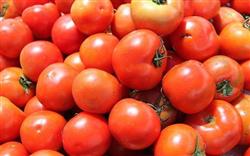
How to ripen tomatoes red? These methods are simple and practical
How to ripen tomatoes red? Please give guidance. When tomatoes fail to turn red for a long time because the temperature does not meet the requirement for lycopene development, using a chemical ripening agent on the plant is an effective measure to promote earlier marketing of tomatoes. However, in the actual ripening process, improper handling often inhibits plant growth, and in some cases causes chemical damage. Therefore,...
-

How to identify peanut leaf blight? A simple method anyone can understand at a glance
Peanut web blotch, also known as cloud-pattern blotch or net-blotch, was first discovered in the United States in the mid-1940s. In the late 1970s, China's Liaoning Province reported the occurrence and damage of this disease for the first time. In recent years, the disease has been fairly common in production areas in northern China, with relatively severe damage, generally reducing yield by about 20%, and in severe cases reducing yield by 4...
-
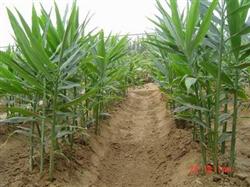
The method of cultivating ginger with plastic film mulching is simple and easy to learn.
Ginger softening cultivation is based on normal ginger cultivation, increasing planting density and strengthening shade and cooling measures, so as to achieve the goal of harvesting tender ginger. The tender ginger harvested in this way not only has a long harvest period and high yield, but is also fresh, tender and crisp, with thin skin and sparse nodes, and has a fresh aromatic ginger flavor when eaten. 1. Land selection and seed selection. Choose 3 consecutive...
-

How to grow hydroponic vegetables? Here are a few simple methods to share
Simple methods for hydroponic vegetables
-

How to control the ginger skipper? These methods are simple and effective
1. Morphological characteristics Adult: body and wings dark brown, forewings with 5 grayish-white spots, the spot located below the discal cell is larger. The center of the hindwing has one large white spot. Egg hemispherical, flat at the top, with the rim in contact with the leaf surface forming a brim shape, slightly wrinkled, with more than 50 raised fine striations on the side. Larva grass-green, after the 3rd instar two nearly crescent-shaped yellow spots appear on both sides of the dorsal line of the sixth abdominal segment, spiracles white. Pupa elongated spindle-shaped, yellow-green, body covered with white waxy powder. 2. Life habits and occurrence pattern The ginger skipper occurs
-
Detailed explanation of how to make dried ginger slices, with simple and easy-to-learn steps
After harvesting fresh ginger, rinse it clean with water, peel it by hand or with a peeling machine, and cut it with a knife or slicing machine into evenly sized slices about 1 cm thick. Set up bamboo racks in a sealed room, place the ginger slices on the bamboo racks, and dry the ginger slices directly in the sun to obtain dried ginger slices. Where conditions permit, baking can be carried out: put the sliced ginger into a drying room, and strictly control the temperature in sequence with high, medium, and low heat. Start with high heat to gradually evaporate the moisture on the surface of the ginger slices, then lower it to medium heat and low heat, so that the ginger slices shrink and cool, becoming hard and crisp, with a moisture content of 12%
-
Three practical methods for storing wheat, simple and easy to carry out
Heat-sealed method: Choose a clear, hot day, and around 9 a.m. after the drying yard has been heated by the sun, first move out the tools and materials (cotton quilts, burlap pieces, etc. all work) to air and dry in the sun. The wheat must be turned frequently so that the wheat temperature rises to 48-52°C in the sun and the moisture drops below 12.5%. Around 3 p.m., pile it up, let it sweat hot for half an hour, and while still hot put it into the jar. Use materials that have been disinfected and dried in the sun to press down and cover it, then seal it with plastic film so that no air leaks, keeping the grain temperature above 40°C for 8-10 days to kill eggs, pupae, larvae and adults, achieving the effect of accumulating heat to kill insects.
-
Key Points for Simple Spring Cultivation Techniques of 'Zhengsong No. 1' Scallion
I. Variety Introduction 'Zhengsong No. 1' has tall plants, thick and long white stalks, rapid growth, high yield, strong stress resistance, and a delicious flavor. It can be sown in both spring and autumn. II. Land Preparation and Sowing Sow from March to May in spring using the furrow direct sowing method. Apply sufficient base fertilizer: 3-5 cubic meters of farmyard manure and 40-50 kg of ammonium bicarbonate per mu. After plowing, directly lay out lines and open furrows with a furrow spacing of 70 cm, furrow width of 20 cm, and depth of 20 cm, with two rows per furrow. Before sowing, first broadcast compound fertilizer in the furrow, then hoe once to make the soil and fertilizer uniform. Along both sides of the furrow, open two small furrows in parallel, and in the small
条件筛选