-

How should characteristic agriculture develop in the New Silk Road Economic Belt, and how should the government set the stage?
A recent study argues that agricultural development in the Silk Road Economic Belt must not blindly follow the old path of scaling up and homogenization, but should leverage local ecological advantages and cultural resources, combine internet thinking, modern marketing concepts and various new business models,
-
Green organic agricultural products shine at the first Silk Road International Ecological Industry Expo
Red dates, red chili peppers, green melons, green vegetables, purple grapes, black fungus, poultry and livestock meat products - on one exhibition stand after another, the colorful green organic agricultural products attracted a large number of guests to stop, taste and admire. On the 11th, at the first Silk Road International
-
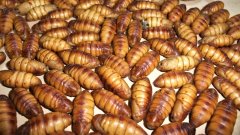
Antibacterial substances from silkworm pupae can be added to animal feed to reduce antibiotic use
In recent years, the Miaoli District Agricultural Research and Extension Station (hereinafter referred to as the Miaoli Station) has found through research that antibacterial substances produced by silkworm pupae can be further developed into functional animal feed additives, a move expected to effectively reduce the amount of antibiotics added when raising economic animals.
-
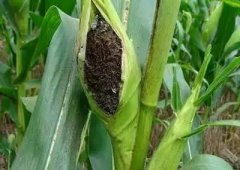
What Is Corn Smut? Causes and Control Methods
Corn smut is a fungal disease of the corn plant, caused by the pathogen Sphacelotheca reiliana. It is a systemic disease that can infect the plant as a seed, but symptoms do not appear until the plant reaches the flowering and fruiting stage. Smut is easily mistaken for
-
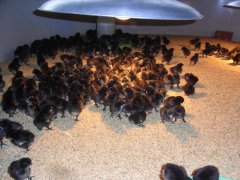
New black velvet silkie breed is dual-purpose for eggs and meat, technology transfer could be available as early as the end of the year
Because native silkie chickens do not lay many eggs, they have long been used mainly as meat chickens. To improve the egg-laying performance of silkie chickens, the Livestock Research Institute obtained eggs of the "black silkie" from China and, after about 20 years of selective breeding, successfully developed a new silkie
-
Myanmar's National Treasure Golden Camphor: Its Other Names and How It Differs from Golden Silk Nanmu
Golden camphor is a broadleaf tree, mainly distributed in Myanmar and the Gaoligong Mountains area of Yunnan, and is also one of Myanmar's national treasures. Because golden camphor has a very long growth cycle, it takes at least fifty years to grow into timber. Golden camphor is very suitable for carving
-
What are the appearance characteristics of the Silkie rooster?
The Silkie is a special rare poultry breed that combines medicinal, meat and ornamental value, and is a medicinal domestic fowl renowned at home and abroad. So what does the appearance of the Silkie rooster look like? 1. Appearance characteristics Its body is small and exquisite, fine and compact, with a small head, short neck and short legs.
-
What is the difference between the silk tree and the silk tree grass?
At the mention of the silk tree, everyone thinks of the sensitive plant (Mimosa pudica); the two plants look very similar in appearance, but they are actually not the same, and the silk tree blooms more beautifully, so what is the difference between the silk tree and the silk tree grass? 1. What is the difference between the silk tree and the silk tree grass? Silk tree silk
-
How many years does it generally take for a Rosa roxburghii to bear fruit after planting?
Rosa roxburghii is the fruit of the plant Rosa roxburghii in the Rosaceae family, also known as cili and mulizi, and is a nutritious treasure fruit for nourishing and strengthening the body. So how many years does Rosa roxburghii take to bear fruit? After planting in the first year, Rosa roxburghii bears fruit the following year. The harvest period of Rosa roxburghii is less than 30 days. Rosa roxburghii is a wild small shrub, from April to June
-
Detailed Explanation of Symptom Identification and Control Methods for Fusarium Wilt in Silk Trees
The silk tree, also known as the velvet flower tree or the Persian silk tree, is a plant that blooms in summer, with flowers mostly in pink and a rather unusual shape, like a feather fan. The wood of the silk tree is very suitable for making furniture, railway sleepers and so on, because its structure is relatively fine and its grain
条件筛选