-
-
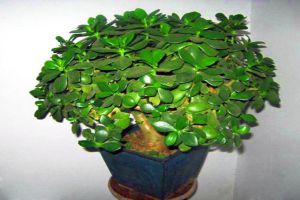
What are the best-looking shapes for a jade plant?
Its leaves are uniquely shaped and remain emerald green all year round; its overall form is also rather dignified, and it is easy to grow. All these qualities make it a suitable ornamental plant for pot cultivation. It can be placed on a balcony, on a desk, or in a bedroom as an accent, and it looks good in all these spots. So, when it comes to its shape, which one looks better?
-
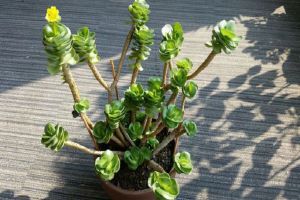
How to grow a beautiful shape with money tree (Zamioculcas zamiifolia)
This plant grows to a height of 50-80cm, is commonly green with a metallic sheen, has a boat-like shape, and its leaves are rather thick. Many people grow this plant. People grow it for ornamental purposes and to purify the air, and there is an art to the ornamental side, because we can prune it to give it a beautiful shape.
-
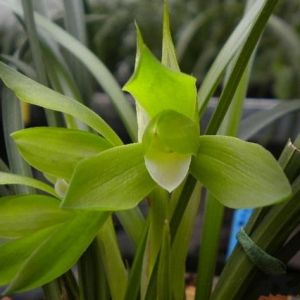
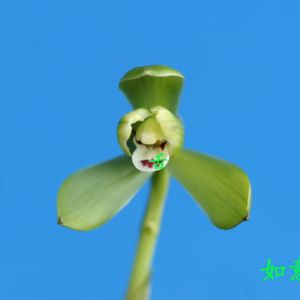
'Pan Shi He Su' is a famous cultivar of Cymbidium goeringii with lotus-petal-shaped, pure-hearted (solid green/white) flowers.
It was selected and named by Pan Jinhui of Xinchang, Zhejiang.
-
Detailed Explanation of the Basic Theoretical Knowledge of Chinese Orchid Tongue Shapes
Chinese orchids have the following several common tongue shapes: 1. Liuhai tongue (bang fringe tongue): the drooping part of the tongue blade closely resembles the front bang in a woman's hairstyle. This type of tongue is mostly paired with plum-form narcissus floral art. 2. Large round tongue: the tongue is short, round, broad and large, and the width of the tongue petal is equal to or greater than the diameter of the central palace. The large round tongue is generally paired with lotus-petal floral art. 3. Ruyi tongue: there are large and small Ruyi tongues....
-
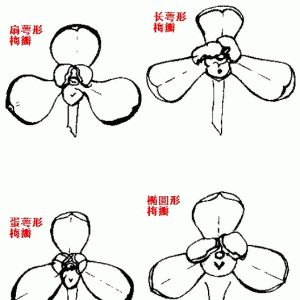
Detailed Explanation of Orchid Petal Shape Characteristics and Appreciation Knowledge
Petal shape refers to the shape of the petals. Orchids generally have five major petal shapes: plum petal, lotus petal, narcissus petal, plain-heart petal, and strange petal. 1. Plum petal: The sepals are short and round, shaped like plum blossom petals, the column petals form a hood, and the lip petal is flat and straight, hard and not curling backward. Song Mei is the most typical representative variety, and there are about 50 commonly seen varieties. 2. Lotus petal: The sepals are thick and broad...
-
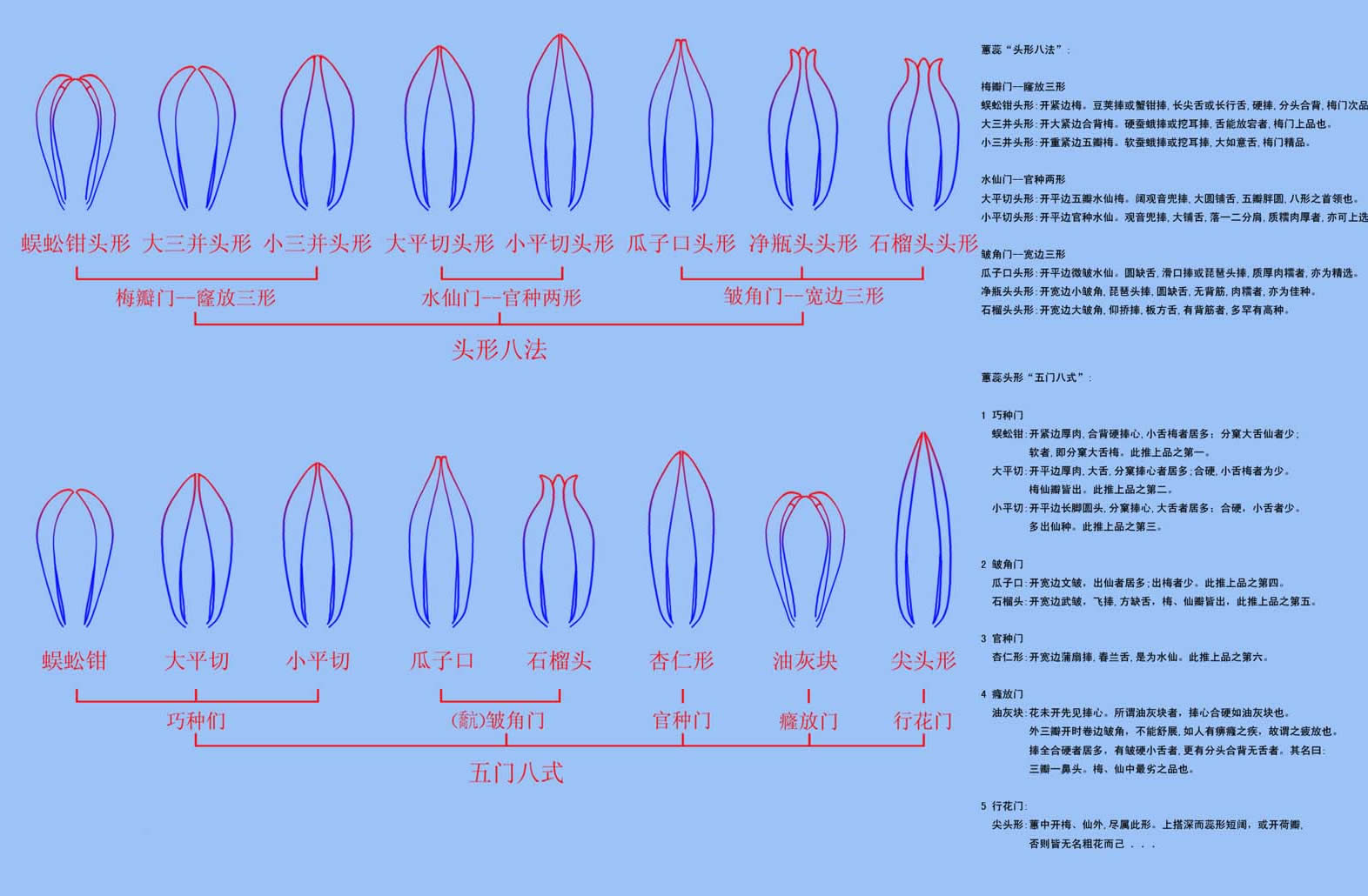
Detailed Explanation of the Eight Head Shapes and the Five Categories and Eight Forms of Cymbidium faberi
The "Five Categories and Eight Forms" of the small bud head shapes of Cymbidium faberi flowers is a summary of valuable experience left by predecessors in selecting superior varieties based on the shape of the small buds of Cymbidium faberi flowers, and is a priceless treasure left to us by our orchid-growing forebears. The "Five Categories and Eight Forms" has spread throughout the world, has had a profound influence in the community, and is an eternal topic often on the lips of orchid enthusiasts. However, because the writings of predecessors were mostly in classical Chinese...
-
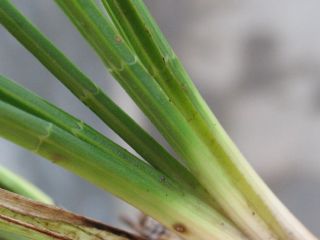
What is the orchid petiole ring? A leaf structure shaped like a finger ring
The orchid's finger ring: both Cymbidium goeringii (spring orchid) and Cymbidium ensifolium (Chinese cymbidium) have a petiole ring, located roughly within 1-4 cm of the orchid pseudobulb, appearing as a ring-shaped protrusion, the dividing line between the petiole and the leaf blade; when the leaf withers it breaks off at the finger ring. The appearance of the petiole ring also indicates that this seedling is about to reach maturity. Orchid leaves often drop at a certain point at the base, and this point is usually formed by transverse...
-
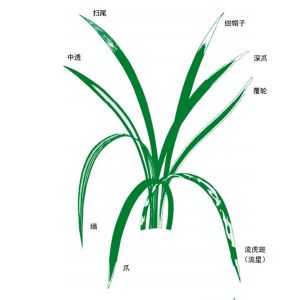
A Guide to Appreciating Orchid Leaf Variegation and Leaf Shapes
The white or yellow patches and patterns that appear on the leaves of Chinese orchids (Cymbidium) are called "yi" (variegation), and orchids cultivated for the changing patterns on their leaves are called "yi orchids" (variegated orchids). According to the standards of Japan and Taiwan, China, there are as many as 35 types of variegation patterns. Each type of pattern is called 1 yi; those with multiple patterns and spots are called "comprehensive yi," but on the same leaf...
-
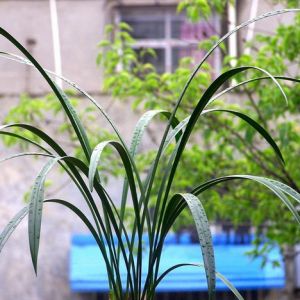
What kind of leaf shape is considered beautiful in Cymbidium ensifolium?
Lan Shangling, fragrance comes first in orchids! One, the pseudobulb base (the petiole part is the leaf foot) should be slender and upright, not sprouting randomly or scattering, that is what makes it neat and elegant. Like a tall beauty with long legs. Two, the middle of the leaf should be firm and straight (the middle part of the leaf blade is the leaf waist) and the leaf tip should droop. Being a person is the same, the waist must be firm and straight, that is how one stays neither haughty nor humble....
条件筛选