-
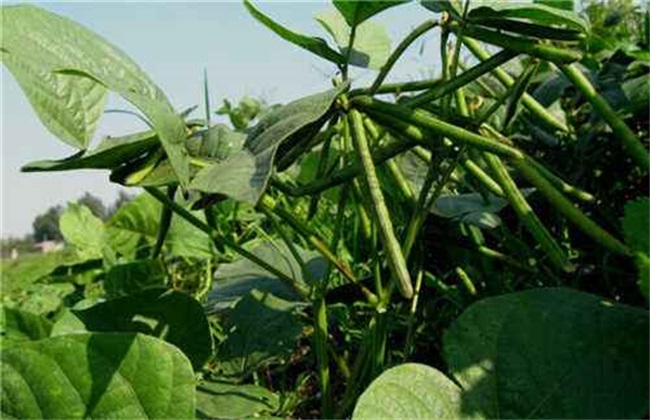
Key Technical Points for Direct-Seeding Mung Bean Cultivation in Summer
Summer Direct-Seeding Techniques for Mung Bean
-

Several Types of Potato Seeding and Planting Machinery
1. 2BMF-2 potato planter. This machine is matched with an 8.8 kW-12 kW (12 hp-16 hp) small four-wheel tractor and can complete multiple operations in one pass, including furrowing, fertilizing, seeding and soil covering. It features labor saving, effort saving and convenient adjustment and use. Main technical parameters: seed breakage rate <=1%, double-seed rate <=8%, empty-hole rate <=2%, productivity 4 mu/hour. 2. 2BXSM-1B potato fertilizing and seeding machine. This machine is an ideal potato planter for dryland flat-cultivation areas.
-
Rice direct seeding machine successfully developed, efficient and versatile, boosting rice sowing
Recently, a "Multifunctional Soil-Covering Direct Seeding Machine Rice Mechanical Direct Seeding Field Demonstration" organized by the China National Rice Research Institute was held in Buqiao Village, Fuyang City, Zhejiang Province, with more than 40 experts from home and abroad attending the field observation event. In recent years, China's rice mechanical transplanting technology has developed rapidly, and a number of different types of transplanters suited to China's rice production have been developed and produced. However, the development and research of rice direct seeding machines and mechanical direct seeding technology have lagged relatively behind, and no mainstream rice mechanical direct seeding technology has yet taken shape. To overcome the problems of poor seedling establishment, easy lodging, premature aging, and difficult and costly weed control
-
Will rice suffer from quinclorac phytotoxicity after reseeding
Question: 4 mu of direct-seeded rice is at the 3-leaf 1-heart stage. Very few seedlings emerged after sowing, there are no seedlings in the low-lying areas, and the emergence rate is less than 50%. The sowing rate was 7-7.5 kg per mu. Not long ago, quinclorac was used for the "second kill" weed control. May I ask, if rice is reseeded in the areas of this field where no seedlings emerged, will the reseeded rice suffer from quinclorac phytotoxicity? Answer: Quinclorac is a selective herbicide for controlling barnyardgrass in paddy fields. It is generally applied at the 2-leaf 1-heart stage of rice, and applying it too early easily causes phytotoxicity. Before the 1-leaf stage of the seedlings, especially at the needle standing stage, applying quinclorac at the conventional rate
-
High-yield cultivation techniques for no-till direct seeding in rapeseed-rice double cropping
Zhejiang Province is relatively economically developed, with high labor costs. At the same time, as diesel prices rise, the cost of mechanical plowing of farmland increases, and the production cost of grain and oil crops increases year by year. For this reason, Zhejiang Province carried out trials, demonstrations and extension of high-yield cultivation techniques for no-till direct seeding in rapeseed-rice double cropping, which reduced the production cost of grain and oil crops and improved planting efficiency. According to surveys, each mu of no-till direct-seeded rapeseed saves 62.5 yuan in costs and increases efficiency compared with transplanted rapeseed, and each mu of no-till direct-seeded late rice saves 70.24 yuan in costs and increases efficiency compared with plowed and transplanted late rice. The annual cumulative cost saving and efficiency increase of no-till direct seeding cultivation in rapeseed-rice double cropping is 132.74 yuan.
-
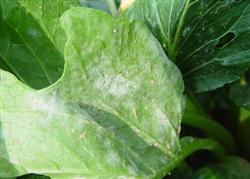
Detailed explanation of the double-low rapeseed minimal and no-tillage relay direct seeding cultivation technique
Controlling rapeseed powdery mildew well is a prerequisite for obtaining high yield and high quality in rapeseed, while autumn-sown rapeseed at the final flowering stage and the middle-to-late pod stage is precisely in the March-April period of high temperatures and shading between plants, when powdery mildew occurs rather commonly, greatly reducing the 1000-grain weight of rapeseed and thereby affecting yield; therefore, the control of rapeseed powdery mildew is very important. 1. Harm...
-
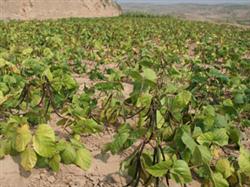
Key Technical Points for Direct Seeding Cultivation of Mung Bean in Summer
When mung bean seedlings reach the 2-leaf 1-heart stage, remove the clustered seedlings. Thin to final stand at the 4-leaf stage, with a plant spacing of 13 to 16 cm and a row spacing of about 40 cm, leaving 10,000 to 15,000 plants per mu; for late-sown fields, up to 20,000 plants per mu may be retained. From emergence to flowering and canopy closure, mung bean must be kept free of weeds through frequent cultivation and hoeing, generally no fewer than 4 times, with the depth of cultivation going from shallow...
-
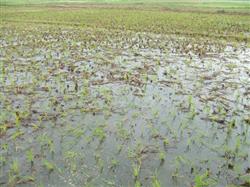
Detailed Explanation of Rice No-Till Dry Direct Seeding Cultivation Technology
(1) Paddy field selection: Select a field where the previous crop was rice and which has not been plowed for no-till dry direct seeding cultivation. Fields with many malignant weeds, heavy clay soil, etc. are not suitable for no-till cultivation. (2) Weed treatment: 4 to 6 days before sowing, choose a sunny or cloudy day with a temperature above 15 degrees, use 10% "Glyphosate" 2 kg + 20% "Gramoxone" 100 ml per mu, diluted in 60 kg of water (four containers of water), and add one tablespoon of laundry detergent to each container of water, then spray to control weeds. If rain occurs within 4 hours after spraying, re-spray, otherwise the weed control effect will be poor.
-
Detailed Explanation of Summer Direct Seeding Cultivation Techniques for Mung Bean
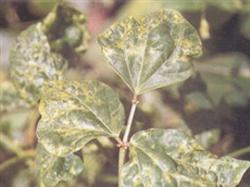
Symptoms: This disease mainly occurs during the rainy season in summer and autumn. After the leaves are infected, brown round to irregular blister-like spots appear on the leaves, initially water-soaked, later becoming gangrenous, and in severe cases becoming suberized. Multiple lesions can often be seen clustering together to form large gangrenous-type lesions. Brown small spots or streak-like spots also appear on petioles and pods when infected...
条件筛选