-

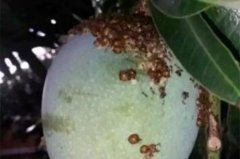
Control Methods and Application Tips for Mango Scale Insects
Control Methods for Mango Scale Insects
-
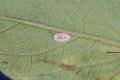
What are the common types of scale insect pests and their control methods
What are the common scale insect pests and their control methods
-
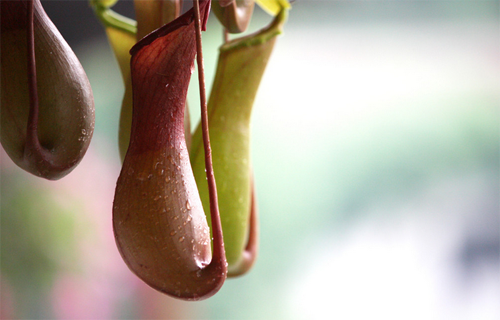
How do you prevent and treat pests and diseases of pitcher plants such as scale insects, leaf spot, and fusarium wilt?
The pitcher plant is so formidable, yet it can still get pests? Isn't the pitcher plant specifically a plant that eats insects? It can even be eaten by insects, and scale insects really are the nemesis of the pitcher plant. What pests does the pitcher plant have? How should they be handled? Fusarium wilt: the leaves and pitchers of a pitcher plant bought not long ago withered, which is usually caused by not adapting to the environment.
-
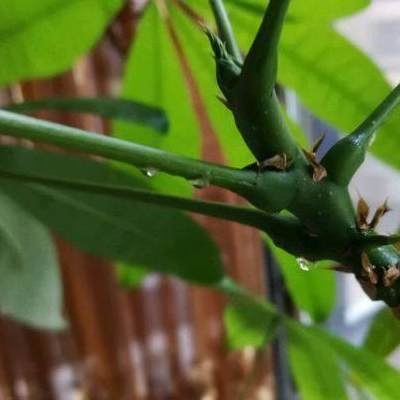
How to deal with sticky sap oozing from a money tree? Learn how to completely wipe out scale insects
Money tree (Pachira aquatica) is a plant many people love to grow, but sometimes things go wrong. How do you deal with sticky sap oozing from a money tree? How do you completely wipe out scale insects? When a potted money tree at home oozes dew-like sticky liquid, shows small white dots and spots on the leaves, what is the cause? The money tree may have been attacked by pests
-
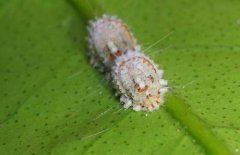
Mealybug Characteristics and Detailed Description of Damage Symptoms
There are many kinds of scale insects. Do you know about the mealybug? What are its damaging habits? What does it look like? Let's take a look together. Damaging habits: It can occur on poinsettia year-round, and infestations are especially severe in poorly ventilated facilities. Many
-
Symptoms, Damage and Control Methods of Coconut Scale Insects
What is the damage caused by the coconut pest Pseudaulacaspis? How should it be controlled? Ecological habits: there may be 10 generations per year, and 1 generation lasts about 33 days. It usually reproduces by parthenogenesis; the mother insect lays eggs under the scale around her body, the egg-laying period is 8 to 10 days, and each female can
-

How to treat scale insects on boxwood hedges? Try these clever tips
In recent years, scale insects have become fairly common in landscaping, with boxwood hedges suffering the most severe damage. Through years of exploration and experimentation, the author has mastered the following technical points: (1) Before spring bud break, spray 3 to 5 degrees Baume lime sulfur mixture or 3 to 5% diesel emulsion to eliminate overwintering nymphs. (2) When female scale insects are carrying eggs and their body weight increases sharply, before egg laying, use a high-pressure water hose to wash the insects off the branches, then supplement with chemical protection. (3) Before chemical control during the hatching period, give the hedge a heavy pruning, which helps
-
What are the control methods for scale insects on privet hedges?
In recent years, with the widespread use of golden privet (Ligustrum sinense 'Variegatum') and small-leaf privet (Ligustrum quihoui) in urban landscaping, pests and diseases on privet have become a major problem in garden maintenance and management. The scale insect occurring on Ligustrum landscaping plants is mainly the white wax scale (Ericerus pela). It has been reported that comstock mealybug (Pseudococcus comstocki) has occurred on privet hedges in Hebei. The identification characteristics and control measures of the white wax scale are described below: Distribution and damage. The white wax scale Ericerus pela (Chavannes) belongs to the order Homoptera, family Coccidae. It is widely distributed in China. It damages
-

How to control scale insects on flowers? These methods are very practical
Almost all flowers are susceptible to scale insect damage, and there are many species, commonly including red wax scale, globular scale, horned wax scale, cottony cushion scale, arrowhead scale, white peach scale, cactus scale, bamboo flat mealybug, and others. Scale insects often gather on branches, leaves, flowers, and fruits; adults and nymphs insert their specialized mouthparts into the flower tissue to suck sap
-
What to Do When a Ponytail Palm Gets Pests? Pest and Disease Identification and Treatment Methods
What to do when a ponytail palm gets pests? This article covers the symptom identification and control methods for the three major pests of ponytail palm - scale insects, plant bugs and whiteflies - as well as leaf spot disease. Spraying with a 1500x dilution of 40% omethoate and other agents, once every 7-10 days for 2-3 consecutive applications, can effectively solve the problem.
条件筛选