What are the common types of scale insect pests and their control methods
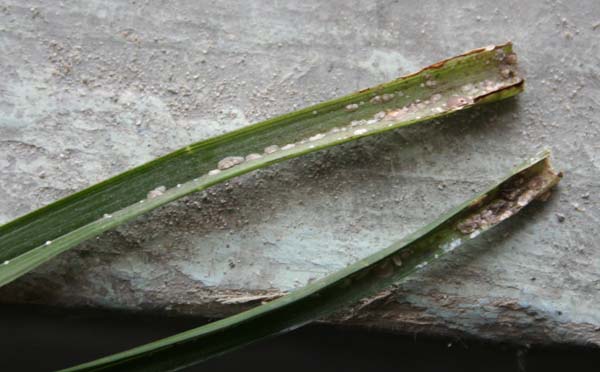
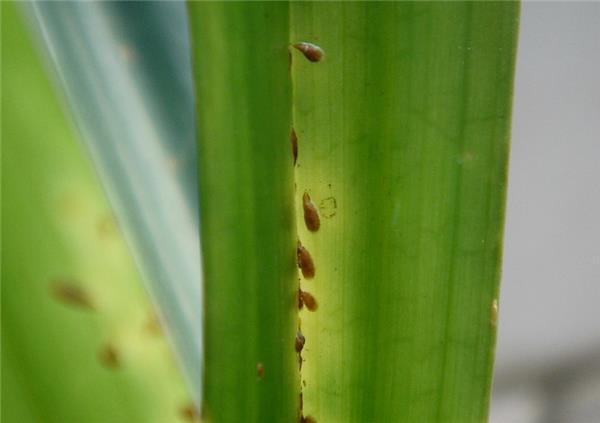
Scale insects are quite harmful to plants. They gather in groups on plant stems and leaves, which not only affects the ornamental effect of the plants, but also gnaws at the branches and leaves, causing large-scale damage to the plants.
I. Common scale insect pests
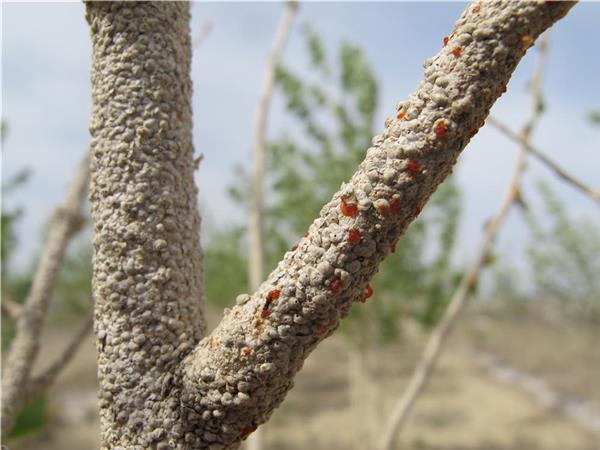
1. Drosicha corpulenta. Also known as the grass-shoe scale insect and the persimmon naked scale. It mainly harms many fruit trees such as peach, persimmon, pear and apple, as well as garden ornamental plants such as cherry blossom, southern magnolia, wintersweet, Chinese rose, rose and Chinese pagoda tree. The female adult is oval in body, 8-10 mm long and 4-5 mm wide, with a grayish-purple back center and a pale yellow margin, shaped like a straw sandal, and the back is covered with a layer of fine hairs and white thin wax powder. The nymph is similar in shape, reddish-brown.
2. Japanese wax scale (Ceroplastes japonicus). Its host range is wide, mainly including ornamental plants such as crape myrtle, southern magnolia, osmanthus, oleander, rose and peony, as well as many fruit trees such as peach, plum, jujube, loquat, apricot, hawthorn, apple, pear and fig. The adult wax shell is flat-oval, white, 3-4.5 mm long, with the back divided into blocks showing tortoise-shell-like grooves. The live insect body is light brown to purplish-red; the newly hatched nymph is light reddish-brown, begins to secrete wax after 1 day, and forms a wax shell in 7-10 days.
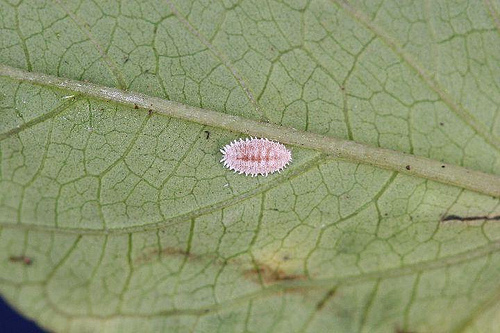
3. Brown soft scale (Coccus hesperidum). It mostly harms household flowers such as orchid, lucky bamboo, Aglaia odorata, cyclamen, Monstera deliciosa, jasmine, calla lily and sago palm, more than 170 kinds of plants in total. The female adult often parasitizes along the midvein on the underside of leaves; the body is oval, 2-4 mm long, and highly variable in color, often yellow-green, yellow-brown or reddish-brown. There is a longitudinal ridge raised in the center of the back, with dark brown around the ridge, often with black dots scattered or gathered into patches, forming 2 brown reticulate transverse bands.
II. Pollution-free methods for controlling scale insects
1. Mix baijiu with water at a ratio of 1:2. When treating the insects, water the surface layer of the potting soil thoroughly. Scale insects begin activity in spring when the room temperature is 7 °C. You can water once in mid-April, then about once every half a month, for 4 consecutive times to see results.
2. Use 50 mL of edible vinegar (rice vinegar), dip a small cotton ball in the vinegar until wet, then gently wipe the stems and leaves of the affected flowers and trees with the wet cotton ball to wipe off and kill the scale insects. This method is convenient and safe, and it can both achieve the purpose of pest removal and make the damaged leaves turn green and glossy again.
3. Gently and repeatedly wipe the diseased plant with alcohol, and the scale insects can be removed, and removed very cleanly and thoroughly. For example, when wiping diseased orchid leaves with alcohol, not only can the scale insects be removed, but even the larvae that cannot be seen clearly with the naked eye are all thoroughly killed, and in the second year there is rarely any damage from scale insects. This method is simple, safe and effective.
4. Mix diesel oil, laundry detergent and water at a ratio of 10:0.6:6 to make a stock solution. At this time the stock solution contains 60%, is milky in appearance, and after dilution with water to a medicinal liquid containing 30% oil, carefully spray it on the scale insects on Aglaia odorata, kumquat and sago palm. After one week, most of the scale insects change from their original fresh orange color to a shriveled state, indicating that this method has a good control effect on scale insects.
III. Control methods for scale insect pests on garden plants
1. Quarantine measures. Scale insects themselves do not move or have poor mobility, and their own spreading ability is limited, but they are easily spread with the transport and exchange of seedlings. Therefore, quarantine is particularly important.
2. Cultivation technique control. Proper crop rotation; thoroughly clean up residual branches and fallen leaves in the nursery; rationally thin branches to improve ventilation and light penetration; prune infested branches and burn them in a concentrated manner; use a soft brush or similar for manual mechanical removal; or use a cloth dipped in kerosene to wipe them off.
3. Chemical control. When they occur in large numbers, spray 10-15 times diluted rosin mixture once in winter to eliminate overwintering female insects; before budding in spring, spray 3-5 degrees Baumé lime sulfur mixture to eliminate overwintering larvae; for newly hatched larvae, spray insecticides such as carbaryl and phoxim on the soil surface around the tree roots in early spring, and for nymphs on the tree body, spray omethoate, malathion, dichlorvos, fenitrothion, etc.
4. Protect natural enemies. Protect some ladybugs, Aphytis wasps, Encyrtid wasps, etc.
Generally speaking, the pests and diseases of any plant should focus on prevention first, and then combine prevention with control, so that better results can be achieved. In addition, although ants themselves also capture and eat some scale insects, ants themselves also pose a threat to plants, so in the protection methods using biological natural enemies, it is not recommended to use ants.