-
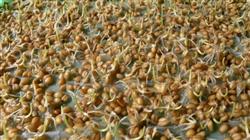
How to save wheat seeds? I'll teach you the correct seed-saving method
It's wheat harvest season again, and here's how to save wheat seeds: The quality of wheat seeds is the foundation and key to a good wheat harvest. In principle, when choosing varieties, farmers should buy wheat varieties that have passed national approval from qualified seed suppliers. Some farmers use their own saved wheat seeds, and they should follow five points....
-
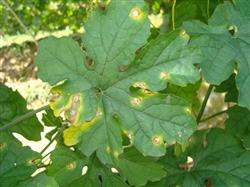
Detailed Explanation of Bitter Melon Seed Saving Methods and Key Technical Points
How can bitter melon yellow leaves be effectively prevented and controlled? Please advise. The symptoms of bitter melon yellow leaves are as follows: the leaves of the entire bitter melon plant turn yellow and lose their green color, the leaf veins dry up, the stems have fine cracks or split into 1-2 cm fissures, the top of the plant grows slowly and gradually shrivels, and when the plant's root system is pulled out, it is found that the root system is underdeveloped....
-
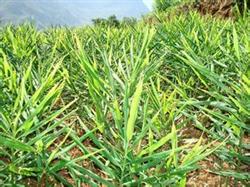
Detailed Guide to Harvesting and Seed-Saving Methods for Ginger
Ginger harvesting, based on the intended product use, is divided into seed ginger harvest, young ginger harvest, and mature ginger harvest. Seed ginger is generally harvested in late June, when the seedlings have 4-5 leaves; carefully loosen the soil and gently snap the connection between the seed ginger and the new ginger to remove the seed ginger. If harvested too late, digging damages too many roots, affecting the continued growth and...
-
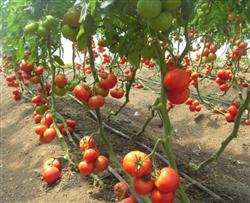
Key Technical Points for Fertilizer-Saving and Water-Saving Cultivation of Tomatoes in Winter Warm Greenhouses
Fertilizer saving: Considering cost reduction, input reduction and fertilization efficiency, apply 10000 kg of chicken manure, 50 kg of urea and 50 kg of ternary compound fertilizer per mu. This is the optimal fertilization rate for fruit vegetables in winter warm greenhouses in the coastal area of Shandong. Water saving: Use drip irrigation, with the suitable relative soil moisture content being 80%, which can also save 70.4% of water compared with conventional furrow irrigation...
-
Detailed Explanation of Common Celery Seed-Saving Methods and Technical Points
In recent years, many regions have cultivated some high-quality common celery varieties, and they also account for a relatively large proportion in sowing. Because celery is a cross-pollinated crop, for common varieties it is especially important to do a good job in seed saving and preventing degeneration, to truly establish a good seed-saving field or seed-production site, and to select and retain good seed plants. Strictly isolate in the seed-saving...
-
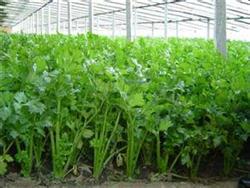
Conventional Celery Seed Saving Methods and Key Techniques
In recent years, many places have bred some excellent conventional celery varieties, which also occupy a relatively large proportion in cultivation. Given that celery is a cross-pollinated crop, conventional improved varieties especially require good seed saving and degeneration prevention work, effectively establishing seed-saving fields or seed-saving bases, and selecting and keeping good seed plants. Strictly isolate at least 4...
-

Detailed Introduction to Biological Water-Saving Technology in Rice
Biological water-saving technology refers to the use of a plant's own physiological and genetic potential to obtain more output under the same water conditions. Although it is difficult to research and remains underdeveloped, it requires little input and yields high benefits in practice. Using the large amount of germplasm resources obtained over many years, rice breeders have developed a number of strongly drought-resistant varieties through intervarietal hybridization, systematic selection, and introduction and evaluation, and have applied genetic engineering to the breeding of new varieties, continuously providing high-quality, strongly drought-resistant new hybrid rice combinations and new varieties with greater biological potential for water-saving cultivation.
-
The only standard water-saving and drought-resistant rice variety for the southern rice region has been bred in Shanghai
The Shanghai Academy of Agricultural Sciences announced on the 16th that Shanghai agricultural scientists have bred the only upland rice control variety for regional trials in the southern rice region and the first japonica-type upland rice variety in the southern rice region to pass national approval, and have built China's most complete rice drought-resistance identification and evaluation system and germplasm resource platform. Shanghai has become the country's main base for rice water-saving and drought-resistance research. According to Gu Xiaojun, vice president of the Shanghai Academy of Agricultural Sciences, the "Zhonghan No. 3" bred by scientists here is the first upland rice variety in China's southern rice region to pass national approval, and has been
-
Detailed Explanation of Water Dropwort Seed Saving Methods and Technical Key Points
Select robust mother plants, requiring characteristics such as medium height, thick stems, short internodes, and relatively concentrated tillering. Once the mother plants are selected, transplant them into the seed-saving field immediately after pulling. The water dropwort seed-saving field should be a paddy field that is warm and sunny, easy to drain, and convenient for roguing. Cultivate finely, applying 1 ton of decomposed human and animal manure and 50 kg of plant ash per mu as base fertilizer. In mid-November or late March to early April of the following year, choose warm and sunny weather, pull selected seed plants from the main field, arrange them in clumps of 3-4 stems, and transplant them neatly. After spring planting, the plants that survive grow relatively small, generally
-
Key Technical Points and Precautions for Saving Seed of Water Dropwort
Water dropwort reproduces asexually, and its stems are the propagation material. For water cultivation, select seed plants in late November. The selection criteria are: possessing the excellent characteristics of the variety being saved, with moderate plant height, thick and sturdy stems, relatively short internodes, numerous and robust axillary buds, a well-developed root system, and freedom from insects and disease. The selected seed plants are then immediately transplanted into the seed-saving field. The seed-saving field should be chosen in a spot sheltered from the wind and facing the sun, with convenient drainage and irrigation. In mid-October, carry out fine land preparation and apply a thick basal fertilizer. When planting the seed plants, maintain a 1 cm water layer in the field, with both row spacing and plant spacing of 25 cm,
条件筛选