-
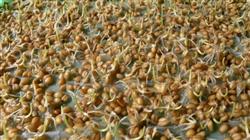
How to save wheat seeds? I'll teach you the correct seed-saving method
It's wheat harvest season again, and here's how to save wheat seeds: The quality of wheat seeds is the foundation and key to a good wheat harvest. In principle, when choosing varieties, farmers should buy wheat varieties that have passed national approval from qualified seed suppliers. Some farmers use their own saved wheat seeds, and they should follow five points....
-
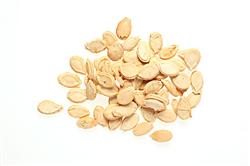
How to Save Seeds from Winter Melon? Key Techniques and Methods Explained
How do you save seeds from winter melon? How should you grow winter melon for seed saving? For winter melon seed saving, you can refer to the following growing methods: Plot selection. Winter melon is a cross-pollinated crop that relies on insect or wind pollination. To keep the variety pure, the seed production field should be at least 1000 m away from other winter melon fields. Manual selection. Raising seedlings and sowing...
-
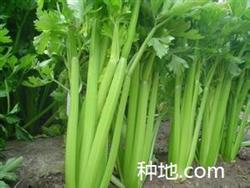
How to save celery seeds? Key technical points explained in detail
How do you save celery seeds? What should you pay attention to? Celery is a cold-hardy vegetable; before flower bud differentiation it needs low temperatures below 10°C, and vernalization is completed in about 10-15 days. However, it must grow to a certain size, about 3-4 leaves, before it can perceive low temperatures, and the longer seedlings are exposed to low temperatures, the higher the bolting rate. ...
-
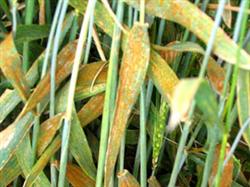
How to prevent wheat frost damage? Save these clever tips
What does wheat rust look like? Wheat rust is also called jaundice. It is divided into 3 types: stripe rust, leaf rust, and stem rust. It is the most widespread and most damaging type of disease on wheat. After wheat is infected with rust, faded green spots first appear on the surface of wheat leaves or stems, and later yellow or reddish-brown powdery pustules grow, namely the pathogen's uredinia...
-
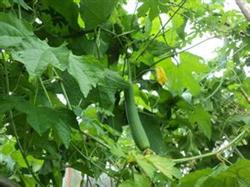
Managing loofah this way in the late stage lets you both save seed and keep harvesting fruit
Vegetable growers often save their own loofah seed in the late fruiting stage. Generally speaking, once plants are kept for seed, they are no longer used for normal loofah production. However, it takes 80-90 days from fruit set to seed maturity, and over these nearly 3 months, growing seed alone is bound to hurt the returns from loofah production. If you manage the late stage of loofah skillfully...
-

Detailed Guide to Simple Garlic Storage Methods, Save for Later Use
The key to garlic storage is creating suitable environmental conditions for dormancy, inhibiting sprouting and rot. The ideal environmental conditions for garlic storage are: low temperature, low humidity, and ventilation. The most suitable temperature is around 0°C, and the relative humidity is 70-80%. Its simple fresh storage requires no special complex process equipment, and even more so no fixed storage location; it adapts to local conditions, uses local materials, has a simple process, and is low in cost. The storage time can reach 7-8 months. Storage methods include hanging storage, rack storage, and cellar storage. 1. Hanging storage: after harvest
-
How to apply formula fertilizer to garlic to save fertilizer and increase income
In 2005, 8 demonstration sites were set up in the three towns of Wangmiao, Yucheng and Lige and in Luotun Township, with 100-130kg of formula fertilizer applied per mu, averaging 121.9kg per mu (equivalent to N 17.1kg, P2O5 21.9kg, K2O 12.2kg), while a conventional fertilization control was also arranged, with an average of 129.4kg of compound fertilizer applied per mu (equivalent to N 20.7kg, P2O5 20.7kg, K2O 20.7kg,). At harvest, 5 sites were actually harvested and 3 sites were yield-measured, and the average yield per mu in the formula fertilizer demonstration area was 1485.
-
How to save garlic seed? Mastering these tips is key
Garlic loses vigor because it is propagated vegetatively by replanting cloves year after year, resulting in weak, stunted plants, poor disease resistance, smaller bulbs and lower yields. In concentrated garlic-producing areas, seed selection, seed saving and purification and rejuvenation should be carried out properly. Selecting bulbs and cloves Before harvest, select plants in the field, mark those that match the variety's characteristics, grow vigorously and are free of pests and diseases, and pick them out as seed at harvest. At harvest, also choose bulbs that are large and round, free of deformed cloves, undamaged, uniform in size, and with skin color, flesh color and clove division matching the variety's characteristics; dry, braid and store them separately; select again when planting, remove rotten, damaged, soft and yellowed cloves caused by heat, freeze injury or bruising, and plant large cloves; bulb and clove selection must be done every year, which can improve the seed stock's quality.
-
Hanyou No. 3 rice saves water and resists drought, high-yielding and easy to grow
Rice is high-yielding, but afraid of thirst; upland rice is drought-tolerant, but its yield is slightly inferior. Shanghai rice experts ingeniously merged the advantages of the high yield of rice and the drought tolerance of upland rice into a single grain of rice seed, breeding the world's first water-saving and drought-resistant hybrid rice, "Hanyou No. 3". The author recently saw the mature "Hanyou No. 3" bent over from "exhaustion": each panicle bears 110 grains, and the yield per mu is better than that of conventional rice, while the rice field saves more than 50% of water. The new rice can go on the market in Shanghai at the end of the month. According to testing by a professional department, the grain quality of "Hanyou No. 3" reaches the Ministry of Agriculture's second-grade high-quality rice standard, and
-
Can Lianjing 7 rice be saved for seed?
Lianjing 7 is a conventional rice variety bred by the Lianyungang Academy of Agricultural Sciences, and its seed can be saved for planting provided that seed purity is ensured.
条件筛选