-
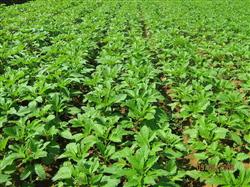
How to fertilize sesame for high yields? Detailed fertilization methods
How to fertilize sesame for high yields? Please provide guidance on the nutrient requirements of high-yielding sesame. Sesame is a fertilizer-loving crop; for every 100 kg of seed produced, it needs to absorb 8-9 kg of pure nitrogen, 3 kg of phosphorus pentoxide, and 7 kg of potassium oxide. At present, sesame yields are generally 40-60 kg per mu, while high-yielding fields generally reach 75-95 kg...
-
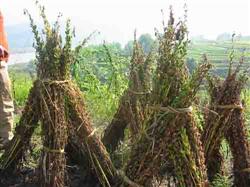
What technical points should be paid attention to for high-yield sesame cultivation?
What should be paid attention to for high-yield sesame cultivation? Please introduce that for high-yield sesame cultivation, the following stages must be handled well: the intertillage and weeding stage. After thinning sesame seedlings, shallow hoeing should be done to loosen the soil and remove weeds. When the seedlings are 5 cm tall, carry out the second intertillage. After that, carry out 1-2 more intertillages according to soil conditions and seedling growth, so as to achieve loose soil and good aeration...
-
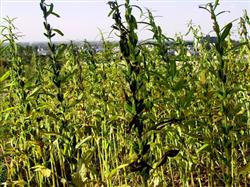
How to prevent lodging when growing sesame? Introduction to practical tips
What common diseases affect sesame? An introduction to the common diseases of sesame: 1. The main diseases of sesame 1. Sesame stem spot blight Sesame stem spot blight, commonly known as "black root disease" or "black stalk disease," is the most important disease in sesame production, generally affecting 10%-15% of plants, and up to 60%-80% in severe cases, mainly occurring when sesame is flowering...
-
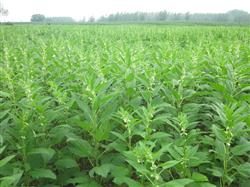
What diseases should be prevented and controlled during the cultivation of white sesame?
What diseases should be prevented when growing white sesame? Please explain that the following diseases should be prevented when growing white sesame: 1. Characteristics of major disease occurrence. The main sesame diseases include sesame stem spot blight, sesame Fusarium wilt, sesame bacterial wilt, sesame Phytophthora blight, etc. 1. Sesame stem spot blight. Sesame stem spot blight is also called sesame stem blight, sesame black root madness, etc.
-
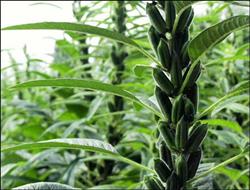
What should be paid attention to when planting black sesame?
What should be paid attention to when planting black sesame? Please give guidance. When planting black sesame, pay attention to the following points: 1. Land preparation and fertilization: choose sandy loam or loam fields with loose soil, good air permeability, and medium-to-above-average fertility, and avoid continuous cropping. Prepare the land and fertilize at the end of May and early June, applying 10-15 kg of urea or 20-2... per mu.
-
What are the precautions for planting sesame in summer?
What problems should be noted when planting sesame in summer? Please give an introduction because during the summer sesame sowing period, temperatures are high and the weather is changeable. If drought occurs, the seedlings are easily "scorched to death," causing gaps in the stand; if heavy rain occurs, they are easily "smothered to death," also causing gaps in the stand. Therefore, mechanized sowing is recommended, sowing 0.7 kg per 667 sq m, using 2...
-
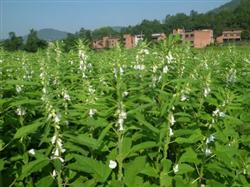
A Detailed Guide to Topdressing Methods and Technical Key Points for Summer Sesame
How should summer sesame be topdressed? Please explain the method. The topdressing method for summer sesame can refer to the following: The flowering and capsule-setting stage is the period of most vigorous growth for sesame and also the peak period of fertilizer demand, when about 70% of the total nutrient uptake occurs, so additional flower fertilizer must be applied. Practice has proven that topdressing with flower fertilizer can increase yield by more than 30%. The topdressing method is soil application of...
-
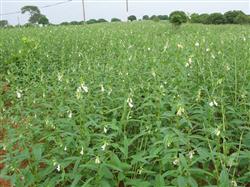
How should summer sesame be fertilized? Master the correct fertilization method
How should summer sesame be fertilized? Please provide guidance. For high-yield cultivation of summer sesame, fertilization should involve heavy and shallow application of base fertilizer, a moderate amount of seed fertilizer, heavy application of flower bud fertilizer, and supplemental spraying of phosphorus and potassium fertilizers; organic fertilizer should be the main type, combined with phosphorus and potassium fertilizers, and the amount of chemical fertilizer should be minimized as much as possible to improve sesame quality. For every 100 kg produced...
-
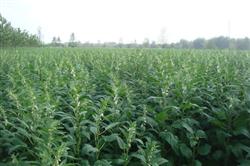
What to pay attention to when planting black sesame
What should be noted when planting black sesame? Please give guidance. When planting black sesame, pay attention to the following issues: 1. Land preparation and fertilization: choose sandy loam or loam fields with loose soil, good air permeability, and medium-to-above-average fertility, and avoid continuous cropping. At the end of May and beginning of June, prepare the land and apply fertilizer, applying 10-15 kg of urea or 20-25 kg of ammonium bicarbonate per mu...
-
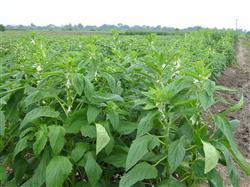
What are the key technical points for summer management of black sesame?
How should black sesame be managed in summer? Please give guidance. The summer management methods for black sesame can refer to the following: First, thinning and final thinning of seedlings, checking seedlings and filling gaps. Because sesame seeds are small and many seedlings emerge, after emergence, when the first pair of true leaves grows, the seedlings should be thinned; when 2-3 pairs of true leaves grow, the seedlings should be thinned again; at 4 pairs of true leaves, the seedlings should be finally thinned. Black sesame generally leaves about 8,000 plants per mu; if seedling gaps or broken rows occur due to poor soil moisture at sowing, transplanting dense seedlings to fill sparse areas or replanting after sprouting can be used to ensure full and strong seedlings.
条件筛选