-

New sesame variety Zhongzhi 12: high yield, disease-resistant and high quality
Zhongzhi 12 was developed by the Oil Crops Research Institute of the Chinese Academy of Agricultural Sciences through crossing the introduced foreign sesame variety "CLSU-9" as the female parent with "Yiyangbai" as the male parent, followed by multiple generations of directional selection, and was approved by the Hubei Provincial Crop Variety Approval Committee in 2003. Characteristics: This variety is of the single-stem type, with three flowers per leaf axil and four-angled capsules. The plant is relatively tall, generally about 160 cm in height, and can reach more than 2 m at its tallest. The leaves are green, relatively large, with longer petioles, and the stem is greenish-yellow at maturity
-
The new sesame variety Jinzhi No. 1 has the characteristics of high yield and high resistance
Jinzhi No. 1 is a new sesame variety selected and bred through years of research by the Wheat Research Institute of the Shanxi Academy of Agricultural Sciences. It passed provincial variety approval in 1994 and was recognized as an achievement by the Provincial Science and Technology Commission in 1998. (1) Characteristics: single stem, square stem, strong growth, dark green leaves, plant height 170 cm, three capsules per leaf, low position of the first capsule, dense capsules, 80 seeds per capsule, 1000-grain weight 3.1 g, white seed coat, excellent quality, oil content 56.2%, meeting export standards. Growth period 100 days for spring sowing, 85-90 days for summer sowing, belonging to the medium-early maturing variety
-
How to prevent and control sesame diseases in hot and humid weather
Recently, some farmers have reported that some sesame plants show leaves curling upward and wilting, some report that sesame leaves wilt rapidly from the top downward, and others report that sesame leaves wither from the bottom upward. What diseases are these exactly? The farmers cannot figure it out either, and they are all asking agricultural technicians for technical guidance, telling them how to prevent and control these diseases. From the current climate factors, high temperatures accompanied by humidity easily trigger sesame diseases, especially in sesame fields with poor drainage, low-lying terrain, or continuous cropping, which are more susceptible to disease. From the sesame symptoms reported by farmers in various places
-
Autumn and winter nourishment is not the same as fish and meat medicinal diets
Autumn and winter nourishment ≠ fish and meat medicinal diets! Chinese people have had the custom of nourishing the body in autumn and winter since ancient times. With social development and rising living standards, autumn and winter nourishment is no longer simply equated with ginseng plus astragalus, and the way of nourishing should change. A balanced diet is the foundation. We all know that protein, carbohydrates, fat, vitamins and minerals are all nutrients the human body needs. However, many people's daily diets are very unbalanced, with unreasonable combinations of meat and vegetables, too little grains and coarse grains, and too much meat. Combined with a lack of exercise, this has led to steadily rising incidence rates of high blood pressure, diabetes and obesity.
-
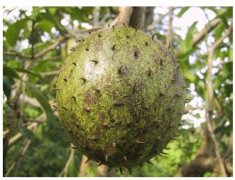
Is soursop the same as sugar apple? One article explains what soursop fruit actually is
What kind of fruit is soursop, and what does it look like? Want to know? Let's take a look together. Soursop is a relatively rare tropical fruit in Taiwan, China; botanically it is very closely related to the sugar apple, as both are fruit trees of the genus Annona. The fruit is long and conical in shape, with a surface
-
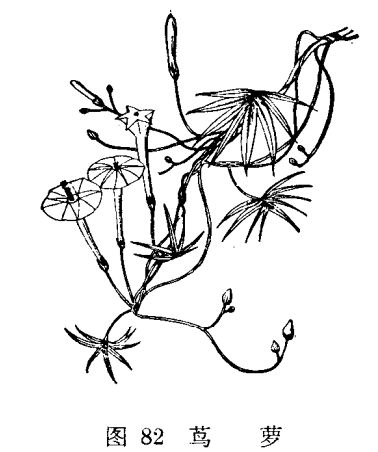
What are the two flowers in the same genus as cypress vine?
1. Cypress vine (Q. coccinea Moench), also known as orange-red cypress vine. Annual twining herb, up to 4 m long. Leaves alternate, ovate, entire, apex acute or acuminate, base cordate, petiole as long as the blade. Cymes axillary, with 3-6 flowers. Corolla salverform
-
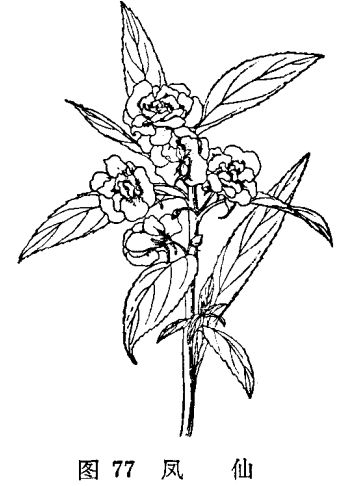
What are the three species of flowers in the same genus as Impatiens?
1. Impatiens balfourii Hook. (Balfour's impatiens): A perennial herb, 90 cm tall, much branched. Leaf margins have fine curved teeth, petioles lack glands. Flowers large, 6-8 clustered into racemes. Capsules erect, 2.5-4 cm long, smooth. Native to the western Himalayan region.
-

-
-
条件筛选