Is soursop the same as sugar apple? One article explains what soursop fruit actually is
What kind of fruit is soursop, and what does it look like? Want to know? Let's take a look together.
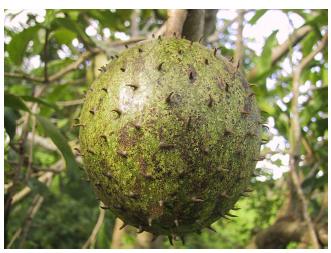
Soursop is a relatively rare tropical fruit in Taiwan, China. Botanically it is very closely related to the sugar apple, as both are fruit trees of the genus Annona. The fruit is long and conical in shape, and its skin is covered with soft spines, making it hard to associate with the image of the sugar apple. Soursop is also one of the main economically important fruit trees among the Annona genus, with great value for cultivation and utilization. In order to increase farmers' understanding of soursop trees and to help them learn about the diverse uses of its fruit, the Taitung District Agricultural Research and Extension Station of the Council of Agriculture, Executive Yuan (hereafter referred to as the Taitung Station) held the "Emerging Fruit Tree with Processing Potential - Soursop Observation Meeting" on December 5 of this year (the 107th year of the Republic of China) at its Banjiu Branch Station. The event attracted a total of 82 farmers and guests.
Chen Hsin-yen, the Station Director of the Taitung Station, pointed out that the Taitung area is the stronghold of Annona fruit trees, but currently only two species are grown on an economic scale: the sugar apple and the pineapple sugar apple (atemoya), and both have a rather sweet flavor, are mainly eaten fresh, and lack diversity of use. Soursop fruit, however, has lower sweetness and a more sour flavor, and is rich in a strong tropical fruit aroma. Besides being eaten fresh, it is very suitable for processing into products such as dried fruit, juice or ice cream, and has a certain market potential, positioned in the market. If it can join the family of Annona fruit trees in Taitung, it should further highlight local characteristics and also help boost the overall development of the industry.
At the observation meeting, Assistant Researcher Chen Hsiao-chun of the Taitung Station introduced the growth habits, plant characteristics and processing suitability of the soursop tree. Soursop originates from tropical America and prefers high temperatures, and Taitung's climate is also very suitable for its cultivation and growth. The tree has an upright appearance, and the tree height can reach more than 5-9 meters. The leaves are long and oval, with a faint aroma. After seedlings are planted, they can bloom in about 3-5 years. The flowers are the largest among Annona fruit trees, shaped like an inverted triangular cone, and have the characteristic of opening year-round. In addition to branches, flowers can also be produced directly on the trunk. The fruit season has two periods, winter and summer. The weight of a single fruit ranges from 1-3 kg, and the flesh is white in color. The soluble solids content ranges from 10-15 oBrix (the sugar apple is about 20-25 oBrix). Compared with the sugar apple and the pineapple sugar apple, soursop has a great advantage in processing, because after high-temperature treatment the flesh does not develop a bitter taste and can retain its original aroma and flavor, so the range of products that can be made from it is quite broad.
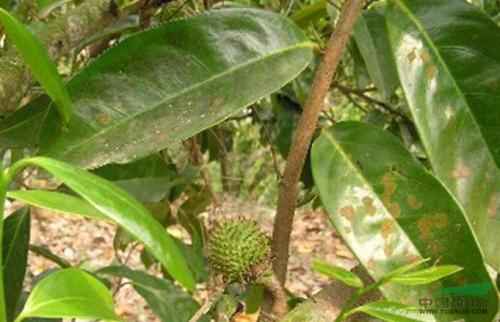
The threshold for cultivating soursop is not high. Because of its strong drought tolerance, it can generally be planted in orchards with good drainage. However, to achieve economic cultivation, there are still many problems to overcome. For example, soursop is not tolerant of strong winds or low temperatures, so summer typhoons and winter cold spells are both limiting environmental factors. In addition, the flowers themselves have the characteristic of protogyny (the female part maturing first), so the natural fruit-setting rate is rather low, and after fruit set there may be a period of stalled development, making it hard to predict the fruit's growth period and the right time for harvest. The Taitung Station therefore calls on farmers to wait until cultivation techniques are well established and downstream sales channels are in place before gradually increasing the cultivation area.
The final part of this observation meeting was a field visit and a tasting of the flesh and processed products. Farmers also entered the orchard to observe the plant form and growth conditions of soursop up close, and tasted the special flavor of soursop, which is a bit like pineapple and a bit like passion fruit. The on-site discussion was very lively, and the researchers also gave detailed answers to all the questions raised. The Taitung Station hopes that through this observation meeting, farmers can gain a more comprehensive understanding of soursop and become interested in cultivating it, and also looks forward to soursop emerging in the near future to open another door for the Annona fruit tree industry in the Taitung area.