What are the three species of flowers in the same genus as Impatiens?
1. Impatiens balfourii Hook. (Balfour's impatiens): A perennial herb, 90 cm tall, much branched. Leaf margins have fine curved teeth, petioles lack glands. Flowers large, 6-8 clustered into racemes. Capsules erect, 2.5-4 cm long, smooth. Native to the western Himalayan region.
2. Impatiens holstii Engler & Warb. (Holst's impatiens): A perennial herb, 60 cm tall. Leaves alternate, nearly ovate; upper leaves whorled, ovate-lanceolate. Flowers large, 4.5 cm in diameter, brick red, solitary or in pairs. Native to tropical East Africa. Grown as a greenhouse potted plant. Has dwarf varieties.
3. Impatiens sultanii Hook. f. (Sultan's impatiens): Similar to the previous species, but leaves narrower, flowers smaller, 2.5-3.5 cm in diameter, bright red, with purple, peach-pink and white varieties; grows more slowly than the previous species. Native to Tanzania. Grown as a greenhouse potted plant.
What varieties of Impatiens are there, and how are Impatiens varieties classified?
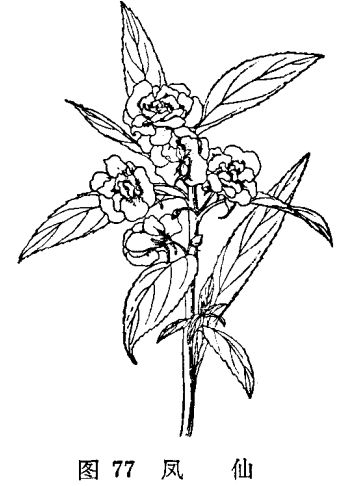
Impatiens is deeply loved by people because of its bright flower colors and ease of care. The sap of Impatiens can be used to dye fingernails, and many girls like to grow it at home. As an ornamental flower, Impatiens not only has beautiful flower shapes but also comes in many varieties, so people can cultivate them according to the different growth characteristics of each variety. So, what varieties of Impatiens are there? Today let's learn about the classification of Impatiens varieties.
1. Top-headed Impatiens, also known as "block-headed Impatiens." It is a variety of Impatiens. Flowers are borne terminally on the main stem or at the tips of branches. Flowers large, double. Branches spread outward, forming a clump.
2. Dwarf Impatiens is a variety of Impatiens. The plant is relatively short, 20-30 cm tall.
3. Dragon-claw Impatiens is a variety of Impatiens. Side branches are winding and extend horizontally.
4. Impatiens holstii, also known as "glass emerald." It is a common species in the same genus. A perennial herbaceous plant, mostly grown as an annual or biennial. Plant height 20-30 cm. Stems semi-transparent, fleshy, stout, much branched. Leaves ovate-lanceolate, leaf tips pointed, leaf margins with obvious serrations. Flowers solitary at branch tips or upper leaf axils. Flowers numerous, with obvious serrations; flowers change from white to peach-pink, rose-red, and even deep red, and there are also pale purple, orange-red and other color varieties, with very bright and beautiful colors. The flowering period is very long, reaching 45-60 days. It prefers moist soil and partially shaded environments, and is averse to low temperatures as well as harsh sun exposure, and is not tolerant of high temperatures. Suitable for greenhouse cultivation. It is currently the most commonly potted and most ornamental of the Impatiens.
5. New Guinea Impatiens is a common species in the same genus. A perennial herbaceous plant. Stems fleshy, stout, with many spreading branches, stems dark red. Upper leaves whorled, lower leaves opposite, leaves ovate-lanceolate, dark green or copper-green, midrib obvious, midrib and petiole red. Flowers deep red, with many varieties, including white, peach-pink, rose-red, orange-red, and deep red. Not tolerant of high temperatures, and averse to harsh sun exposure. It has attracted attention and is gradually being used in green spaces and as potted plants.
That is a brief summary of what varieties of Impatiens there are and how Impatiens varieties are classified. Different varieties of Impatiens have different growth characteristics, but they all like loose, fertile, deep, well-drained soil. Impatiens is averse to waterlogging, prolonged dampness and poor ventilation. In late spring and early summer, when temperatures rise sharply and there is no rain for a long time, pay attention to reasonable arrangements for drainage and watering, and water appropriately in the morning.
Is Impatiens toxic? The effects and benefits of Impatiens
Impatiens mainly comes from China and India. Its flower shape resembles a butterfly, and its colors are diverse and highly variable, so we can often see flowers of different colors on a single plant. So, is Impatiens toxic, and what are the effects and benefits of Impatiens?
Is Impatiens toxic?
It is mildly toxic. If the sap touches the skin, it may cause allergic reactions such as itching and redness and swelling. Do not handle it excessively.
The effects and benefits of Impatiens
(1) Functions and indications
Dispels wind, invigorates blood, reduces swelling, and relieves pain. Treats rheumatic hemiplegia, pain in the waist and hypochondrium, abdominal pain from amenorrhea in women, postpartum retention of stagnant blood, traumatic injuries, carbuncles and cellulitis, furuncles, eczema of the palms, and onychomycosis.
"Dian Nan Ben Cao": "Treats purulent ear discharge in children."
"Gang Mu": "Invigorates blood and reduces accumulations. Treats snake bites and dragging pain in the waist and hypochondrium."
"Ben Cao Qiu Yuan": "Treats hemiplegia."
"Tian Bao Ben Cao": "Treats incessant nosebleeds."
"Common Tibetan Herbal Medicines": "Unblocks menstruation and invigorates blood, promotes urination. Treats abdominal pain from amenorrhea, postpartum retention of stagnant blood, retained dead fetus, difficult urination, and furunculosis and carbuncles."
Invigorating blood and unblocking menstruation: This herb is sweet in taste, slightly bitter, warm in nature, and enters the liver meridian. Being sweet and warm, it promotes free flow and harmonizes qi and blood to generate the new; its bitterness can drain downward and guide downward to unblock the meridians. It is often used to treat conditions such as abdominal pain from amenorrhea in women and postpartum retention of stagnant blood. "Ben Cao Hui Yan" records that Impatiens is: "a medicine for invigorating blood qi and benefiting the sinews and meridians." Therefore, it can treat blood-stasis amenorrhea caused by emotional stress or changes in living environment leading to liver qi stagnation, failure of the Chong and Ren vessels' qi and blood to flow freely, resulting in menstruation that has not come for several months, with distending pain in the lower abdomen that may be tender to pressure, chest oppression and hypochondriac pain, irritability, and a purple-dark tongue with static spots. It can also treat blood-stasis postpartum abdominal pain caused by postpartum retention of stagnant blood and impaired uterine contraction, presenting with lower abdominal pain that is tender to pressure, with a palpable mass at the painful site, scanty and unsmooth lochia that is dark and clotted, and a dark red tongue with a purple tongue edge, among other signs of incomplete discharge of postpartum stagnant blood. This abdominal pain is all caused by static blood; when the meridians are not unblocked, there is pain. This herb invigorates blood and removes stasis, warms and unblocks the meridians; once the static blood is removed, the pain stops on its own, and it has the effect of invigorating blood without harming healthy qi. For patterns of static blood in women, it can all be applied.
Dispelling wind and relieving pain: This herb has the effect of dispelling wind pathogens and relieving pain and reducing swelling. "Ben Cao Gang Mu" records that Impatiens: "invigorates blood and reduces accumulations. Treats snake bites and dragging pain in the waist and ribs." "Ben Cao Qiu Yuan" records that Impatiens "treats hemiplegia." It mainly treats hemiplegia and numbness and loss of sensation caused by insufficient healthy qi, emptiness of the meridians and collaterals, invasion by wind pathogens, which stir up phlegm-dampness and run through the meridians, causing stagnation and blockage of qi and blood, or by deficiency of qi and blood failing to circulate and leading to static blood obstructing the collaterals; or caused by traumatic injuries, liver and hypochondriac pain, and static blood swelling, etc. The liver is the organ that stores blood, and its meridian runs along both hypochondria; blood-stasis disorders are often treated from the liver. This herb enters the liver, so it can invigorate blood and unblock menstruation, as well as dispel wind, relieve pain and reduce swelling. Therefore, for hemiplegia caused by static blood, or static blood edema and chest and hypochondriac pain from traumatic injuries, it can cause the blood to disperse, the swelling to subside, and the meridians to become unobstructed, so the illness can be cured.
(2) Pharmacological effects
Effect on fungi: Experiments have shown that the fresh flower juice of Impatiens has an inhibitory effect on Trichophyton rubrum, Trichophyton violaceum, Epidermophyton inguinale, and Epidermophyton floccosum.
Antibacterial effect: The decoction of this herb also has varying degrees of inhibitory effect on Staphylococcus aureus, hemolytic Streptococcus, Pseudomonas aeruginosa, Salmonella typhi and Shigella.
Others: Making modern use of this herb's inhibitory effect on fungi, it is often applied externally to treat eczema of the palms and onychomycosis. Fresh use gives the best effect.
Differential application: Impatiens flower and Impatiens seed both belong to the same plant, Impatiens balsamina of the Balsaminaceae family; one is the flower and one is the seed, but their effects differ. Impatiens flower mainly invigorates blood, unblocks menstruation and relieves pain, treating blood-stasis patterns, whereas Impatiens seed breaks blood, softens hardness and reduces accumulations, mainly treating masses, dysphagia, and hard external swellings, etc., with a difference between drastic and mild action. Moreover, Impatiens flower is non-toxic, while Impatiens seed is toxic. In clinical practice, they should be carefully distinguished.
(3) Other effects:
Dyeing fingernails
In ancient Chaoshan and among people throughout the country, the custom of dyeing fingernails with Impatiens was popular. On summer nights, girls would pull up whole Impatiens plants, wash them, add a little alum, and pound them together into a paste. Before sleeping, they applied it to their fingernails, wrapped them with hemp leaves, and tied them tightly with string; after a night, the fingernails were dyed red.
Today, manicures are still very fashionable, and there are many professional nail salons in both urban and rural areas, but they all use chemical dyes, and the cost is very high. Growing henna to dye nails is pollution-free, costs nothing, and is environmentally friendly; it is still the first choice of rural girls today.
Ornamental value
Native to China and India. Widely cultivated in gardens throughout China, it is a common ornamental flower. The flower shape of Impatiens is ingenious, with a head, a tail, wings and feet, vivid and lifelike, just like a flying phoenix. Impatiens has no rich fragrance, yet stands proudly on the branches with its enchanting appearance.
Beautifying the home
Impatiens can keep indoor air humidity at an excellent level, and its bright colors also add a lot of spring atmosphere to the home. At the same time, the beautiful Impatiens has great ornamental value. In a small house it makes the scene seem infinitely springlike, as if living in an ocean of fresh flowers, while when arranged in a large house, it can create an elegant home style.