-

How to manage edible fungi during the mycelium-running stage? Five points to remember
Five points to note during the mycelium-running stage of edible fungi
-
Key Technical Management Points for the Spawn-Running Period of Autumn-Cultivated Oyster Mushrooms
The period from spawning to the appearance of fruiting bodies is called the spawn-running period. The level of technical management during this period determines whether the oyster mushroom mycelium can grow and develop normally in the substrate, and is the key period for achieving high-quality, high-yield oyster mushrooms in the future. Therefore, strengthening management during the spawn-running period of oyster mushrooms is crucial. In my investigations, I have found that many oyster mushroom producers believe oyster mushrooms are easy to grow and manage extensively. After spawning, they often neglect scientific management during the spawn-running period and become careless, which leads to reduced yields and poor harvests of oyster mushrooms, and in severe cases, complete crop failure.
-
High-Quality, High-Yield Techniques for Bag-Cultivated Oyster Mushrooms: Micro-Pore Spawn Running and Seepage Irrigation for Fruiting
During the spawn-running stage of bag-cultivated oyster mushrooms, problems commonly arise such as inconsistent mycelial growth rates within the bags, an excessively long spawn-running period, a high contamination rate, the mushroom wall being somewhat too tall and prone to toppling during the fruiting stage, and severe water loss from the bags after the second flush making rehydration difficult, all of which seriously affect yield and quality. In recent years, new techniques of micro-pore spawn running and seepage irrigation for fruiting in oyster mushroom cultivation have been successfully developed in production, effectively solving the above problems. Micro-pore spawn running. The selection of the substrate, ingredient mixing, blending and fermentation are the same as conventional methods; the difference is that before bagging, a sewing machine is used to prick three rows of needle holes on the top of the substrate cylinder, serving as micro-pore channels to supply air during the mycelial growth period.
-
Key Technical Points for Temperature Management During the Spawn-Running Stage of Oyster Mushrooms
When oyster mushroom mycelium grows thick and vigorous, the spawn-running success rate is high; especially in the sterilized-substrate cultivation process, the mycelium has a lower chance of being infected by contaminant microorganisms than other varieties. However, in the raw-material cultivation process, its temperature requirements during the mycelial growth stage are very strict. Therefore, correctly mastering the suitable spawn-running temperature is the key to ensuring the success of raw-material cultivation of oyster mushrooms. Oyster mushroom mycelium grows vigorously at 20°C-30°C and has strong resistance to contaminant microorganisms; even if occasional contamination occurs, the oyster mushroom mycelium can penetrate and consume it, and the spawn runs quickly, with the mycelium
-
Key Technical Points for Stacking and Mycelium Running in Log Cultivation of Shiitake Mushrooms
After inoculation, to enable the mycelium to rapidly colonize and spread into the cambium, the mushroom logs must be stacked. Commonly used stacking patterns include the "well" shape, "roof ridge" shape, and "fish scale" shape. In relatively damp locations, the "well" shape and "roof ridge" shape are usually adopted, with a stack height of 1.5-1.6 m, stones placed at the base, about 20 cm from the ground, and branches, leaves, straw curtains, etc. used as cover on top. Spray water once every 1-2 days, and turn the stack once a week, swapping the positions of the logs. At this stage, the main focus is maintaining the temperature within the stack to promote mycelium colonization
-
Key Technical Points for Mycelium Running Management of Greenhouse Field-Grown Shiitake Mushrooms
After inoculation, stack the spawn bags in the incubation room for mycelium running. When the mycelium has grown to 6 cm wide, turn the stack; at 6-8 cm, turn the stack a second time. Arrange them in a triangular pattern to prevent overheating of the logs. 1. Piercing holes for aeration: If the mycelium around the edges is found to be shrinking, with the color changing from white to pale yellow and the mycelial coat thickening, this indicates that the mushroom logs are short of oxygen, and the first hole-piercing for aeration must be carried out. Make 3-4 holes around the inoculation point, 1.5-2.0 cm deep, to promote normal mycelial germination. After the mycelium has fully covered the entire bag, carry out a second hole-piercing for aeration, on both sides
-
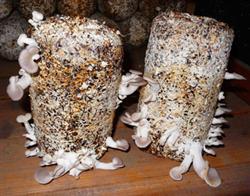
Pleurotus pulmonarius cultivation techniques: how to manage the spawn-running stage?
How do you manage the spawn-running stage when cultivating Pleurotus pulmonarius? Please provide guidance. To manage the spawn-running stage of Pleurotus pulmonarius cultivation, you can refer to the following methods: spawn running should be carried out in a cool, ventilated, and hygienic site, avoiding direct sunlight and keeping it away from rooms housing chickens and ducks; the spawn-running site should also be disinfected harmlessly beforehand. The spawn-running stage focuses on...
-
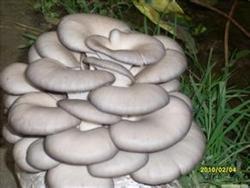
What are the common problems during the mycelium running stage of oyster mushrooms? Solutions included
In oyster mushroom cultivation, pests and diseases are stumbling blocks. Recognizing and controlling them promptly is of great significance for normal production. Once pests and diseases are found, failure to take timely measures will seriously affect oyster mushroom yields and sometimes cause total crop failure. Therefore, one should choose excellent and highly resistant spawn strains, strengthen scientific management, and create conditions favorable for mushroom mycelium...
-
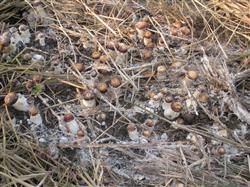
What are the temperature and humidity requirements for Wine Cap mushroom (Stropharia rugosoannulata) during the mycelium running stage?
What are the temperature and humidity requirements for Wine Cap mushroom (Stropharia rugosoannulata) during the mycelium running stage? Please explain. Regulating temperature and humidity is an important part of cultivation management for Wine Cap mushroom. During the mycelium growth stage, Wine Cap mushroom requires a pile temperature of 22 to 28°C, a moisture content of 70% to 75% in the growing medium, and a relative humidity of 85% to 90% in the air...
条件筛选