What are the common problems during the mycelium running stage of oyster mushrooms? Solutions included
In oyster mushroom cultivation, pests and diseases are stumbling blocks. Recognizing and controlling them promptly is of great significance for normal production. Once pests and diseases are found, failure to take timely measures will seriously affect oyster mushroom yields and sometimes cause total crop failure. Therefore, one should choose excellent and highly resistant spawn strains, strengthen scientific management, and create conditions favorable for mushroom mycelium...
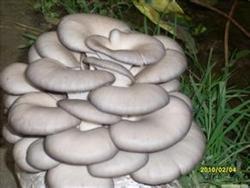 Through visits to demonstration households and mushroom growers, the following experiences were summarized.
I. Mycelium does not germinate and does not colonize the substrate. Causes: the substrate has deteriorated and bred large amounts of contaminating microorganisms; the moisture content of the growing substrate is too high or too low; the spawn is aged and has weak vitality; the ambient temperature is too high or too low, lime was added in excess, and the pH value is too high.
Solutions: use fresh, mold-free raw materials; use spawn of the proper age (spawn age 30-35 days); control the moisture content appropriately, so that when the substrate is squeezed tightly in the hand, water droplets appear between the fingers but do not drip down; during the mycelium running period, keep the shed temperature at around 20°C and the substrate temperature at around 25°C, preferably slightly lower rather than too high, and strictly prevent the mycelium from being killed by heat; add lime to the growing substrate in an appropriate amount, especially when the air temperature is low, the added amount should not exceed 1%, and a pH of 7-8 is suitable.
II. The growing substrate becomes sour and foul-smelling. Causes: during the mycelium running period, high temperatures occur and heat is not dissipated and cooled in time, so bacteria multiply massively, the substrate ferments and turns sour, and rots and smells foul; there is too much water in the substrate and not enough air, and anaerobic fermentation causes the substrate to rot and stink.
Solutions: pour out the substrate, spread it out to air-dry, then add an appropriate amount of new material and continue fermentation, and bag and inoculate again; if the substrate has already rotted and turned black, it can only be discarded as fertilizer.
III. Mycelium shrinks. Causes: the bags are stacked too high, and during fermentation the stacks are not turned in time to dissipate heat, so the substrate temperature rises above 35°C and burns the mycelium; the bags are large and hold a lot of substrate, the temperature is too high and ventilation is poor; the substrate is too wet and packed too firmly, so air permeability is poor, and mycelium shrinkage also occurs when the mycelium lacks oxygen.
Solutions: improve the environment of the mycelium running site and pay attention to ventilation and cooling; when running mycelium in stacked bags, if the air temperature is high, stack them 2-4 layers in a crisscross "well" pattern to facilitate heat dissipation; turn the stacks in time to dissipate heat during the fermentation heat release period; master the substrate-to-water ratio well when mixing, and make the bagging neither too loose nor too tight; the width of the film tube used for bagging should preferably not exceed 25 cm, to avoid too much substrate and excessively high fermentation heat.
IV. The bag walls are covered with a tofu-dregs-like layer of yeast. Causes: the growing substrate has a high moisture content and poor air permeability, which triggers massive breeding of yeast that accumulates heavily on the bag film, and a fermented sour odor appears in the substrate.
Solutions: use a sharpened round wooden stick 1 cm in diameter to poke 2-3 holes from both ends of the bag toward the middle, 5-8 cm deep, to ventilate and replenish oxygen; before long, the yeast layer attached to the inner wall of the bag will gradually disappear on its own, and the oyster mushroom mycelium will continue to grow.
V. Mold contamination. Causes: the growing substrate or the spawn itself carries mold; the hygiene conditions of the mycelium running site are poor, or an old mushroom house has not been thoroughly disinfected; the mushroom shed is hot and humid with no ventilation.
Solutions: choose fresh, mold-free growing substrate that has been sun-exposed, and ferment it thoroughly; avoid sowing during high-temperature periods, strengthen ventilation, and prevent damp, stuffy heat; choose high-quality, mold-resistant spawn that colonizes the substrate quickly; if mold contamination is discovered early and the area is small, inject lime water with pH=10 or above into the contaminated growing substrate, and at the same time move it away from the mycelium running site and manage it separately for mycelium running. For severe contamination, remove it from the site and bury it deeply in a pit.
VI. In the late mycelium running stage, colonization is slow and the bag is slow to fill. Causes: the two ends of the bag are tied too tightly, and there is insufficient air inside the bag, causing oxygen deficiency.
Solutions: loosen the string at the tied ends of the bags or prick holes for ventilation.
VII. Soft bags. Generally, mycelium grows on the surface of the bagged substrate, but there is little mycelium inside the bag, and it is sparse and not dense, so the bag is soft and lacks elasticity. Causes: the spawn has degenerated or aged, and its vitality is weakened; high temperatures have damaged the spawn; too much nitrogen was added, and bacteria in the substrate multiply massively, inhibiting mycelial growth; the growing substrate has a high moisture content and insufficient oxygen, affecting mycelial growth into the substrate.
Solutions: use robust, high-quality spawn; inoculate at a suitable temperature to prevent high-temperature damage to the spawn; add an appropriate amount of nitrogen nutrition to the growing substrate, and never too much; when soft bags occur, lower the mycelium running temperature, prick holes in the bag walls to release moisture and let air through, and appropriately extend the mycelium running time so that the mycelium grows fully and thoroughly into the substrate.
VIII. Mushrooms emerge before the mycelium has filled the bag. Causes: the light at the mycelium running site is too strong, and low temperatures or too large a day-night temperature difference stimulate mushroom emergence.
Solutions: pay attention to avoiding light and keeping warm at night, raise the mycelium running temperature, and improve the mycelium running environment.