-

A Detailed Guide to the Latest Management Methods for Chinese Cabbage at the Rosette Stage
The rosette stage of Chinese cabbage mainly refers to the period from the growth of its true leaves to the start of head formation. The rosette stage is the most important of all the growth stages of Chinese cabbage, and the growth during this stage is closely related to its yield, generally lasting about 3-4 weeks. Therefore, the
-
How to prevent and control wheat rosette dwarf disease? Growers should take preventive measures in advance
Symptoms and characteristics of rosette dwarf disease: infected plants have yellow-green alternating stripes on the upper leaves, increased tillering, stunted and dwarfed plants in a rosette-dwarf form, and generally cannot joint or head. Plants infected in early spring show symptoms successively during the green-up stage and jointing stage, with stripes on the heart leaf and a relatively darker green leaf color
-
Comprehensive Management Techniques for Chinese Cabbage at the Rosette Stage
Chinese cabbage, a biennial herb, 40-60 cm tall, usually hairless throughout the plant, sometimes with a few bristles on the midrib of the lower leaf surface. Native to northern China, it is a leafy vegetable of the genus Brassica in the family Brassicaceae, usually referring to napa cabbage; it also includes bok choy and the headed cabbage (Brassica oleracea var. capitata) derived from cultivated varieties of cabbage, namely "round cabbage" or "foreign cabbage." Introduced to the south, it is cultivated throughout both northern and southern regions. It was introduced to Japan, Europe and the United States in the 19th century. There are many types of Chinese cabbage; northern napa cabbage varieties include Shandong Jiaozhou napa cabbage, Beijing green-white, Tianjin hemp-leaf napa cabbage, Northeast large dwarf cabbage, Yutian napa cabbage, Shanxi Yangcheng large hairy-edge, and others. Chinese cabbage is eaten for its tender leaf heads, rosette leaves or flower stalks. Its cultivation area and consumption rank first among all vegetables in China. <p>Chinese cabbage, a biennial herb, 40-60 cm tall, usually hairless throughout the plant, sometimes with a few bristles on the midrib of the lower leaf surface. Native to northern China, it is a leafy vegetable of the genus Brassica in the family Brassicaceae, usually referring to napa cabbage; it also includes bok choy and the headed cabbage (Brassica oleracea var. capitata) derived from cultivated varieties of cabbage, namely "round cabbage" or "foreign cabbage". Introduced to the south, it is cultivated throughout both northern and southern regions. It was introduced to Japan, Europe and the United States in the 19th century. There are many types of Chinese cabbage; northern napa cabbage varieties include Shandong Jiaozhou napa cabbage, Beijing green-white, Tianjin hemp-leaf napa cabbage, Northeast large dwarf cabbage, Yutian napa cabbage, Shanxi Yangcheng large hairy-edge, and others. Chinese cabbage is eaten for its tender leaf heads, rosette leaves or flower stalks. Its cultivation area and consumption rank first among all vegetables in China.</p><p></p><p>Cultivation seasons for Chinese cabbage</p><p>Early-maturing varieties are generally sown in early to mid-August, with some sown as early as late July. Mid-maturing varieties can be sown from late August to early September. Late-maturing varieties are best sown in late August.</p><p>Management of Chinese cabbage at the rosette stage is very important for its production and must be taken seriously, so how should comprehensive management be carried out at the rosette stage?</p><p>The rosette stage is a critical period for napa cabbage growth; at this time growth is rapid and both roots and leaves grow vigorously, but it is also a critical period for disease occurrence. In management, it is necessary to promote rapid leaf growth to form the largest possible leaf assimilation area as quickly as possible, promote rapid root development, control excessive late-stage leaf growth, and prevent disease occurrence.</p><p>Fertilizer and water management. During the rosette stage of napa cabbage, growth speed and growth amount are both very rapid, and fertilizer demand increases. At the early rosette stage, a “plant-development” fertilizer should be applied as a top dressing, with 8-10 kg of urea per mu, by opening a 10 cm furrow on one side of the ridge, applying the fertilizer, closing the furrow and watering; when opening the furrow, take care to damage the roots as little as possible. The heading stage has a high water demand, so full irrigation should be combined with top dressing, generally once every 7 days, keeping the ground constantly moist. Stop watering 10 days before harvest, generally once every 7 days, keeping the ground constantly moist. Stop watering 10 days before harvest.</p><p>Seedling hardening to promote roots. During the period from the mid-rosette stage to the heading stage, napa cabbage is subjected to controlled watering for seedling hardening, controlling excessive growth, thickening the leaves, promoting root development, helping nutrient accumulation, reducing field humidity, and controlling the occurrence and development of diseases. The seedling hardening period varies from 10-20 days, with leaf color changing from green to yellow or slight wilting at noon. In the following situations, reduce seedling hardening: varieties with a short growth period and rapid growth, those sown too late, those transplanted as large seedlings, those with poor seedling condition, dry areas with little rain and higher temperatures, and sandy land short of water and fertilizer.</p><p>Pest and disease control. The main diseases of napa cabbage at the rosette stage are downy mildew and soft rot. Control methods: first, control humidity to prevent downy mildew and soft rot. Second, when disease is found, apply pesticide at the right time to control disease development.</p>
-
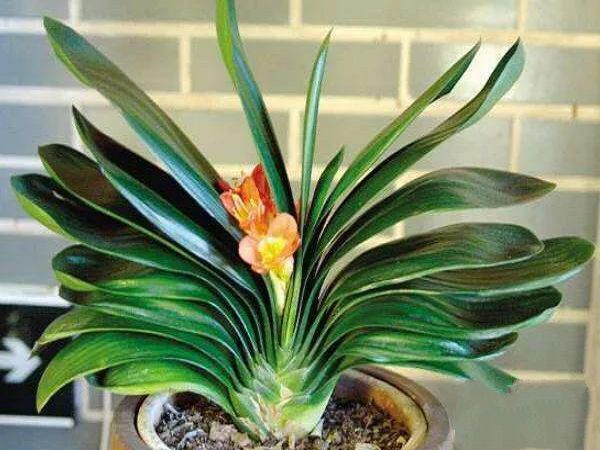
What to do when a clivia's flower bud emerges from the center of the leaf rosette
What to do when a clivia's flower bud emerges from the center of the leaf rosette
-

Management methods and technical points for the rosette stage of Chinese cabbage
How should Chinese cabbage be managed during the rosette stage
-
When is the rosette stage of Chinese cabbage? Appearance and management methods
How should Chinese cabbage be managed during the rosette stage
-
Symptom Identification and Control Methods of Wheat Rosette Stunt
I. Disease Development Pattern Wheat rosette stunt is a viral disease spread by the vector Laodelphax striatellus (small brown planthopper). There are two peak periods of virus transmission and infection by the small brown planthopper on wheat: the first peak period is after wheat emergence, and the second peak period is after wheat turns green. As temperatures gradually rise, the overwintering generation of small brown planthoppers begins to feed and move on wheat seedlings, spreading the virus.
-
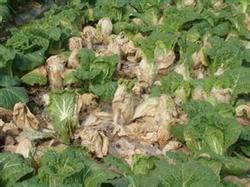
How to manage Chinese cabbage during the rosette stage? These measures need to be mastered
Symptoms: It occurs in all regions and can cause damage both in the field and during storage. The disease usually starts at the base of the leaf stalk and spreads to the entire leaf and then the whole cabbage plant. The diseased part rots, and white cottony mycelium and black sclerotia grow on the surface. On seed-producing plants, the stems are mostly affected; the stalk area is initially light brown and sunken, then turns white, and the cortex decays...
-

Young man grows succulents into a bouquet, one plant bursts out 30 rosettes and the price soars
The fresh flowers in the flower shop are so beautiful, but unfortunately, once you take them home and put them in water, they only last a week. However, Huahua recently discovered succulent bouquets. These varieties of succulents can be grown into natural bouquets. Keep one pot at home and you will never tire of looking at it every day!
-
Black Prince Succulent Plant Introduction: An Ornamental Variety of the Crassulaceae Family
Black Prince is a succulent in the Crassulaceae family, Echeveria genus. Its neat rosette leaf disc and distinctive leaf color give it high ornamental value. Cultivation and propagation are also relatively easy, making it a fine choice for a home potted plant.
条件筛选