Black Prince Succulent Plant Introduction: An Ornamental Variety of the Crassulaceae Family
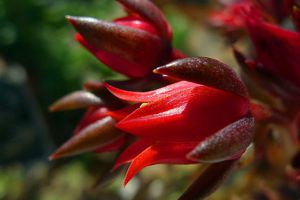
Habits of Black Prince
Black Prince is a succulent in the Crassulaceae family, Echeveria genus, and spring and autumn are its periods of vigorous growth.
Black Prince is a cultivated variety of Echeveria. It likes a warm, dry environment, and its favorite temperature is 18~25°C. It is not cold-tolerant, tolerates partial shade and drought, and during the growing period it should be watered once a week.
Black Prince is a full-sun plant and needs plenty of sunlight, but it dislikes intense light exposure, so at midday in summer it needs appropriate shading. The more sufficient the light and the greater the day-night temperature difference, the darker and glossier the leaf color.
Common propagation methods for Black Prince: seed sowing, cuttings, division.
Black Prince Care Tips
Watering: In summer it needs appropriate shading, watering once a week to keep the potting soil moist. In winter, place the plant in a warm spot with sufficient care, water 1~2 times, and keep the potting soil dry. During care, when the air is dry, do not spray water on the leaves; instead mist around the flowerpot.
Hydroponics: Black Prince can also be grown in water. Remove a section of the top stem and insert it into a sand bed; after white roots grow, it can be hydroponically grown. When growing hydroponically, do not submerge all the roots in water, as this is more beneficial to the growth of Black Prince. During care, add a small amount of nutrient solution in spring and autumn; in other seasons, plain water is sufficient.
Pests and diseases: Common pests and diseases include leaf spot and black weevil. When Black Prince develops leaf spot, brown spots appear on the leaves and they gradually wilt. Once pests or diseases are found, promptly spray with medication to control them.
Propagation Methods of Black Prince
Sowing: Choose seeds that matured in the current year and sow them immediately, controlling the temperature between 16~19°C; they will germinate after 2~3 weeks.
Cuttings: In late spring, cut off mature, plump leaves and insert them directly for cuttings.
Division: If many offsets sprout around the mother plant, division propagation can be carried out in spring.
Suggested planting combinations: Sedum album, Xiaosongbo.
Related Articles
- How to prevent and control pests and diseases on desert rose? Ventilation and dryness are the key to prevention
- The three main causes of cotton diseases: climate, seeds and cultivation
- How to Grow Bird's Nest Fern in Water? Master Temperature, Light, and Water Change Techniques
- A Complete Guide to Identifying and Controlling Common Potted Flower Pests
- Do Carnivorous Plants Need Watering? Pot Watering and Wet/Dry Assessment Methods
- How to manage cotton during the flowering and boll-setting stage? Apply flowering and boll fertilizer heavily, use chemical regulation and pruning to prevent premature senescence
- How to Grow Chinese Hibiscus? Master These 5 Key Points for Blooms All Year Round
- How to Grow Tulips in Water? The Complete Process from Bulb Preparation to Blooming