-
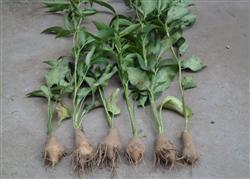
How to prevent diseases and apply fertilizer during Atractylodes macrocephala cultivation?
How to prevent diseases and apply fertilizer for Atractylodes macrocephala? Please provide an introduction to the methods. The common diseases of Atractylodes macrocephala are root rot and southern blight, and the control methods are as follows: Carefully select seedlings: they should be free of pests and diseases, with plump apical buds, slender upper parts, round and large lower ends, fine and tender skin, and dense soft fine roots. Seed soaking disinfection and soil sterilization: the planting material and soil are...
-

What pests are there during Salvia miltiorrhiza cultivation?
What pests affect Salvia miltiorrhiza? What control methods are there? Please give an introduction. The main pests of Salvia miltiorrhiza are: silver-marked noctuid, cotton bollworm, aphids, white grubs, etc. The control methods are as follows: 1. Salvia miltiorrhiza pest - silver-marked noctuid control methods: 1. Hang black light traps to kill adult moths. 2. Spray 90% trichlorfon 800...
-

How should Salvia miltiorrhiza be raised from seedlings during cultivation?
How do you raise Salvia miltiorrhiza seedlings? What method is best for raising Salvia miltiorrhiza seedlings? Please describe the method. After the "seed roots" of Salvia miltiorrhiza are planted, it takes 25-30 days for seedlings to emerge, and the field emergence rate is only about 60%. Especially when soil moisture is poor, the emergence rate is even lower, which easily causes missing plants and broken rows, thereby affecting yield...
-

What should be noted during the process of growing Gastrodia elata?
What should be noted when growing Gastrodia elata? We ask netizens to help explain. Zhongdi Web has compiled the points to note when growing Gastrodia elata, listed below for netizens' reference. 1. Suitable cultivation time for Gastrodia elata: Gastrodia elata cultivation is generally from late October of the current year to April of the following year. From late October to early December, the soil freezes...
-
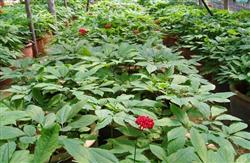
What are the management methods for ginseng in autumn, winter and spring?
How should ginseng be managed in autumn, winter and spring? Please explain the methods. Autumn, winter and spring are the overwintering dormancy period for ginseng, and field management during this stage is an important production step that cannot be ignored. The main tasks are cold protection and moisture conservation, and the key management points are: sealing the beds in autumn, allowing snow cover in winter, and digging drainage ditches in spring. Applying cold-protection soil in autumn...
-
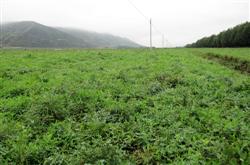
How can Scutellaria baicalensis be managed effectively during cultivation?
How should Scutellaria baicalensis be managed well during cultivation? Please provide guidance. For growing Scutellaria baicalensis, you can refer to the following methods for management: 1. Management before emergence: Regardless of the propagation method, the soil should be kept moist from planting until emergence to promote seedling emergence. 2. Thinning and final thinning: Combined with intertillage and weeding, Scutellaria baicalensis should be thinned, replanted, and finally thinned in a timely manner...
-
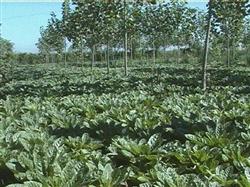
What are the management key points during Rehmannia cultivation?
What are the management key points for Rehmannia cultivation? Please share an introduction. There are several key points for Rehmannia cultivation management for reference: 1. Straw mulching: After sowing Rehmannia and covering with soil, cover the ridge surface with thatch or other crop straw. Mulching with straw can suppress weed growth and keep the soil loose. 2. Thinning: 20-30 days after emergence, remove excess seedlings during cultivating and weeding. The principle is to remove the inferior and keep the superior, leaving 1-2 seedlings per spot.
-
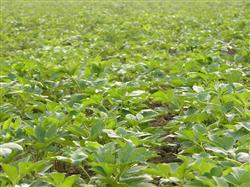
What pests and diseases need to be controlled during the cultivation of Angelica dahurica?
What pests and diseases need to be controlled when growing Angelica dahurica? Please explain the control methods. The following pests and diseases need to be controlled in Angelica dahurica cultivation: 1. Diseases: Diseases occur relatively rarely in Angelica dahurica production, but gray leaf spot and leaf spot sometimes occur. This disease is caused by a type of imperfect fungus among the fungi, and mainly harms the leaves. The lesions are initially dark green...
-
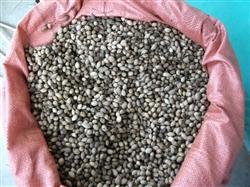
Detailed Explanation of Spring Seed Propagation Methods for Japanese Honeysuckle
Harvest black fruits in January. After harvesting, pile them at a thickness of 30 cm and let them undergo after-ripening for 5-7 days, then put them in clean water and rub and wash away the fruit skin and flesh, and dry them in a shaded place. Avoid direct sunlight, then winnow away the shriveled seeds and store them for later use. Seed treatment: before sowing, soak the seeds in warm water at 35-40°C for 24 hours, take them out and mix with...
-
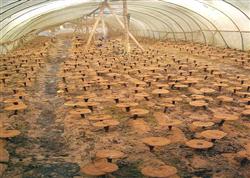
Detailed Explanation of Ganoderma (Reishi) Field Cultivation Technology with Soil Covering in a Wild-Simulated Style
China is rich in Ganoderma (reishi), and its products are exported to Japan, South Korea, Singapore, and Southeast Asian countries and regions. Especially after China's accession to the WTO, domestic product demand and export volume will rise substantially. However, in recent years, wild Ganoderma resources have been declining day by day due to massive logging of timber resources, and large-scale artificial cultivation of Ganoderma has become an urgent matter...
条件筛选