-

How to prevent and control mung bean ring spot disease? A detailed explanation of the latest control methods
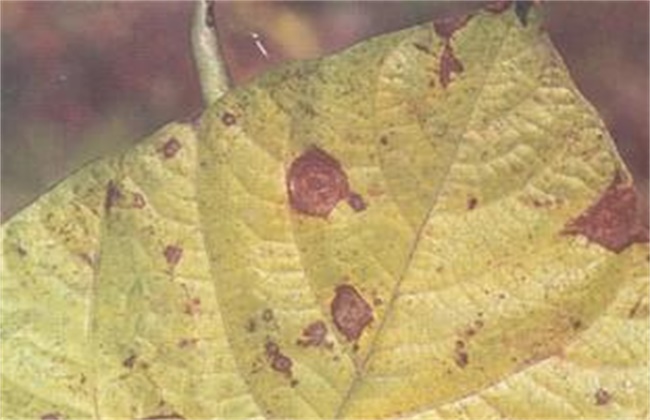
Mung bean ring spot disease not only infects mung bean, but also harms adzuki bean, common bean, broad bean and others, causing brown spot disease outbreaks. It mainly damages leaves, preventing the leaves from functioning normally, and has a relatively large impact on yield. So how should mung bean ring spot disease be prevented and controlled? Follow the editor
-
What are the control methods for Hydrangea ringspot virus?
[Distribution and Damage] Hydrangea (Hydrangea macrophylla), also known as bigleaf hydrangea, is a deciduous shrub planted throughout China. Viral infections are relatively common, with ringspot being the most frequent. It is generally latent; severely affected plants become stunted, with few or no flowers. [Symptoms] Leaves become crinkled,
-
-

Lilac sapling prices, planting and care methods, flowering season, and main viewing spots
Lilac (a deciduous shrub in the genus Syringa of the family Oleaceae) generally refers to the genus Syringa, also known as the lilac genus; plants in this genus are deciduous shrubs or small trees; most are grown for ornamental purposes. So how much does a lilac sapling cost? How do you plant and care for it? In what season does it bloom? What are the main viewing spots? From Oleaceae information, we learn
-
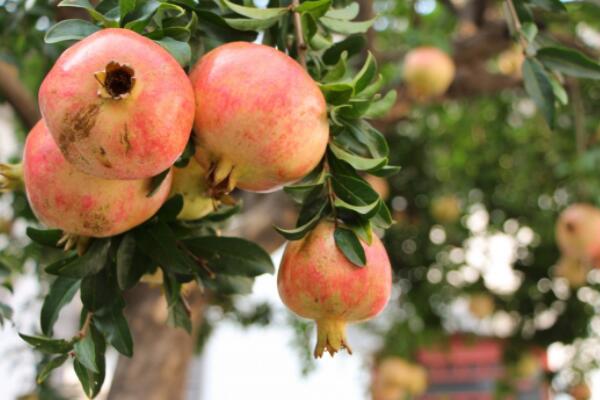
Evergreen Pomegranate Tree: Morphology, Flowering and Fruiting, Black Spot, Fruit Borer Control and Care
Pomegranate is also known as An pomegranate, Shanliye, Danruo, Ruoliumu, Jinying, Jinpang, Tulin, and Tianjiang. Its taste is sweet, sour and astringent, and it has effects such as killing insects and stopping dysentery. So what does a pomegranate tree look like? What pesticide should be used for flowering and fruiting, black spot, and fruit borer? How should it be managed and cared for? According to Myrtales data
-

An introduction to Calendula and how to grow it, bringing you a spotless spiritual enjoyment
An introduction to Calendula and how to grow it, let Calendula bring you a spotless spiritual enjoyment
-
Symptoms and Control Methods of Geranium Ringspot Disease
[Pathogen]Tobacco ringspot virus (Tobaccoringspotvirus, TomRSV), thermal inactivation point 58°C; Pelargonium ringspot virus (prlargoniumringspotvirus, PRSV), thermal inactivation point 85°C. [Symptoms]Chlorotic yellow spots, ringspots and line patterns appear on leaves, plants grow stunted, and flowers develop abnormally. [Disease pattern and epidemic characteristics]Propagating from cuttings taken from diseased plants is the main route of virus transmission. Sap
-
What is Tobacco ringspot virus disease of Carnation?
(Tobacco ringspot virus disease of Carnation) [Symptoms] Mottling, mild mosaic and plant decline appear on the affected leaf areas. [Pathogen] Tobacco ringspot virus (Tobacco ringspot Nepovirus, TRSV). It belongs to the family Secoviridae, genus Nepovirus. The virus particles are spherical, about 28 nm in diameter. The virus mainly has 3 types of particles: empty shells without RNA (T), non-infectious nucleoprotein (M), infectious nucleoprotein (B), and a satellite-like particle (SL), with sedimentation coefficients of 535 (T), 915 (M), 1265 (B), and 1225 (SL), respectively. The satellite is 359 nt in size. The coat protein accounts for 60% of the particle weight, and the nucleic acid accounts for 40% of the particle weight; it is single-stranded RNA, and the genome consists of 2 types of RNA, namely RNA1 and RNA2, with molecular weights of 2.73 x 10⁶ and 1.34 x 10⁶, respectively. The RNA1 genome is 7514 nt. The sedimentation coefficients are 32S for RNA1 and 24S for RNA2. When diluted 1:5 with distilled water, the thermal inactivation point is 65 degC, the dilution end point is 0.001-0.0001, and the longevity in vitro is 6-10 d at room temperature, 3 weeks at 18 degC, loses infectivity after several months at 2 degC, and retains activity after 10 years of storage under sealed conditions as a frozen low-temperature liquid; leaves dried with calcium chloride remain infectious after storage at -10 degC for more than 1 year. TRSV has good immunogenicity, and antiserum with a titer above 1:2000 is easily obtained; it has no serological relationship with viruses of the same genus, such as Tomato ringspot virus and Arabis mosaic virus.
-
Symptom Identification and Control Methods of Hydrangea Ringspot Virus
[Distribution and Damage] Hydrangea (Hydrangea macrophylla), also known as bigleaf hydrangea, is a deciduous shrub planted throughout China. Many viruses infect it, with ringspot being the most common. It is generally latent; severely affected plants are stunted with few or no flowers. [Symptoms] Leaves are crinkled, and stems sometimes show necrotic spots. In inoculated diseased plants, old leaves develop chlorotic spots, brown ringspots, or oak-leaf patterns. [Pathogen] The virus HyRSV, also belonging to the potato virus Y group. Particles are filamentous, measuring 47
-
How to prevent and control garden balsam ring spot disease? A detailed guide to practical methods
Symptoms The disease occurs on leaves. Large round lesions with dark brown edges form. The surface of the lesions shows distinct concentric rings. In the later stage, the center of the lesion turns grayish brown, with scattered small black dots. Pathogen: Ascochyta phaseolorum Saccardo, belonging to the genus Ascochyta, subphylum Deuteromycotina. Transmission route: The pathogen overwinters and oversummers on diseased plant debris as pycnidia and perithecia. Conidia can spread via wind and rain. Conidia produced on later lesions continue to spread and cause secondary infections.
条件筛选