An introduction to Calendula and how to grow it, bringing you a spotless spiritual enjoyment
The poet Xi Murong once said: "What I love is not only that one flower, but all the memories that appear together with that flower." Because each flower belongs to a different season, and every season has different flowers. Now in the height of summer, it is once again time for Calendula (pot marigold) to bloom. Calendula's flower color is delicate and elegant, its branches and leaves are gracefully spread, and among its layer upon layer of petals it gives people a kind of unworldly elegance untouched by dust. It is precisely because of these characteristics that Calendula is loved by flower lovers everywhere. So, how much do you know about the introduction and cultivation methods of Calendula? Let's take a look together.
I. Introduction to Calendula
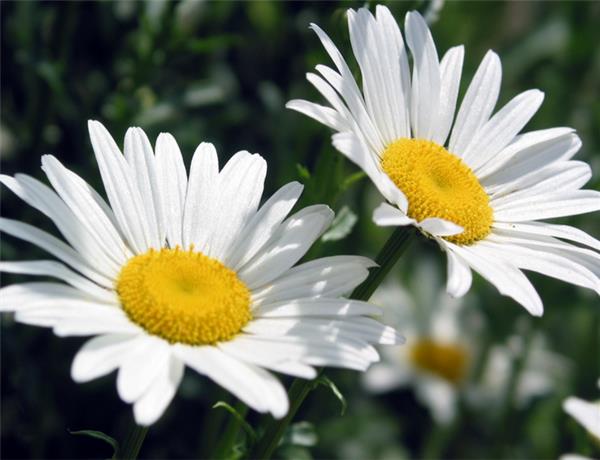
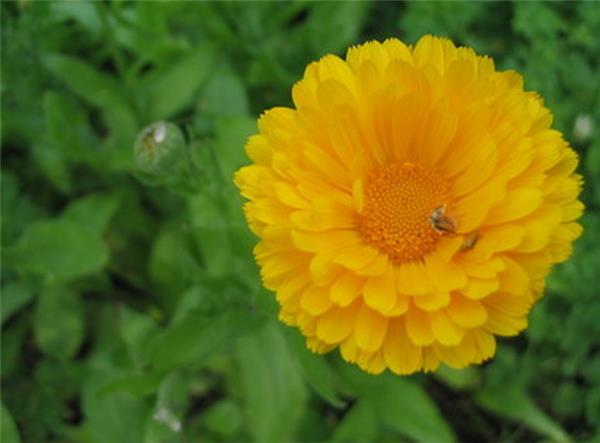
Calendula, also known as pot marigold, is a plant of the genus Calendula in the family Asteraceae. It is an annual or overwintering herbaceous plant that likes light and is not strict about soil; it can grow well in dry, loose, fertile alkaline soil and tolerates poor soil. It is often used for flower bed displays. In ancient Western times, Calendula was used medicinally or as a dye, and also in cosmetics or as food; its leaves and petals are edible and used as a garnish for dishes. It originated in southern Europe. It has medicinal value: anti-inflammatory, antibacterial, clearing heat and reducing internal heat, and treating acne and pimples. Calendula's flowering period is from December to June, with the peak blooming period from March to June. The achene is boat-shaped or claw-shaped, and the fruit ripening period is from May to July. The Calendula plant is 30-60 cm tall; it is a biennial herbaceous plant, with the whole plant covered in white fine hairs. The leaves are simple and alternate, oval or elliptical-obovate, with entire margins; the basal leaves have petioles, and the upper leaves clasp the stem at the base. Calendula's flower head is solitary at the top of the stem, large, 4-6 cm, with one whorl of ligulate flowers, or multiple whorls spreading flat, golden yellow or orange-yellow, and tubular flowers, yellow or brown. There are also cultivated varieties with double flowers (actually multiple layers of ligulate flowers), curled petals, and green centers, deep purple flower centers, and so on.
II. Cultivation and care of Calendula
Calendula likes a sunny, well-lit environment and is highly adaptable; it can withstand low temperatures of -9°C and is afraid of hot weather. It is not choosy about soil, but loose, fertile, slightly acidic soil is best. It can self-sow, grows quickly, is relatively cold-tolerant, and is not choosy about soil. Calendula tolerates poor, dry soil and cool, shaded environments, and grows well in sunny and fertile areas. When the seedlings have 3 true leaves, transplant them once; when the seedlings have 5-6 true leaves, plant them in 10-12 cm pots. 7-10 days after planting, pinch off the growing tips to encourage branching, or spray the leaf surface 1-2 times with a 0.4% daminozide solution to control plant height. During the growing period, fertilize once every half month, or use "Huiyou" 20-20-20 general-purpose fertilizer. With sufficient fertilizer, Calendula blooms more and larger. On the contrary, with insufficient fertilizer, the flowers noticeably become smaller and degenerate. If not saving seed during the flowering period, cut off the fading flowers, which helps the flowering branches sprout, produces more flowers, and prolongs the viewing period. To save seed, select plants with large, brightly colored flowers and pure varieties, and collect seed on sunny days to prevent shedding. During Calendula's growing period, the soil should be kept moist; apply diluted decomposed urine at 10 times water once every 15-30 days, and stop fertilizing by the end of February. When Calendula reaches the late seedling stage, with 4-5 leaves, pinching off the tips (that is, pinching) can promote side branch development and increase the number of flowers; after the first flush of flowers fades, immediately pinch off the tops, which can also encourage side branches to bloom again. In addition, sow seeds after low-temperature treatment: put the seeds in a 0°C refrigerator for 24 hours, then sow directly in the open ground after taking them out; the seedbed should be shaded, they germinate in mid-August, apply diluted decomposed manure water once a week, and they can also bloom in late September.
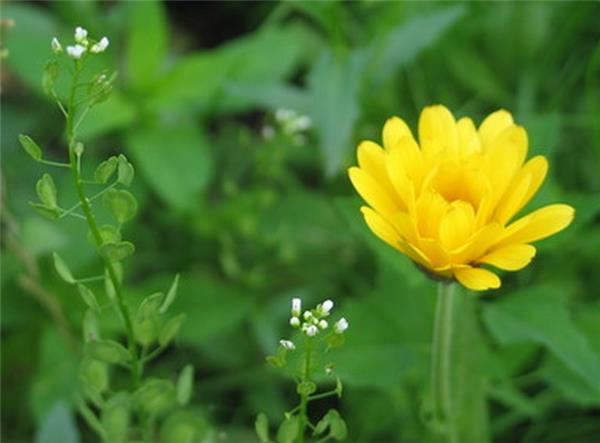
Calendula's flowering period can be regulated by changing cultivation measures; the main regulatory measures are as follows:
1. After normal flowering in early spring, promptly remove the spent flower stems to encourage new shoots to grow and bloom again; strengthen water and fertilizer management, and by September-October it can bloom again.
2. In late August, when sowing in pots in autumn, add an appropriate amount of new soil.
3. Sow directly in the courtyard in late March or early April; after the seedlings come up evenly, thin them appropriately or transplant them, and give reasonable fertilizer and water conditions, and they can bloom in early June. Because Calendula's flowering requires a longer low-temperature stage, spring-sown plants grow weaker and have smaller flowers than autumn-sown ones.
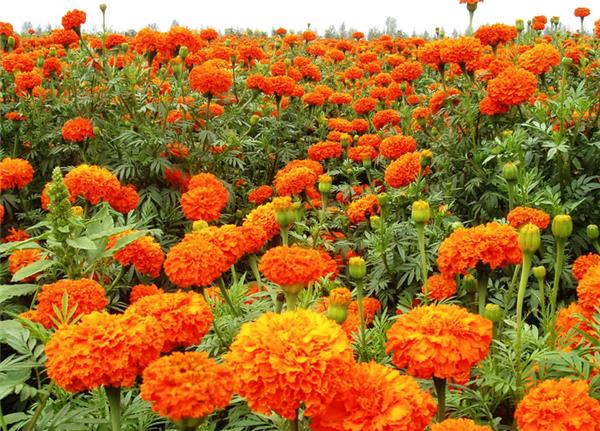
4. Sow in the open ground in late August in autumn; when the minimum temperature rises to 0°C, the straw curtain should be removed immediately. At this time, water appropriately to keep the soil moist, and at the same time add diluted cake fertilizer water once about every 15 days, so that by May Day, Calendula can bloom profusely. In addition, now place Calendula seeds in a 0°C refrigerator for several days for low-temperature treatment, then sow in the open ground in early August, and they can also bloom in late September.
That is all for the introduction and cultivation of Calendula. Are you already tempted? Then hurry and grow a pot of Calendula.