-

What are the control methods for Hydrangea ringspot virus?
[Distribution and Damage] Hydrangea (Hydrangea macrophylla), also known as bigleaf hydrangea, is a deciduous shrub planted throughout China. Viral infections are relatively common, with ringspot being the most frequent. It is generally latent; severely affected plants become stunted, with few or no flowers. [Symptoms] Leaves become crinkled,
-
Symptoms and Control Methods of Geranium Ringspot Disease
[Pathogen]Tobacco ringspot virus (Tobaccoringspotvirus, TomRSV), thermal inactivation point 58°C; Pelargonium ringspot virus (prlargoniumringspotvirus, PRSV), thermal inactivation point 85°C. [Symptoms]Chlorotic yellow spots, ringspots and line patterns appear on leaves, plants grow stunted, and flowers develop abnormally. [Disease pattern and epidemic characteristics]Propagating from cuttings taken from diseased plants is the main route of virus transmission. Sap
-
What is Tobacco ringspot virus disease of Carnation?
(Tobacco ringspot virus disease of Carnation) [Symptoms] Mottling, mild mosaic and plant decline appear on the affected leaf areas. [Pathogen] Tobacco ringspot virus (Tobacco ringspot Nepovirus, TRSV). It belongs to the family Secoviridae, genus Nepovirus. The virus particles are spherical, about 28 nm in diameter. The virus mainly has 3 types of particles: empty shells without RNA (T), non-infectious nucleoprotein (M), infectious nucleoprotein (B), and a satellite-like particle (SL), with sedimentation coefficients of 535 (T), 915 (M), 1265 (B), and 1225 (SL), respectively. The satellite is 359 nt in size. The coat protein accounts for 60% of the particle weight, and the nucleic acid accounts for 40% of the particle weight; it is single-stranded RNA, and the genome consists of 2 types of RNA, namely RNA1 and RNA2, with molecular weights of 2.73 x 10⁶ and 1.34 x 10⁶, respectively. The RNA1 genome is 7514 nt. The sedimentation coefficients are 32S for RNA1 and 24S for RNA2. When diluted 1:5 with distilled water, the thermal inactivation point is 65 degC, the dilution end point is 0.001-0.0001, and the longevity in vitro is 6-10 d at room temperature, 3 weeks at 18 degC, loses infectivity after several months at 2 degC, and retains activity after 10 years of storage under sealed conditions as a frozen low-temperature liquid; leaves dried with calcium chloride remain infectious after storage at -10 degC for more than 1 year. TRSV has good immunogenicity, and antiserum with a titer above 1:2000 is easily obtained; it has no serological relationship with viruses of the same genus, such as Tomato ringspot virus and Arabis mosaic virus.
-
Symptom Identification and Control Methods of Hydrangea Ringspot Virus
[Distribution and Damage] Hydrangea (Hydrangea macrophylla), also known as bigleaf hydrangea, is a deciduous shrub planted throughout China. Many viruses infect it, with ringspot being the most common. It is generally latent; severely affected plants are stunted with few or no flowers. [Symptoms] Leaves are crinkled, and stems sometimes show necrotic spots. In inoculated diseased plants, old leaves develop chlorotic spots, brown ringspots, or oak-leaf patterns. [Pathogen] The virus HyRSV, also belonging to the potato virus Y group. Particles are filamentous, measuring 47
-

What are the treatment methods for Odontoglossum ringspot virus disease?
Treatment of Odontoglossum ringspot virus disease
-

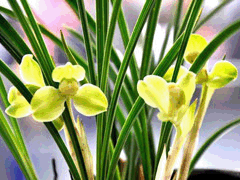
Identification and Control Methods for Necrotic Ringspot Disease in Chinese Cymbidium
Necrotic Ringspot Disease in Chinese Cymbidium
-
-
条件筛选