-
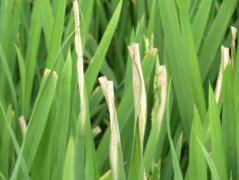
Success in Controlling Rice Bacterial Leaf Blight: Xingda Releases 2 Disease-Resistant Rice Varieties
Rice bacterial leaf blight, be gone! Xingda releases 2 disease-resistant rice varieties. Do you know which two rice varieties they are? Let's take a look. When farmers grow rice, what they fear most is encountering bacterial leaf blight, rice blast and sheath blight. The appearance of these diseases means reduced yields and affected rice qual
-
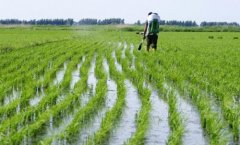
Introduction to the high-yield and lodging-resistant characteristics of the new rice variety Tainan 11
This station's Chiayi Branch is a specialized rice research station, dedicated to the improvement of rice breeding and cultivation techniques. The newly bred rice line Nanjingyu No. 58 was, on the morning of November 4, unanimously approved for naming as "Tainan 11" under review by the rice new variety review panel convened by the Agriculture and Food Agency of the Council of Agriculture, comprising 9 rice experts and scholars from the Agriculture and Food Agency, Taiwan University, Chung Hsing University, Chiayi University and the Asia-Pacific Food and Fertilizer Technology Center, and began propagation and promotion.
-
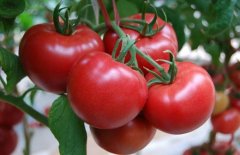
Differences Between TY Virus-Resistant Tomato Jiahong No. 8, Beiya No. 6, and Jiahong No. 7 Red Tomatoes
Do you like tomatoes, this kind of plant? The fruit of this plant can be eaten both as a vegetable and as a fruit. The growing method for tomatoes is also relatively simple, and you can grow them yourself if you want to. Its varieties are very
-
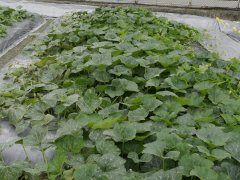
Introduction to the High-Yield and Disease-Resistant Characteristics of the New Pumpkin Variety Hualien AVRDC No. 2 - Youwang
The Hualien District Agricultural Improvement Station of the Council of Agriculture, Executive Yuan, together with the internationally renowned AVRDC - The World Vegetable Center, has developed a new disease-resistant pumpkin variety "Hualien AVRDC No. 2 - Youwang," which is resistant to two viruses. One of its parents is the strongly virus-resistant variety "Hualien AVRDC No. 1 - Taishan.
-

What are the new apple varieties? These several are high-quality, stress-resistant and easy to grow with high yields
Apple is a fruit that everyone eats often. It is rich in minerals and vitamins, has high nutritional value, and its nutrients are highly soluble and easily absorbed by the human body, so it is known as "living water." With the continuous improvement of agricultural technology, many new varieties have been developed in recent years. So
-
How to Grow Autumn Delayed Cucumbers? Detailed Explanation of Key Cultivation Techniques
1. Select heat-resistant and disease-resistant varieties. The main heat-resistant varieties include Jinyan No. 7, Jinza No. 2 and No. 4, Xiafeng No. 1, Xiaqing No. 4, Lu Cucumber No. 9 and No. 4, as well as Zhongnong No. 8, Jinyou No. 1, Zhongnong 1101, etc. 2. Sow at the right time. In Shandong, Hebei, Tianjin and other places, sowing generally starts from late July
-
Methods and Technical Key Points for Controlling Powdery Mildew in Melons
1. Select disease-resistant varieties. There are obvious differences in disease resistance among different melon varieties, so selecting disease-resistant varieties is the key to controlling the degree of disease occurrence. 2. Clean the field. After the crop is harvested, weeds and residues should be removed promptly. During the melon growing period, weed promptly, remove ⟦4 <p>1. Select disease-resistant varieties. There are obvious differences in disease resistance among different melon varieties, so selecting disease-resistant varieties is the key to controlling the degree of disease occurrence.</p><p></p><p>2. Clean the field. After the crop is harvested, weeds and residues should be removed promptly. During the melon growing period, weed promptly, remove diseased leaves, and take weeds, residues, and diseased leaves outside the field to be burned in a centralized manner.</p><p>3. Scientific management to enhance plant disease resistance. Apply sufficient basal fertilizer, especially heavily apply decomposed organic fertilizer, and plow deeply and harrow finely; prevent excessive vegetative growth and premature senescence of plants, organize branches and vines promptly, and strengthen ventilation and light penetration; during the mid-growth stage, pay attention to topdressing phosphorus and potassium fertilizers, and use foliar fertilizer well to cultivate strong branches and vines and enhance the disease resistance of the population.</p><p>4. Scientific irrigation. Create environmental conditions suitable for melon growth but unfavorable for the occurrence and development of powdery mildew. Irrigation should follow 4 principles: do not water on cloudy days but water on sunny days, do not water in the afternoon but water in the morning, do not water heavily but water lightly, do not water on the surface but water under the surface (that is, subsurface irrigation under film).</p><p>5. Chemical control. Use 15% triadimefon wettable powder at 1000-1500 times dilution, or 40% Daconil suspension concentrate at 800-1000 times dilution, or 40% Fuxing emulsifiable concentrate at 6000 times dilution, or 10% Shigao water-dispersible granules at 2000 times dilution, or 30% Tefuling wettable powder at 5000 times dilution, or 50% thiophanate-methyl wettable powder at 1000 times dilution, etc., alternating sprays for control, spraying once every 7-10 days, for 2-3 consecutive sprays. Medication is prohibited 7 days before melon harvest to allow safe harvesting.</p>
-
How to prevent and control fruit cracking in pomegranates during the ripening period? A detailed guide to practical methods
1. Plant crack-resistant varieties This is the fundamental measure for preventing fruit cracking. Priority should be given to this measure when developing pomegranates. Among the excellent pomegranate varieties, Heyin Tonghongdeng pomegranate, Heyin Yueliangbai pomegranate, Heyin Hongdeng pomegranate, Tunisian soft-seed pomegranate and Chaodazi pomegranate are all
-
How to prevent and control soybean root rot? These methods you need to master
1. Select disease-resistant varieties. 2. Rotate with non-host crops such as corn, millet, and sweet potato. 3. When sowing, apply more farmyard manure, potassium fertilizer, phosphate fertilizer, etc. 4. When sowing, apply metalaxyl granules so that soybean roots can absorb them to prevent root infection. 5. Before sowing, use seed weight
-
Control methods for soybean mosaic virus in soybean cultivation
1) Select disease-resistant varieties: Different soybean varieties have different resistance to soybean mosaic virus, so selecting disease-resistant varieties suited to the local area is the most effective measure for controlling soybean mosaic virus. Disease-resistant varieties include Qihuang No. 22, Ludou No. 4, Ludou No. 1, Ludou No. 7, Ludou No. 6,
条件筛选