-

Methods for Extending Rice Seedling Age and Key Points for Preparing to Transplant Rice While Waiting for Rain as a Drought-Resistance Measure
In a normal year, the seedling age for machine-transplanted rice is about 30 days, about 40 days for seedling-throwing rice, and about 50 days for water-raised seedlings. If the water for transplanting comes late, the seedling age must be extended to more than 60 days in order to wait for water before transplanting. First, sow sparsely to cultivate strong seedlings of extended age. That is, by expanding the area of the seedling-raising bed and reducing the sowing rate per square meter, the tillering-stagnation period of the seedlings is prolonged, which can effectively increase the seedling-age flexibility of seedlings sown early at the proper time and improve seedling quality; this can both raise per-unit yield and resolve the contradiction of having no water for transplanting in the early period.
-
What are the technical measures for drought resistance and disaster mitigation in rice cultivation in Heilongjiang Province?
In response to the actual drought situation, the Rice Expert Guidance Group of the Ministry of Agriculture conducted in-depth research in drought-affected rice areas and proposed technical measures for scientific drought resistance and disaster mitigation to ensure increased rice production. 1. Strengthen the management and scheduling of irrigation water sources. Actively develop water sources, organize as much as possible the pumping of return flow and the use of water-lifting irrigation machinery to utilize rivers, lakes and groundwater, alleviating the contradiction of insufficient reservoir storage. For plots far from water sources, promptly dig supplemental water wells to ensure a safe water supply during severe drought seasons. Strengthen the management of existing water resources and the clearing, repair and film-mulching of main irrigation canals to prevent seepage and leakage. Scientifically regulate
-
New fresh-eating tomato variety Jinxiang Fanbao: high yield, high quality and multi-resistance
High-yield, high-quality and multi-resistant new fresh-eating tomato variety "Jinxiang Fanbao". Variety source: this variety was developed by the Jinxiang Research Institute of the Jinxiang Group using a method combining hybrid crossing with pedigree selection, and was bred over five years and six generations as a new fresh-eating tomato variety. Characteristics: the true leaves of the seedlings are lobed, the leaf color is dark green, and it is semi-determinate. The average plant height is 86.5 cm, the flowers are bright yellow, with 6 stamens, 6 pistils and 6 sepals each, the first inflorescence is borne on the 6th-7th node, the internode length is 5 cm, the stem diameter is 0.8-1.0 cm, the young fruit has no shoulder, and the mature fruit is red,
-
New hybrid indica rice combination K You 818: high yield, good quality and disease resistance
K You 818 is a new hybrid indica rice combination with high yield, good quality and disease resistance, bred by the Institute of Agricultural Sciences of the Lixiahe Region of Jiangsu, and produced and distributed exclusively by Nanjing Shenzhou Seed Industry Co., Ltd. This variety has applied for national new variety protection and patent, with the announcement number: CNA000548E. It passed the Jiangsu provincial approval in 2001, and in the same year entered the national southern rice region high-yield group regional trial, with a yield of 660 kg per mu, ranking first among the tested combinations. In 2002, it exceptionally entered the national southern rice region production trial, with a yield increase of 10.65% per mu compared with the control, ranking first, making it
-
Yangdao 6: Breeding and Utilization of a New Medium Indica Rice Variety with High Quality, High Yield and Disease Resistance
Yangdao 6 is a new medium indica variety bred by the Institute of Agricultural Sciences of the Lixiahe Region of Jiangsu, using Yangdao 4 as the female parent, crossed with "Yan 3021", with the F1 seeds subjected to 60CO-gamma ray irradiation mutagenesis, and then developed through continuous directional selection. This variety combines high quality, high yield, disease resistance and wide adaptability, and is an ideal seed source for developing high-quality rice; it has already been demonstrated and promoted on a large scale in Jiangsu, Anhui, Hubei, Shanghai and other provinces and municipalities. Yangdao 6 is also a high-quality restorer line for two-line hybrid rice and three-line Honglian-type hybrid rice, and the formulated "Liangyou Peijiu" and "Yueyou 9
-
Zhengdao 18 is a nationally approved new japonica rice variety with high yield, disease resistance and good quality
Zhengdao 18 is a new japonica rice variety with high yield, disease resistance and wide adaptability, bred by the Grain Crops Research Institute of the Henan Academy of Agricultural Sciences. In 2005, plant variety right protection was applied for, with announcement number CNA002221E. It passed Henan provincial approval in 2006 and national approval in August 2007. I. Characteristics: The whole growth period is about 152 days, the plant type is compact, the plant height is 95 cm, growth is vigorous, tillering ability is strong, the earing rate is high, the stems are thick, the leaf color is green, the flag leaf is short and held upright, and the leaf sheath is green; the panicle length is 16 cm, the grains are densely set, the grain shape is short and round, and threshability
-
New japonica rice variety Zhengdao 18 passes national approval, combining high yield, disease resistance and good quality
Zhengdao 18 is a new japonica rice variety with high yield, disease resistance and wide adaptability, bred by the Grain Crops Research Institute of the Henan Academy of Agricultural Sciences. In 2005, plant variety right protection was applied for, with announcement number CNA002221E. In 2006, it passed provincial approval in Henan, and in August 2007 it passed national approval. I. Characteristics: The whole growth period is about 152 days, the plant type is compact, the plant height is 95 cm, growth is vigorous, tillering ability is strong, the effective panicle rate is high, the stems are thick, the leaf color is green, the flag leaf is short and held upright, and the leaf sheath is green; the panicle length is 16 cm, the grains are densely set
-
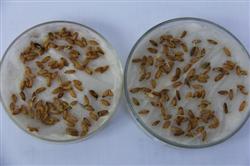
Detailed Explanation of Rice Blast Resistance Breeding Techniques
The main diseases transmitted by rice seeds include bakanae disease, rice blast, rice false smut, bacterial leaf blight, and striped virus disease transmitted by the small brown planthopper at the seedling stage. Currently, it is time for soaking rice seeds in Qilin District. When soaking rice seeds, all demonstration households must insist on soaking seeds with fungicides, the main purpose of which is to kill the pathogens carried by rice seeds...
-
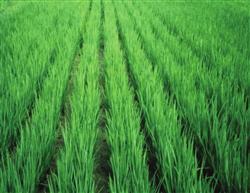
Zinc supplementation for rice boosts disease resistance and high yields, making rice plants healthier
When rice enters the jointing and panicle elongation stage, it is an important period of transition from vegetative growth to reproductive growth, and also a critical period that determines yield. Doing a good job of field management in the middle and late stages of rice is crucial for ensuring sufficient panicles, developing large panicles, shaping a high-yield plant type, and building a good framework for a bumper harvest. I. Seedling characteristics According to a survey on July 21...
-
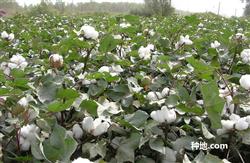
What are the effective methods for increasing cotton yield and disease resistance?
How can cotton be made to increase yield and resist disease? What are the tricks? Surveys conducted in some cotton-growing areas found that only about 45% of cotton growers apply nitrogen, phosphorus and potassium compound fertilizer; most farmers apply ammonium bicarbonate, urea and superphosphate, and about 15% of them use only phosphate fertilizer as a base dressing. This situation shows that in...
条件筛选