-

-

What are the environmental requirements for passion fruit growth?
Environmental requirements for passion fruit growth
-

What are the conditions for growing blueberries? A detailed explanation of the growing environment requirements
Blueberry growing conditions
-

What are the growing environment requirements of winter jasmine?
Winter jasmine is also known as golden belt. It is a deciduous shrub in the Oleaceae family. It grows 2 to 3 days tall, with slender branches that arch, curve and droop; leaves are opposite, with ovate to elliptical leaflets; the corolla is yellow and salverform. In early spring it grows leaves first and then blooms, hence the name winter jasmine. 1. It likes light, tolerates cold, drought and alkaline soil, but fears waterlogging.
-

What are the cultivation requirements for Aconitum carmichaeli? Read this article to understand the growing techniques
Cultivation requirements for Aconitum carmichaeli
-
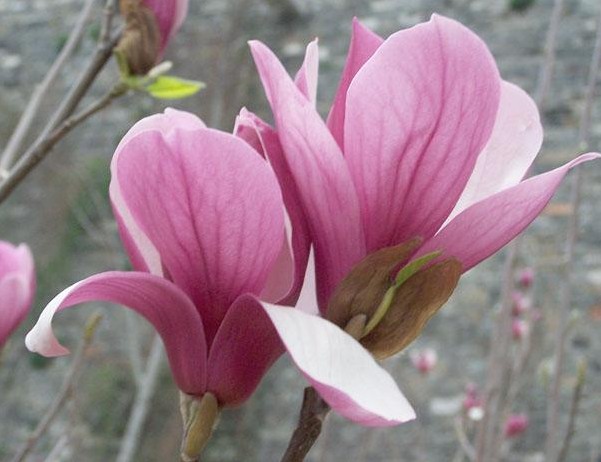
What are the growing environment requirements for the purple magnolia?
The purple magnolia, also known as Xinyi or Mubi, is a deciduous large shrub of the Magnoliaceae family, native to central China. It prefers sunlight and a warm, humid climate; it is cold-hardy but not drought-tolerant, and dislikes waterlogging and saline-alkaline conditions. It requires loose, fertile, well-drained slightly acidic to neutral soil; its root system is well developed and it suckers readily.
-
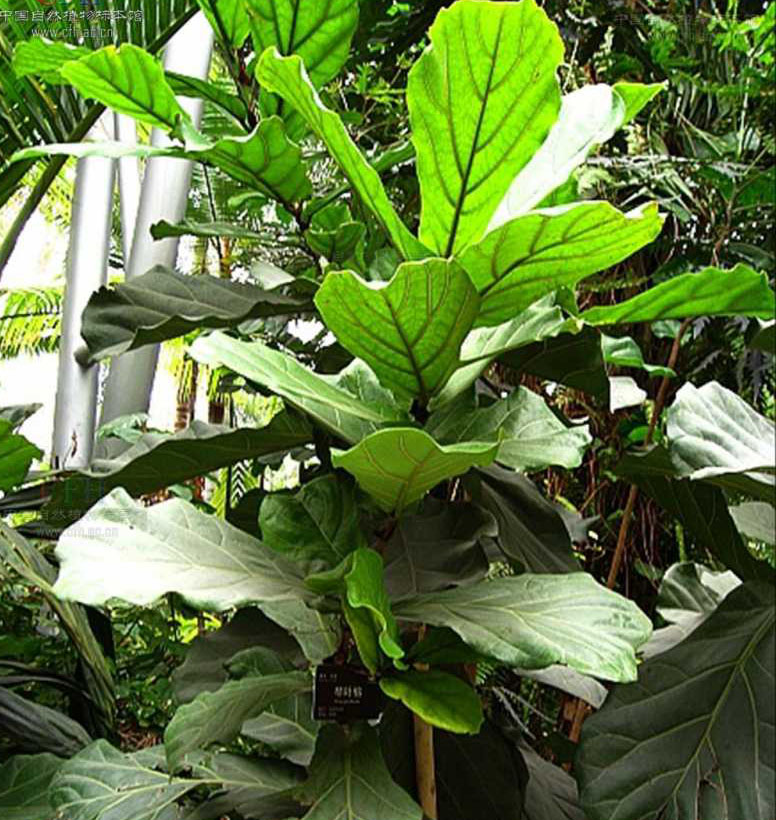
What are the growing environment requirements of the fiddle-leaf fig?
The fiddle-leaf fig (Ficus lyrata) is a plant of the genus Ficus in the mulberry family (Moraceae), native to tropical Africa. In recent years, together with its relative the big-leaf fig, it has been introduced into China for use in garden landscaping. The fiddle-leaf fig prefers a hot and humid climate, and can tolerate anything from partial sun to full sun. It is highly resistant to air pollution and dust, but has poor cold tolerance.
-
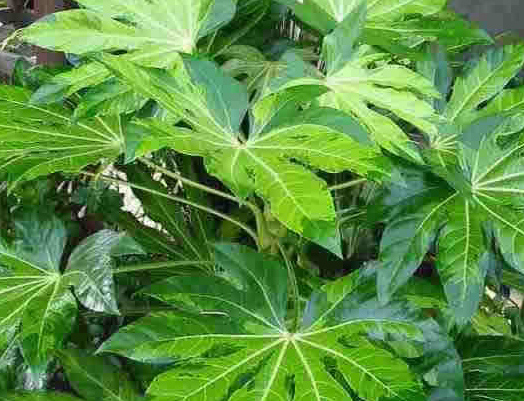
What are the growing environment requirements for Fatsia japonica?
Fatsia japonica, also known as Ba Jin Pan, Ba Shou and Shou Shu, originated in Taiwan, China and Japan. It prefers warmth, fears intense heat, is relatively tolerant of moisture, fears drought, is extremely shade-tolerant, fears strong direct sunlight, and has strong resistance to harmful gases. It is best grown in a relatively shady environment with moist, loose, fertile soil, and the winter temperature should not fall below minus 5 degrees.
-

Growing environment requirements and suitable cultivation conditions for Pinellia ternata
Pinellia ternata is a shallow-rooted plant that prefers fertile soil, and was originally mostly found growing wild on moist, loose, and fertile sandy loam or humus soil. It prefers a mild, humid climate and a shaded environment, is afraid of drought, and avoids high temperatures. In summer, it is best grown in a semi-shaded, semi-sunny environment; it grows relatively well when soil moisture content is 20%-40%; drought and water shortage easily cause the seedlings to fall over. Generally, with changes in the growing environment, it can fall over 1-3 times a year. For Pinellia ternata, falling over is, on the one hand, an adaptation to adverse conditions, and more importantly, it increases the number of bulbils, that is, it carries out one round of asexual
-
How to Keep Tiger Barbs? A Detailed Guide to Tiger Barb Care Requirements
Morphological Characteristics of the Tiger Barb The tiger barb, also known as the four-banded barb, pinpin fish, black four-banded barb, and red fluttering fish, belongs to the family Cyprinidae and originates from Malaysia, Indonesia's Sumatra, and Borneo in Southeast Asia. The tiger barb grows 4-6 cm long, with a deep, laterally compressed body that is slightly oval in shape. The tiger barb's body is pale yellow, with a golden-yellow back, and the dorsal fin, pelvic fins, caudal fin, and snout are all bright red. The fish's body has 4 thick black vertical bands: the first band passes through the eye, the second lies between the gill cover and the dorsal fin, the third starts at the end of the dorsal fin and extends to the origin of the anal fin,
条件筛选