-

Pear storage methods are different and require tailored treatment
Master the storage characteristics of pears. Generally, early-maturing varieties do not store well, while mid- and late-maturing varieties and white pear varieties (such as Ya pear) store relatively well. The storage temperature for pears is generally -1°C to 3°C, and the relative humidity is 90% to 95%. Ya pear, Xuehua pear, Ci pear, Changba pear and others are extremely sensitive to carbon dioxide and low oxygen, and are not suitable for controlled atmosphere storage. During storage, be careful to prevent water loss. Pear fruits contain a lot of water, and once they lose water severely during storage, rotten spots, rotten fruit or hollow dried fruit will appear. Therefore, attention should be paid to increasing the humidity in the warehouse
-
What are the feed requirements when selecting a site for a deer farm?
Feed requirements for choosing a deer farm site: the deer farm should have sufficient land and a stable feed base, with an adequate feed supply. In mountainous, semi-mountainous and grassland areas, there must be enough grazing pasture. In the past, deer were mostly "raised on forest resources"; in the future, planted feed should be the main approach, and deer farming should develop toward farming areas, farming-and-grazing areas, and farming-and-forestry combined areas, because these areas have abundant agricultural by-products that can ensure an adequate feed supply.
-
Cotton mirid bugs still require priority control at present
This year's cotton pest situation differs from previous years. For most of the cotton growing period, the first and second generations of cotton bollworm did not have too great an impact on cotton; it can be said that cotton bollworm did not break out on a large scale. However, in the later stage of cotton growth, some cotton farmers only focused on controlling summer aphids and did not pay attention to controlling other pests. In fact, pests in the later stage of cotton growth are often another important factor preventing high cotton yields. The main pest in the later stage of cotton growth is the cotton mirid bug, a hemipteran cotton pest with extremely strong reproductive capacity, whose damage period lasts from mid-May
-
Feeding Livestock with Fresh Wheat Bran Requires Vigilance Against Stomatitis
Many breeders are accustomed to feeding fresh wheat bran directly to livestock, and untreated fresh wheat bran often punctures the oral mucosa of livestock and causes stomatitis. After livestock develop stomatitis, they want to eat but refuse food; they take feed into their mouths but dare not chew, or after chewing a few bites they spit the feed back out; white turbid mucus continuously flows from the mouth; and wheat awns can be seen stuck all over the tooth roots and the base of the tongue in the oral cavity. Once this disease occurs, first clean the wheat awns from the livestock's oral cavity thoroughly, then rinse the oral cavity with clean water to prevent infection. Then
-
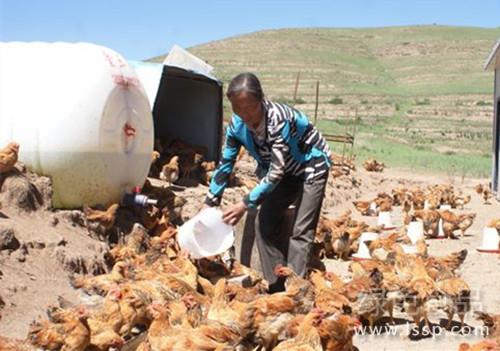
Laying hens have high water requirements during peak laying periods; they drink more in summer and no less in winter
They drink more in summer and no less in winter: water requirements of laying hens during peak laying
-
Duck disease prevention and control requires attention during the transition between summer and autumn
Currently we are in the transition between summer and autumn, with large temperature fluctuations, and various pathogens easily breed and multiply. This is a season when livestock, poultry, fish and other animals are prone to disease. Neglecting prevention at this time can easily trigger disease outbreaks, causing death of livestock, poultry and fish from mass and epidemic diseases, resulting in relatively large losses. Therefore, the symptoms and prevention and treatment methods of common duck diseases during this period are introduced below. 1. Duck plague. It occurs frequently in spring, summer and autumn, with high morbidity and mortality. Prevention: inject duck plague vaccine at 10 to 15 days of age.
-
Feeding young pigeons requires care; mastering the method is key
Since young pigeons need time to adapt to a new environment, and their body functions have also undergone considerable changes, poor management can easily lead to stunted growth, illness, or death. Therefore, they must be cared for attentively. First, attention should be paid to keeping them warm and preventing chills. The feed troughs and water troughs should not be placed too high, fine granular feed should be provided, and an appropriate amount of multivitamin B aqueous solution should be added to the drinking water. In hot weather, attention should be paid to ventilation and mosquito prevention; in cold weather, attention should be paid to preventing wind, and at night it is best to use infrared light bulbs or a brooder umbrella for warmth. After young pigeons are moved to a new loft for half a month, they have a certain
-
Eight requirements to note when using a precision dibble seeder on cotton mulched film
In 2005, our regiment introduced 1 unit of the 2BMJ-12 precision dibble seeder on cotton mulched film produced by the Shihezi Agricultural Machinery Research Institute, and that year trial-sowed 30 hectares. The application of precision dibble sowing technology on cotton mulched film saved costs on seed and manual thinning, and at the same time had advantages such as simple mechanical adjustment and operation, stable performance; and after sowing, the cotton seedlings grew uniformly and neatly. The eight requirements to note when using this machine are introduced below. 1. Requirements for land plowing quality: plow when soil moisture is suitable, plowing depth reaching 28-30 cm, with consistent plowing depth;
-
Lycoris radiata has high ornamental value, and its cultivation methods require attention
[Aliases] Cockroach flower, crow garlic. [Family and genus] Amaryllidaceae, Lycoris. [Morphology] Perennial herbaceous plant, with thick underground bulbs, broadly oval, covered with a purplish-red membrane. Leaves linear, emerging from the base after the flowering period, 5-6 leaves, leaves emerge in winter and wither in summer. Flower scape emerges from August to September, 30-60 cm tall, bearing 4-12 flowers in a terminal umbel; flowers bright red, the tube very short, about 5-6 mm long, lobes narrowly obovate-lanceolate, curling outward. Ova
-
Detailed Explanation of Energy Requirements in Fox Nutrition
Organic nutrients in feed are the energy source for foxes, and these nutrients release energy during metabolic processes within the organism. When calculating the total nutritional value of feed rations and the energy requirements of animals, metabolizable energy is usually used as the measure. The conventional unit for feed energy and nutritional value of fur-bearing animals is 418 kilojoules (100 kilocalories) of metabolizable energy. Feed energy units are expressed in kilojoules or kilocalories; 1 kilocalorie equals 4.184 kilojoules, or 1 kilojoule equals 0.239 kilocalories. The range of basal metabolic energy per kilogram of body weight per day for adult foxes varies as follows:
条件筛选