-
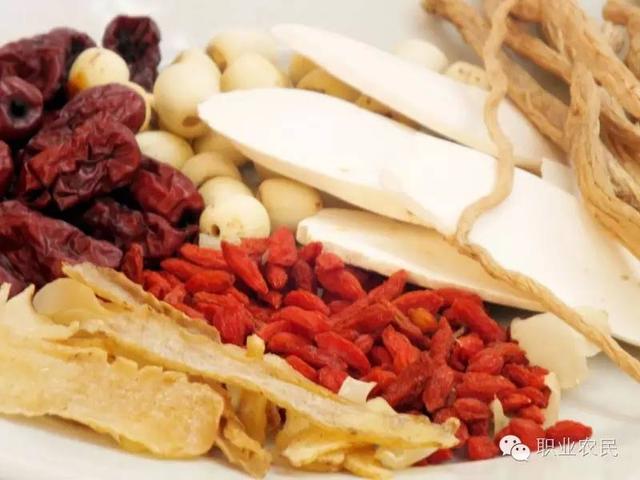
Chinese medicinal herbs are prone to insect damage; learn these storage tips to reduce losses
Chinese medicinal herbs are prone to insect damage; learn the key storage tips to reduce losses!
-

After corn acreage was reduced, what did agricultural structure adjustment increase the planting of?
Agricultural structure adjustment: corn reduced, what increased?
-
Simplified handling of weddings and funerals effectively reduces the burden on villagers
Simplifying weddings and funerals reduces the burden on villagers
-
Using coal without burning coal helps reduce air pollution
"Using coal without burning coal" reduces air pollution
-
Why do continuous and alternating soybean cropping reduce yields? Cause analysis and countermeasures
With China's accession to the WTO and the opening-up policies of the grain market, the problem of continuous and alternating soybean cropping has become increasingly serious, and the yield reduction increases as the number of consecutive cropping years rises. According to surveys and research, alternating cropping reduces yield by 6.1%, one year of continuous cropping by 9.9%, two years of continuous cropping by 13.8%, and three years of continuous cropping by 19.0%. Moreover, in continuous and alternating cropping soybeans, the 100-seed weight decreases, the rate of diseased seeds and insect-damaged seeds increases, and commercial quality drops significantly. With long-term continuous cropping of more than 3 years, the protein content of soybeans increases markedly while the fat content decreases markedly. According to research by scientific research departments
-
Technical Measures to Reduce the Mortality Rate of Induced Spawning Broodfish
Reducing the death of induced spawning broodfish is an important technical task in fry aquaculture. There are two main factors causing the death of induced spawning broodfish. First, broodfish consume a great deal of physical energy during the spawning and reproduction process, which increases the side effects of the inducing drugs and lowers the body's resistance. If the fish is severely injured, various pathogens will take the opportunity to infect the fish body, causing disease and leading to the death of the broodfish. Second, the broodfish has a poor physique, or the water temperature fluctuates greatly during induction, or the dosage of the inducing drugs is improper (too high or too low), so the broodfish cannot spawn normally or experiences difficult spawning, and this in turn causes its own physiological activities to become disordered and leads to death.
-
What are the environmental measures to reduce pig stress?
1. Control stocking density. During heat stress, stocking density must be strictly controlled to help the pig's body dissipate heat and allow air circulation. Suitable stocking densities are generally: for pigs under 45 kg, 0.74 sq m per pig on solid flooring and 0.37 sq m per pig on slatted flooring; for pigs over 45 kg, 0.93 sq m per pig on solid flooring and 0.56 sq m per pig on slatted flooring. 2. Provide a suitable environment. The pig house should face north-south to reduce
-
Proper removal of silkworm excrement can effectively reduce the occurrence of silkworm diseases
Silkworm excrement not only harbors the pathogens of viral flacherie, but is also a breeding and transmission site for the pathogens of many silkworm diseases such as empty-head soft rot, bacterial soft rot, and muscardine. Data show that when pathogen-carrying silkworm excrement from spring-reared silkworms is left for 15 days and then comes into contact with mulberry leaves, it can cause the incidence of midgut-type viral flacherie in silkworms that eat those leaves to reach 75%; when pathogen-carrying silkworm excrement from late-autumn-reared silkworms is left for 1 day and then comes into contact with mulberry leaves, it can cause the incidence of midgut-type viral flacherie in silkworms that eat those leaves to reach 60%, and after 7 days the incidence reaches 100%. Therefore, during routine rearing,
-
How to reduce pests and diseases in edible mushrooms? Practical control methods shared
The main insect pests of edible mushrooms include mushroom gnats, mushroom flies, springtails, mites and nematodes, and the integrated control measures are as follows. Keep the mushroom yard clean. Before cultivation, the mushroom house should be thoroughly cleaned and evenly sprayed with an 800-fold trichlorfon or dichlorvos solution. For outdoor mushroom cultivation, clear the weeds around the cultivation site and spray the soil and the surrounding area with a 250-fold trichlorfon solution. Prevent adults from entering the room. For indoor cultivation of edible mushrooms, nail 60-mesh fine gauze over doors, windows, ventilation holes, etc., to prevent adult mushroom flies, mushroom gnats and other pests from entering the room and causing damage. Trap and kill adults
-
How to reduce pests in edible fungi? Practical pest control techniques shared
1. Keep the mushroom yard clean. Before cultivation, the mushroom house should be thoroughly cleaned and evenly sprayed with an 800-fold trichlorfon or dichlorvos solution. For outdoor mushroom cultivation, clear the weeds around the cultivation site and spray the soil and the surrounding area with a 250-fold trichlorfon solution. 2. Prevent adult insects from entering the room. For indoor mushroom cultivation, nail 60-mesh fine gauze over doors, windows, ventilation holes, etc., to prevent adult insects such as flies and mushroom gnats from entering the room and causing damage. 3. Chemical fumigation. For indoor cultivation of edible fungi, under sealed conditions, use 2-3 tablets of aluminum phosphide per cubic
条件筛选