Chinese medicinal herbs are prone to insect damage; learn these storage tips to reduce losses
Chinese medicinal herbs
Chinese medicinal herbs refer to raw medicinal materials used under the guidance of traditional Han Chinese medicine. Traditional Chinese medicinal herbs generally emphasize "authentic medicinal materials," which refers to herbs produced in a specific region with particular natural conditions and ecological environment. Because production is relatively concentrated and cultivation techniques, harvesting, and processing all follow certain standards, the quality and therapeutic efficacy are superior to the same herbs produced in other regions.
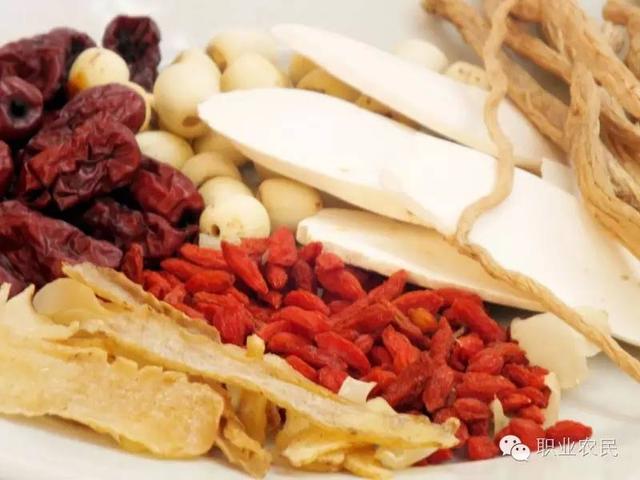
Chinese herbal decoction pieces
Chinese herbal decoction pieces are Chinese medicines that have been processed and prepared from Chinese medicinal herbs according to traditional Chinese medicine theory and processing methods, and can be directly used in clinical Chinese medicine. This concept shows that there is no absolute boundary between Chinese medicinal herbs and Chinese herbal decoction pieces. Chinese herbal decoction pieces include some Chinese medicine slices processed at the place of origin (including cut sections, blocks, and segments), whole-form medicinal pieces, and pieces that have been cut (on the basis of processing at the place of origin) and stir-baked with adjuncts.
Medicinal herb storage
Simply put, medicinal herbs generally cannot be directly used as medicine; decoction pieces are those that have undergone basic processing and can be used and taken as medicine.Whether medicinal herbs or decoction pieces, both face storage problems. So how should medicinal herbs or decoction pieces be stored?
When the moisture content of Chinese medicinal herbs exceeds 15%, insect damage, mold, and other deterioration are likely to occur. Therefore, for herbs with high moisture content, high temperature, sunlight, wind, lime desiccant, and other means should be used. Methods such as sun-drying, air-drying, baking, microwave, and far-infrared irradiation should be selected to reduce the moisture content to below 15%.
The most commonly used methods to reduce the moisture content of Chinese medicinal herbs are:
Spread the herbs on a mat and place them in the sun to dry. If conditions permit, use a rack to elevate the straw mat. For some herbs with relatively high moisture or starch content, such as Fritillaria (beimu), lily (baihe), and Corydalis yanhusuo (yanhusuo), they should first be blanched in boiling water or steamed, then dried in the sun. Some herbs cannot withstand prolonged sun exposure, such as Ephedra (mahuang); after prolonged sun exposure, the content of active ingredients decreases, so they should be placed in a ventilated room or under a shaded shed to dry in the shade. In addition, some high-priced herbs are prone to insect damage and mold, such as ginseng and tiger bone; these should be sealed for storage, using lime to keep the herbs dry.
Common deterioration phenomena during the storage of Chinese medicinal herbs and Chinese herbal decoction pieces include:
Mold, insect damage, discoloration, oil exudation, loss of odor, efflorescence, deliquescence, sublimation, volatilization, adhesion, and rotting, etc., all of which can lead to changes in the quality of medicinal materials and cause them to lose certain medicinal efficacy.
General storage should follow these principles:
Low temperature.Mold and pests do not easily grow below 10°C, and deterioration reactions of medicinal herbs such as oil exudation, dissolution, adhesion, loss of odor, and rotting are also unlikely to occur at low temperatures. Therefore, placing medicinal herbs in a cool, dry place (such as a refrigerator) helps preserve their active ingredients.
Avoid light.Medicinal herbs such as flower and leaf types that tend to change when exposed to light should be stored in dark places and in ceramic containers or colored glass bottles to avoid direct sunlight.
Classification.Store by category according to the characteristics of the medicinal herbs. For example, fleshy and sweetly fragrant herbs such as hedgehog skin and Trichosanthes fruit (gualou) are prone to insect damage and should be placed in a fumigation warehouse; herbs such as Polygala (yuanzhi) and Pinellia (banxia) are prone to mold, so attention should be paid to ventilation and sun-drying. In addition, highly toxic medicinal herbs should have conspicuous labels and be kept by specially assigned persons to prevent misuse and poisoning.
Sealing.Seed-type medicinal herbs (white hyacinth bean, malt, coix seed, etc.) can be sealed for storage to prevent gnawing by rats; medicinal herbs that are prone to efflorescence (such as mirabilite) and volatilization (such as borneol) can be sealed for storage to avoid loss of active ingredients. When sealing, place the medicine in a clean glass bottle, then tightly cover the bottle cap, and drip wax around the bottle mouth to seal it tightly. In addition, ceramic jars and vacuum bags are also good sealed containers.
Combined storage.Storing Sichuan pepper together with animal-derived medicinal herbs that have a fishy odor (deer antler velvet, earthworm, etc.) can prevent insect damage and deterioration of animal-derived medicinal herbs; storing Alisma (zexie) together with Moutan bark (danpi) makes Alisma less prone to insect damage and Moutan bark less prone to deterioration.
Insect killing.Animal medicines such as mantis egg cases and hornet nests should be steamed before preservation to avoid hatching of insect eggs; at the same time, chemical drugs can be used to fumigate and kill pests. Usually, when preserving a small amount of medicinal herbs, sulfur can be ignited to generate sulfur dioxide for fumigation; when preserving a large amount of medicinal herbs, chloropicrin can be sprayed for fumigation.
The biggest problem in the storage of Chinese medicinal herbs today is insect damage. Insects erode the internal tissues of the medicinal materials, thereby reducing therapeutic efficacy or causing loss of medicinal value.Main causes of insect damage:
Chinese medicines are contaminated during harvesting and processing, and insect eggs are not completely killed during drying. Once environmental conditions are suitable, the insect eggs will hatch into adults.
Insect damage is related to temperature, humidity, and the moisture content of the medicinal herbs (temperature 16-35°C, humidity 60%, and moisture content of medicinal herbs at 11% are the suitable temperature range for pests; the lethal high-temperature range is between 50°C and 60°C, where pests can lose vital activity within a relatively short time; the lethal low-temperature range is below -4°C, within which pests die from dehydration due to body fluid freezing and freezing damage to cell protoplasm).
Insect damage is related to the integrity of the medicinal herbs; whole medicinal herbs are less prone to insect damage than processed medicinal materials.
Medicinal herbs prone to insect damage include Angelica pubescens (duhuo), Angelica dahurica (baizhi), Saposhnikovia (fangfeng), Ligusticum chuanxiong (chuanxiong), Ligusticum sinense (gaoben), Alisma (zexie), lotus node, Aconitum carmichaelii (chuanwu), Aconitum kusnezoffii (caowu), Peucedanum praeruptorum (qianhu), Adenophora stricta (nanshashen), Curcuma zedoaria (ezhu), Chinese yam (shanyao), Astragalus (huangqi), Angelica sinensis (danggui), Codonopsis (dangshen), Isatis root (banlangen), ramie root, Typhonii rhizome (baifuzi), Fritillaria (beimu), Arisaema (tiannanxing), Pinellia (banxia), Curcuma (yujin), licorice (gancao), Platycodon (jiegeng), Trichosanthes root (tianhuafen), Stephania (fangji), Changium (mingdangshen), ginger, Curculigo (xianmao), Glehnia (beishashen), Ampelopsis (bailian), Kansui (gansui), Belamcanda (shegan), Morinda (bajitian), Bupleurum chinense (beichaihu), Sophora tonkinensis (shandougen), Tulipa edulis (guangcigu), Polygonum multiflorum (heshouwu), Sanguisorba (diyu), Lindera (wuyao), Anemone altaica (jiejiechangpu), Sparganium (sanleng), Cimicifuga (shengma), Spatholobus (jixueteng), Piper kadsura (haifengteng), Sinomenium (qingfengteng), Morus bark (sangbaipi), etc.; common ones include Phellodendron bark (huangbai), Ailanthus bark (chunpi), mistletoe (jisheng), cinnamon twig (guizhi), Tussilago flower (kuandonghua), chrysanthemum, honeysuckle, campsis flower, Rhododendron molle flower (naoyanghua), daphne flower (yuanhua), cattail pollen (puhuang), and so on.
Chinese medicines in storage should be inspected frequently. The timing of inspections can be determined according to the season, and regular or irregular inspections may also be carried out. Inspections should focus on various types of Chinese medicines prone to mold, and be conducted in batches and by category. During inspection, attention should be paid to whether the medicinal herbs themselves are damp, soft, moldy, exuding oil, or infested with insects. Key medicinal herbs must be unpacked or opened for inspection.
From August 20 to 22, Nongxuegu, in collaboration with Jiren Pharmaceutical, will hold a Beijing "Chinese Herbal Medicine Special Topic Class" that will analyze various aspects of Chinese medicinal herbs point by point, injecting more momentum into Chinese medicine practitioners walking in the industry! For registration and consultation, contact Teacher Shao (WeChat ID: qq_33165673)!
For more information, you can also follow the "Nongxuegu" WeChat account (WOA-OA)