-

How to reduce the stockpiles of agricultural products and the irrational use of chemical fertilizers and pesticides
The Central Rural Work Conference was held in Beijing from the 24th to the 25th. The conference reviewed the work related to agriculture, rural areas and farmers during the 12th Five-Year Plan period, and made arrangements for the work related to agriculture and rural areas in 2016 and during the 13th Five-Year Plan period. Centering on structural reform in agriculture, the conference sent a strong policy signal of benefiting farmers, strengthening agriculture and enriching farmers. For the first time it proposed
-
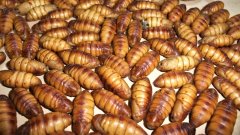
Antibacterial substances from silkworm pupae can be added to animal feed to reduce antibiotic use
In recent years, the Miaoli District Agricultural Research and Extension Station (hereinafter referred to as the Miaoli Station) has found through research that antibacterial substances produced by silkworm pupae can be further developed into functional animal feed additives, a move expected to effectively reduce the amount of antibiotics added when raising economic animals.
-
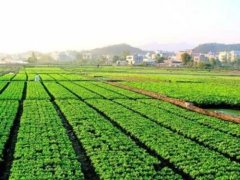
Organic Farming Prospects and Current Status Analysis: Will It Reduce Global Food Production?
Organic farming yields less and requires more farmland, so what can be done? We can both increase crop yields and avoid the farmland problem. Let's take a look together. The latest research shows that organic farming may cause some crop yields to be lower than conventional farming methods.
-
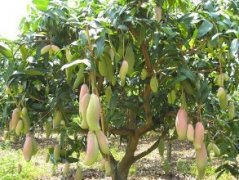
What are the reasons why mango trees fail to flower and suffer reduced yields?
Recently, Pingtung mangoes have gradually hit the market, but it has been reported that mango flowering and fruiting in Fenggang Village, Fangshan Township, fell short of expectations. Legislator Chuang Jui-hsiung recently inspected the area with experts and demanded that cash disaster relief for natural disasters be provided, but after the joint inspection team assessed the damage, it did not meet the standards for natural disaster relief
-
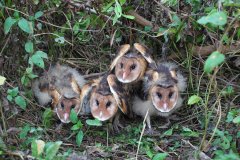
Is the grass owl an owl? It feeds mainly on rodents, which helps reduce harmful rodent populations
The Eastern grass owl belongs to the family Tytonidae, of which there are 15 species worldwide, and it is an endemic subspecies. The Eastern grass owl is also known as the "monkey-faced owl." But it is different from the owl. The grass owl is not an owl. The habitat of the grass owl is mainly distributed across the low-altitude plains of the west and the shallow hills and hilly areas
-
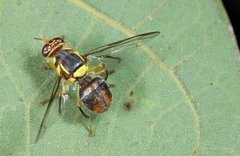
Three-Pronged Approach to Fruit Fly Control: Trapping and Orchard Cleanup Combined with Biological Control to Reduce Damage
As summer approaches, temperatures rise, and the Oriental fruit fly (Bactrocera dorsalis) begins to stir into action. Not only are the public's favorite mango and guava easily affected, but the red date (jujube), often used for warming tonics, is also a favorite food of fruit fly larvae. The Miaoli District Agricultural Research and Extension Station reminds that red dates, unlike general
-
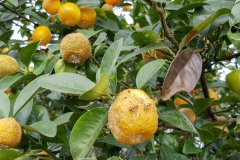
How do you control fruit flies? Clean up fallen fruit and combine with traps to reduce the population
As temperatures gradually rise, fruit fly populations gradually increase, causing damage to fruit crops such as wax apples and mangoes. Huang Yubin, an associate researcher at the Taiwan Agricultural Research Institute, said fruit flies lay eggs inside fruit crops such as guavas, causing losses for fruit farmers. Currently, across Taiwan, the highest
-
How Many Years After Planting Does a Cactus Bear Fruit
The cactus is a variant of the reduced-spine cactus in the cactus family. Its seeds are mostly flat and round, with slightly irregular edges, hairless, and light yellowish-brown. Do you know how many years it takes for a cactus to bear fruit? 1. How many years does a cactus take to bear fruit? A cactus generally takes as few as 2-3 years, or as many as 4-5 years, to bloom
-
How to Treat Cactus Diseases? A Detailed Guide to Prevention and Control Methods
The cactus is a variety of the reduced-spine cactus of the family Cactaceae. It was introduced to China in the late Ming Dynasty, and is commonly cultivated in the southern coastal areas. So, how do you treat diseases when a cactus gets them? 1. How to treat cactus diseases. Different cactus diseases are treated differently. For example,
-
How to increase the fruiting rate of loquat? Reduce humidity, cultivate fruiting mother branches, shape and prune, and apply additional fertilizer reasonably
Loquat is a fruit with high nutritional value. It is not only delicious and good in texture, but its leaves can also be combined with other medicines to make drugs. Therefore, loquat is welcomed by the market and people. In order to meet the needs of people and the market, the planting area of loquat is also becoming ⟦4 <p>Loquat is a fruit with high nutritional value. It is not only delicious and good in texture, but its leaves can also be combined with other medicines to make drugs. Therefore, loquat is welcomed by the market and people. In order to meet the needs of people and the market, the planting area of loquat is also becoming wider and wider. So how should the fruiting rate of loquat trees be increased? Next, I will share some methods for increasing the fruiting rate of loquat trees.</p><p></p><p><strong>Reduce humidity</strong></p><p>During the flower bud differentiation stage, loquat greatly needs a dry environment with high temperature and sufficient light. The flower branch bud differentiation stage of loquat occurs in summer, and there is more rain in summer, so drainage work must be done well at this time. In order to prevent water accumulation, drainage ditches must be made in low-lying areas with many pits. If the humidity in some orchards is too high, then when the leaves turn green, dig open the base of the loquat tree, expose the roots, and then cut about 80 percent of the branch roots into sections, thereby controlling nutrient dispersion, speeding up the greening of the leaves, and increasing the fruiting rate of loquat.</p><p></p><p><strong>Cultivate fruiting mother branches</strong></p><p>Because the fruiting branches of young loquat trees are all formed from summer shoots, the time, quantity, and growth capacity of summer branch bud sprouting are closely related to the fruiting rate of loquat. Therefore, a healthy and strong mother branch is the key to the number of fruits set, so in spring, after the new branches mature, fertilize in time to promote the sprouting of summer branch buds. During the fertilization stage, attention must also be paid to the amount, avoiding improper fertilization affecting the growth of loquat. Fertilization should be based on the growth stage of loquat, and the fertilizer is generally mainly phosphorus and potassium fertilizer.</p><p></p><p><strong>Shaping and pruning</strong></p><p>The pruning period of loquat is different from that of other fruit trees. Loquat is an evergreen fruit tree, so it cannot be pruned in winter like other fruit trees. Loquat pruning should be carried out in summer, immediately after the fruit is harvested. Because the summer branch bud sprouting is the most important one for loquat, it cannot be too late, otherwise it will affect the growth of flower buds. Autumn pruning of loquat is only an auxiliary pruning, carried out before the flower buds open in autumn. Fruit tree pruning can reduce the occurrence of pests and increase the nutritional development of the fruit tree, thereby improving the fruiting rate of loquat.</p><p></p><p><strong>Apply additional fertilizer reasonably</strong></p><p>Loquat needs sufficient nutrients, so during the fertilization process, the demand for phosphorus and potassium is relatively high. Therefore, the proportion of phosphorus and potassium fertilizer can be increased in fertilization, and the use of nitrogen fertilizer can be reduced. Because excessive use of nitrogen fertilizer will cause loquat to grow too fast and have excessive nutrients, seriously affecting the production volume of loquat. Therefore, use fertilizer reasonably, increase the proportion of phosphorus and potassium fertilizer, and improve the fruiting rate of the fruit tree.</p>
条件筛选