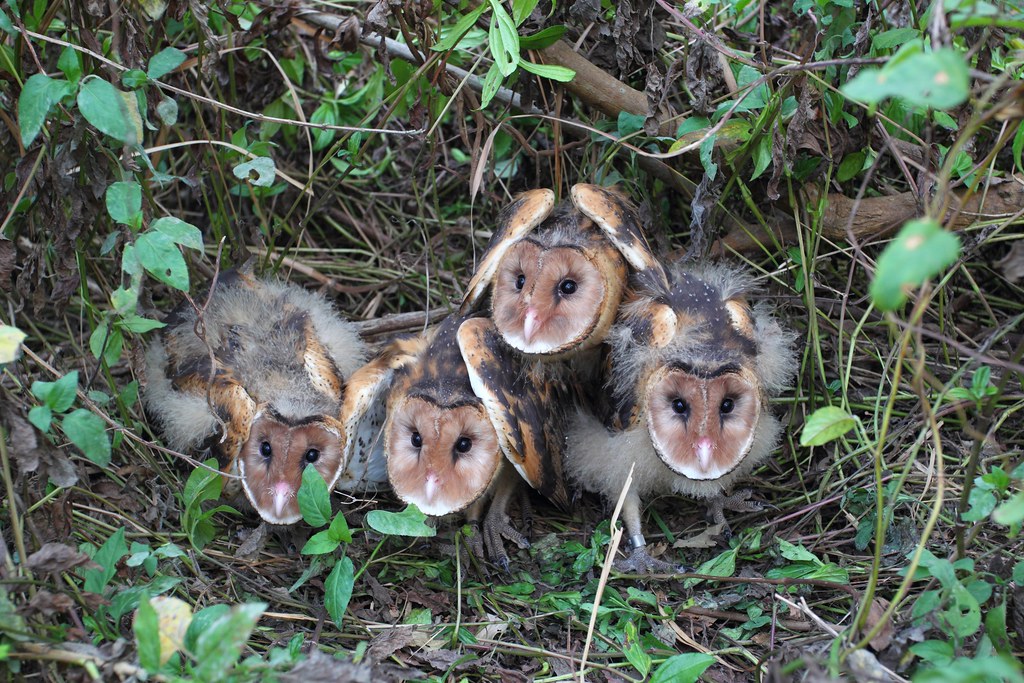
Is the grass owl an owl? It feeds mainly on rodents, which helps reduce harmful rodent populations
The Eastern grass owl belongs to the family Tytonidae, of which there are 15 species worldwide, and it is an endemic subspecies. The Eastern grass owl is also known as the "monkey-faced owl." But it is different from the owl. The grass owl is not an owl.
As for the habitat of the grass owl, it is mainly distributed across the low-altitude plains of the west, in grassland areas of shallow hills and hilly zones, badlands, orchards, cemeteries, battlefield sites, riverbeds and so on, all of which are environments they will use. They like to be active in open environments seldom visited by people, where tall grass and thickets are interspersed, and they also readily interact with the agricultural environments of the shallow hills.
According to the latest satellite transmitter research, the habitat sites of the grass owl are on average about 182 meters away from areas of human activity and buildings. It is also the only resident bird among the owls recorded in Taiwan, China that nests and breeds on the ground. During the day it usually hides and rests on the ground in tall grass, using its feet to trample out a cave-like space to hide in, and only comes out after nightfall to fly and forage.
Because it nests on the ground, the breeding season of the grass owl avoids the rainy season. Usually from October to March of the following year is the courtship and egg-laying period, the incubation period is about 30-32 days, and the nestling period is about 60 days before leaving the nest. About two months after leaving the nest, they follow the parent birds to learn hunting skills, so the young birds need at least more than half a year to become independent.
Its diet is mainly based on rodents, mainly including the greater bandicoot rat, the little Indian field mouse, the lesser rice-field rat, the red-backed vole and so on, and it also preys on small animals such as birds, hares, lizards, insects, bats and so on. From analysis of food pellets found at Zhongliao Mountain in Kaohsiung, more than 90% of the grass owl's food sources are rodents, showing that the grass owl is a very effective natural enemy of rodents.