-

How many levels of protection does the black-faced spoonbill have? An analysis of its habitat in Zhuanghe and its migration route
Do you know the black-faced spoonbill? Its numbers are extremely small. How many levels of protection does the black-faced spoonbill have? It is a Class II protected wild animal. So we must take good care of it. Xingrentuo on Shicheng Island and Yuanbaotuo in Wangjia Town of Zhuanghe City are the black-faced spoonbill's only breeding site in China
-
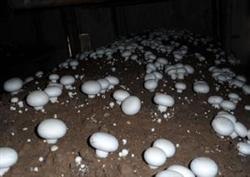
What are the methods for preventing and controlling the degeneration of Agaricus bisporus (button mushroom) spawn
Preventing spawn degeneration can increase yield, reduce the occurrence and development of pests and diseases, and cut down the amount of pesticides used, which is the foundation for producing organic button mushrooms. 1. The ambient temperature for culturing spawn must not exceed 28°C, and properly cultured spawn should not be stored at room temperature for more than half a month. 2. Properly master the time for mycelium to emerge from the substrate...
-
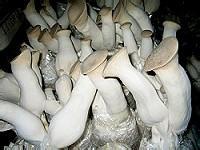
Advance preparation of raw materials is needed for winter and spring cultivation of king oyster mushrooms
King oyster mushroom (Pleurotus eryngii), also known as xuerong, is a high-quality large fleshy agaric. The king oyster mushroom has a thick, plump stalk, a crisp and tender texture, and a delicious flavor, and can be called the "king of oyster mushrooms." It is rich in nutrients and high in oligosaccharides, with effects on intestinal regulation and beauty. It is suitable for fresh preservation or drying and is highly favored by consumers...
-
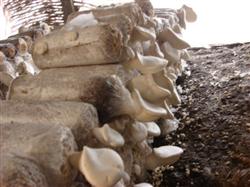
White King Oyster Mushroom Cultivation Techniques: Preparation and Sterilization of Growing Substrate
How do you prepare and sterilize the growing substrate for White King Oyster Mushrooms? Please refer to the following methods for preparing and sterilizing White King Oyster Mushroom growing substrate: 1. Substrate preparation: 100 kg cottonseed hulls, 5 kg cornmeal, 5 kg wheat bran, 3 kg lime, 2 kg gypsum. 2. Pile fermentation: The material for pile fermentation is best at around 300 kg...
-
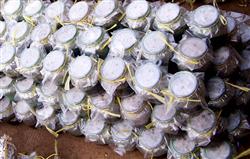
How to prevent spawn degeneration in button mushrooms? Practical prevention and control methods shared
How to prevent spawn degeneration in button mushrooms? Please provide methods to prevent spawn degeneration in button mushrooms. It can increase yield, reduce the occurrence and development of pests and diseases, and reduce pesticide use. It is the foundation of organic button mushroom production. The following methods can be used for prevention: 1. The ambient temperature for culturing spawn must not exceed 2...
-
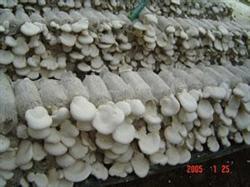
The raw material ratio for white lingzhi mushroom cultivation must be scientific and reasonable
The white lingzhi mushroom (Pleurotus nebrodensis) is an emerging mushroom type developed in recent years. Because its history of development is relatively short, many problems still exist in cultivation techniques, especially since total yield has been difficult to increase. Some growers achieve a biological conversion rate of less than 20% when cultivating white lingzhi mushrooms, and even when prices are relatively high, the economic benefit is still quite ordinary. The author...
-
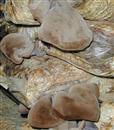
Detailed Explanation of Wood Ear Mushroom Inoculation Techniques: Master the Key Operational Steps
There are many raw materials suitable for bag cultivation of Auricularia polytricha (hairy wood ear), such as mixed wood sawdust, cottonseed hulls, broken cottonseed, bagasse, mulberry branches, cassava stalks, rice straw, soybean stalks, peanut vines, and so on. Except for mixed wood sawdust, cottonseed hulls, broken cottonseed, and bagasse, the remaining raw materials must be crushed into powder before they can be used for production. The bag cultivation process for Auricularia polytricha is similar to that for golden needle mushroom (Flammulina velutipes) bags...
-
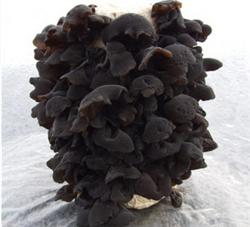
Detailed Explanation of Black Fungus (Wood Ear Mushroom) Spawn Production Techniques and Key Operation Points
After 2-3 flushes of fruiting bodies are harvested in hanging-bag cultivation of black fungus, the bags no longer produce mushrooms due to nutrient depletion and lack of moisture inside the bags, and are generally discarded as waste. In practice, we adopt a sand-covering treatment, and through multiple trials it has been shown that 3-4 more flushes can still be harvested. The specific method is as follows: remove the spawn bags, soak the spawn substrate in nutrient solution for one day to allow it to absorb sufficient water (nutrient...
-
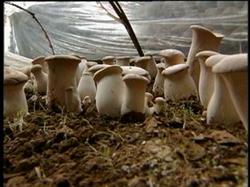
Key Operation Points Before Fruiting in King Oyster Mushroom Cultivation with Biogas Residue
Using biogas residue to cultivate king oyster mushroom (Pleurotus eryngii) offers advantages such as developing new resources and saving costs, generally reducing production costs by about 30%. The pre-fruiting operation techniques for cultivating king oyster mushroom with biogas residue are introduced as follows: 1. Biogas residue treatment: Spread the biogas residue drawn from farm household biogas digesters on flat ground, let it aerate, and sun-dry it until the moisture content...
-

Detailed explanation of the production process and technical operations at each stage for the nameko mushroom
Production process: ingredient mixing - sterilization - tray filling - cooling and inoculation - mycelial growth - summering - mushroom management - harvesting and processing - flush transition - insulation for fruiting. 1. Ingredient mixing: the most critical requirement for ingredient mixing is to mix raw materials of different compositions evenly, mix dry and wet materials evenly, so that the nutritional ratio of each tray of substrate is uniform, with a water content of 60%. 2. Sterilization: there are mainly two sterilization methods for nameko mushroom substrate: bag steaming and loose material steaming. The vast majority of growers in all areas of the county still follow these two methods, but each has its advantages and disadvantages, and attention should be paid when choosing.
条件筛选