-

-
What is the inevitable path for improving agricultural quality and efficiency?
The inevitable path for improving agricultural quality and efficiency
-
The key to storing grain in technology lies in improving quality and efficiency
The key to "storing grain in technology" lies in improving quality and efficiency
-
Initial success in the research and demonstration of integrated technical models for improving dairy cow quality and efficiency
Preliminary success achieved in the research and demonstration of integrated technical models for improving dairy cow quality and efficiency
-
Bringing technology to the countryside must play the innovation card well to help agriculture improve quality and efficiency
Bringing technology to the countryside must play the "innovation card" well
-
High-quality, high-yield and high-efficiency cultivation techniques for potatoes in dry hilly and mountainous areas
About 85% of the potato planting area in our province is mainly distributed in hilly and mountainous areas, where the climate is cool, the frost-free period is short, sunlight is abundant, the temperature difference between day and night is large, and the annual rainfall is only about 400 mm, mostly concentrated in July and August. Every spring is dry, windy, and has high evaporation, creating ecological conditions of drought in nine out of ten years. The unfavorable factor of drought and water shortage seriously hinders the development of agricultural production. The five supporting techniques centered on drought resistance - "selecting improved virus-free seed potatoes, planting small whole tubers, sprouting and sunning seed potatoes, and one late and four deep" - are
-
Pollution-free, High-quality and High-efficiency Cultivation Techniques for Chuzhou Chrysanthemum
Chuzhou Chrysanthemum was originally named "Chiju" (pond chrysanthemum), and together with Zhejiang "Hangju" (Hangzhou chrysanthemum), Henan "Huaiju" (Huai chrysanthemum), and Bozhou "Boju" (Bozhou chrysanthemum), it is collectively known as one of China's four famous chrysanthemums. Chuzhou Chrysanthemum is not only enjoyed as an ornamental flower, but is also a precious dual-purpose product for both medicine and tea. During the Guangxu period of the Qing Dynasty, "Chuzhou Chrysanthemum" was once listed as a tribute item, hence it is also called "Gongju" (tribute chrysanthemum) or "Chugongju" (Chuzhou tribute chrysanthemum). It is currently a product under origin protection in China, and the eastern Anhui region is cultivating and developing it on a large scale. 1 Biological Characteristics 1.1 Morphological Characteristics Chuzhou Chrysanthemum belongs to the Asteraceae family and is a perennial root plant, with a plant height of 60-
-
How to achieve high yield, high quality and high efficiency in Pinellia ternata cultivation? A detailed explanation of cultivation techniques
Pinellia ternata is a commonly used precious traditional Chinese medicine, and for a long time its commercial supply has mainly relied on collecting wild resources. In recent years, changes in the environment, climate and resources have led to the gradual depletion of wild resources, while artificial cultivation has developed slowly, the market has long been in short supply, and prices have continued to rise. In the winter of 2005 the medicinal herb market price was 55 to 65 yuan per kg, while in the same period of 2004 the price was 45 yuan per kg. With traditional methods, Pinellia ternata cultivation generally yields 500 to 750 kg of fresh tubers per mu, with a drying ratio of 25% to 30%, and a yield of 125 kg per mu
-
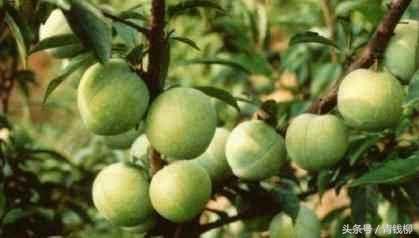
How to cultivate Youmunai (Prunus salicina × Prunus persica) with high quality and efficiency? Key supporting technologies for Ningde City
Key supporting technologies for high-quality and efficient cultivation of Youmunai in Ningde City. You (munai) is a famous and premium fruit of Fujian Province with a long cultivation history, mainly distributed in Gutian, Fu'an and surrounding counties and cities in the eastern Fujian region. The fruit resembles a peach in shape and a plum in flesh...
-
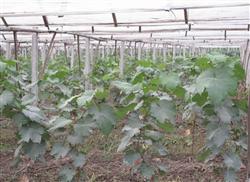
How to manage young grapevines for high quality and efficiency
1. From after the grapes bud until late August, apply a topdressing once a month, using 5 kg of farmyard manure and 50 g of nitrogen fertilizer per plant each time, applied in holes, so as to apply fertilizer frequently and lightly; 2. For newly planted grapevines, set up small supports in the same year to tie and guide the new shoots. When the new shoots grow to about 20 cm, select and keep one thick, strong new shoot and remove the other tender shoots....
条件筛选