-

Technical measures for snow resistance, freeze protection and post-snow management of forest specialty seedlings and flowers
Technical measures for snow resistance, freeze protection and post-snow management of forest specialty seedlings and flowers
-
Latest measures for overwintering rapeseed seedling protection, helping seedlings survive winter safely
Rapeseed is an autumn-sown, winter-grown crop. It has some ability to withstand severe cold, but cold air invasions and improper sowing and fertilizing often cause frost damage to rapeseed, resulting in varying degrees of yield reduction. Therefore, when rapeseed overwinters, you should take corresponding mature techniques according to local actual conditions,
-
Key Techniques for Overwintering Spinach Seedling Protection and Field Management
Spinach (Spinacia oleracea L.), also known as Persian spinach, red-root spinach, parrot spinach, etc., belongs to the genus Spinacia in the subfamily Chenopodioideae of the family Amaranthaceae, and is an annual herbaceous plant. The plant can reach 1 m in height, with a conical root that is reddish, less often white, and leaves that are hastate to ovate, bright green, with entire or
-
Technical Guidelines for Protecting Cotton Seedlings in Spring Planting
"Half the yield comes from good seedlings." Since late March, cotton sowing has been rolled out across the country. Because cotton prices opened high and kept rising last year, cotton production has shown a recovery trend this year, seed markets in various places started early, and seed sales have rebounded noticeably. In view of last year's abnormal climate, with rainy and low-temperature autumn weather, many rotten bolls and generally poor seed quality, plus the low temperature and drought of last winter and this spring, preparations must be made in advance and active responses taken to unfavorable weather of low temperature, drought or high humidity. According to forecasts from the Central Meteorological Observatory, there is a high probability of high temperature and drought this spring, so it is even more necessary to lay a
-
Five practical methods to protect wheat seedlings from freezing and cold
When the severe winter comes, doing a good job of protecting overwintering crops such as wheat from the winter cold and taking preventive measures is an important guarantee for obtaining a bumper harvest. According to different field plots, the following five methods can be used to prevent freezing and protect seedlings. First, spreading grass to protect seedlings. Some varieties with strong spring habit are sown relatively late, emerge sparsely, and have fewer tillers. For such field plots, cover them with crop straw such as wheat straw and rice straw to keep them warm, promote tiller growth, prevent freezing and strengthen seedlings, so that the wheat seedlings can safely overwinter. Second, applying fertilizer and water to the roots. For field plots where wheat seedlings have shallow roots and few tillers
-
Key technical points for preventing five hazards and protecting three types of seedlings in cotton seedling beds
Common problems in cotton nutrient bowl seedling beds are mainly manifested as drought, waterlogging, disease, fertilizer, pesticide and frozen seedlings, burned seedlings, and spindly seedlings. 1. Prevent the "five hazards" 1. The water content in the bowls should be moderate. The nutrient bowl seedling bed should be selected in a place convenient for both drainage and irrigation. The water content in the bowls is best when the soil can be pinched into a ball by hand and falls apart upon hitting the ground; 2. After sowing cotton and covering with soil. Water thoroughly in one application, and water until it slowly infiltrates downward; 3. After covering with film, ensure sufficient soil moisture. Do not uncover the film at will, and do not uncover the film until the seedlings emerge completely; 4. Around the seedling bed, drain surface water and filter waterlogged water
-
Key points of seedling protection techniques for newly planted early-sprouting tea: improving the survival rate of tea seedlings
In recent years, Chun'an County has accelerated the pace of developing clonal early-sprouting tea. By early 2007, Chun'an County had planted 53,000 mu of clonal early-sprouting tea (1 mu = 667 sq m, the same below), of which 38,000 mu were in production, and another 15,000 mu still needed strengthened drought resistance and seedling protection, with management aimed at improving the survival rate. Especially for tea gardens planted last winter and this spring, the following seedling protection measures must be effectively adopted. 1. Mulch with grass at the right time. Mulching with grass can preserve water and lower temperature, and loosen the soil; it is a key drought-resistance technique. Cutting grass
-
What are the effective methods for protecting pepper seedlings from freezing in winter?
During winter pepper seedling raising, sudden cold waves often strike, the temperature drops abruptly, and the seedlings are prone to freezing damage. If the temperature drops slowly, they are less likely to freeze. If the temperature is not very low but lasts for a long time, especially when low temperature is accompanied by rain, a condition known as "wet cold", the seedlings are also very prone to freezing damage. The severity of freezing damage to the seedlings is also related to how quickly the temperature rises after the low temperature. If the temperature rises slowly, the seedlings thaw slowly and easily regain their vitality. If the warming and thawing are too
-
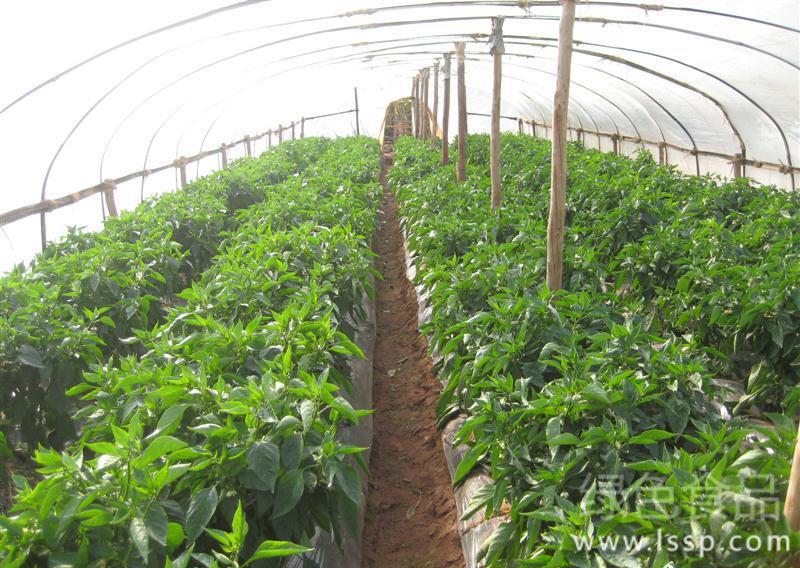
Four Simple Ways to Protect Pepper Seedlings from Freezing in Winter Greenhouses
Four Simple Ways to Protect Pepper Seedlings from Freezing in Winter Greenhouses
-
How to overwinter and protect spinach seedlings in the north? Key technical points explained in detail
Celery, also known as Western celery, foreign celery, or American celery, is planted in autumn in the Shuyang area. The average yield per mu is 3000-4000 kg, and high-yielding fields can reach 5000 kg per mu. Its high-yield autumn cultivation techniques are briefly described as follows: 1. Select good varieties for sowing. Choose varieties that bolt late, have strong stress resistance, are not prone to softening, and have thick, solid stalks...
条件筛选