-
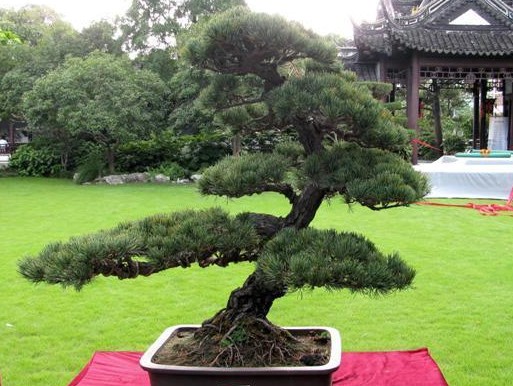
What are the representative tree species and artistic styles of Shanghai-style bonsai?
Shanghai-style bonsai is one of the excellent traditional arts of the Han ethnic group, and is a bonsai art school named after Shanghai. It embodies literature and aesthetics, and integrates plant cultivation science, plant morphology, plant physiology, garden art and plant modeling art. The distribution range of Shanghai-style bonsai is mainly in Shanghai and its surrounding counties and cities
-
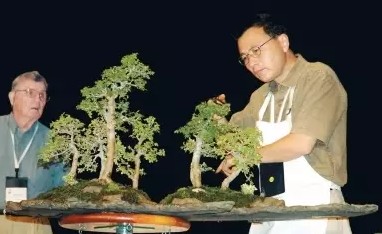
Yangzhou-style penjing debuts on the world stage, with Chinese penjing art master Zhao Qingquan giving a special presentation
With no prominent signboard hung high and no luxurious decoration, Master Zhao Qingquan's studio, tucked away in a corner of the Penjing Museum in the Ten Thousand Flower Garden of Slender West Lake, looks quite simple and understated. When the reporter walked into Zhao Qingquan's office, he was on the phone with Su Yiji, former chairman of the International Bonsai Association and a famous penjing and viewing stone artist from Taiwan, China
-
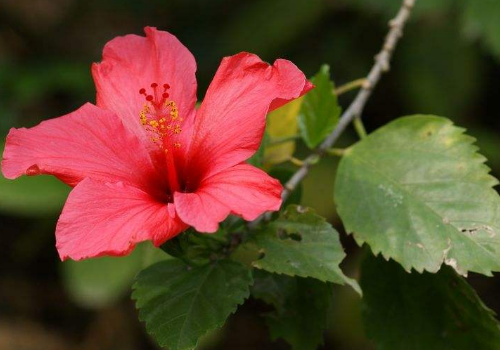
Are there any taboos about keeping hibiscus at home? Does it represent death?
Hibiscus is a plant that blooms with red flowers, a single bloom is quite large, and many people like it. So, are there any taboos about keeping hibiscus at home? Does it represent death? Are there any taboos about keeping hibiscus at home? There are no taboos about keeping hibiscus at home
-

What level does a cotton single boll weight of 8 grams represent?
1. Large bolls: The average single boll weight of this variety is 8 grams, with the largest single boll weighing 9.2 grams. Lint percentage is 41.5%, and seed index is 11.1 grams. 2. Good emergence: The seeding rate for this variety is 400-500 grams per mu, with strong germination vigor, good emergence, and uniform, vigorous seedlings. 3. Strong growth: The growth period of this variety is about 128 days, with medium-sized leaves and good ventilation and light penetration. Plant height is 105 cm, the cotton plants are clean, and the fruiting branches have strong outward extension ability. Cotton bolls are evenly distributed on the lower, middle, and upper parts of the plant and on the inner and outer periphery, and boll weight is consistent. 4. Good resistance: This variety is highly resistant to cotton
-
Cotton mirid bugs still require priority control at present
This year's cotton pest situation differs from previous years. For most of the cotton growing period, the first and second generations of cotton bollworm did not have too great an impact on cotton; it can be said that cotton bollworm did not break out on a large scale. However, in the later stage of cotton growth, some cotton farmers only focused on controlling summer aphids and did not pay attention to controlling other pests. In fact, pests in the later stage of cotton growth are often another important factor preventing high cotton yields. The main pest in the later stage of cotton growth is the cotton mirid bug, a hemipteran cotton pest with extremely strong reproductive capacity, whose damage period lasts from mid-May
条件筛选