-

Why Plastic Mulch Is Hard to Recycle: The Problem Lies in the Mulch Itself
After more than 30 years of development and application, plastic mulch coverage has become one of the most important agronomic techniques in our country, and in the northwest region it has even created a situation in which agricultural production cannot be carried out without plastic mulch coverage. At present, on the one hand, plastic mulch coverage has been incorporated into national and local agricultural
-
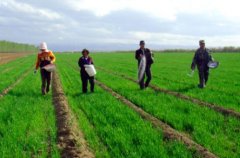
Is Laying Plastic Sheeting Useful in Field Management? Common Practices Explained in One Article
Do you know what the black plastic commonly seen in fields is for? Why do farmers lay a layer of black plastic? What are the benefits of doing so? Do you know? Let's take a look together. The presence of silver-black plastic sheeting is often seen in fields, with one plot after another completely covered to prevent
-
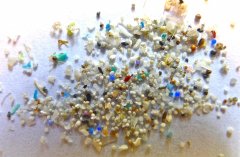
Bioplastics do not use petroleum and degrade very quickly. Is there a solution to the plastic waste crisis?
Plastic waste crisis? What can be done? Bioplastics do not use petroleum and degrade very quickly. Currently, a new study from Tel Aviv University in Israel describes the process technology for making bioplastic polymers derived from microorganisms that feed on seaweed.
-
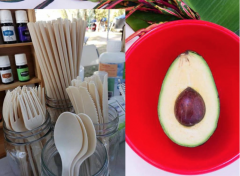
Avocado seeds turned into bioplastic to make tableware, self-decomposes in half a year, very eco-friendly
Avocados, as we all know, are a fairly popular food, but did you know? Its seed can be turned into tableware. How does that work? Let's take a look! In recent years, more and more people have come to love eating avocados, but you would never guess that the avocado seed, besides being
-
How should plastic mulch be laid when planting sweet potatoes?
Abstract When planting sweet potatoes, you can choose a rotary tillage, ridging and mulching integrated machine, or you can cover the film manually. Film selection: For sweet potato planting, transparent film is usually chosen for mulching. Pesticide application: Before ridging, to control underground pests, 6% phoxim-phorate granules can be applied; before mulching, to control weeds
-
Plastic Mulch Peanut Planting Time Is Mid-May, with Detailed Key Points of Planting Technology
Summary Varieties: Choose high-quality varieties with a growth period of about 120-130 days. Planting site: It is advisable to choose fertile sandy loam with good drainage and irrigation. Land preparation: The depth is about 20-23cm, and the soil needs to be fine and free of clods. Fertilization: Farmyard manure and chemical fertilizer can be chosen as base fertilizer. Sowing:
-
What to Do When a Clivia Gets Stuck Arrow? Learn to Treat It with a Plastic Bag
When it comes to the most popular flowering plants in daily life, orchids certainly count among them. There are many varieties of orchids, and each one is very beautiful and exquisite. In fact, Clivia stands out among the many orchids and has become one of everyone's favorite orchids. Although Clivia is beautiful,
-
How to cultivate plastic-mulched watermelon for high yield? Detailed explanation of key planting techniques
Most watermelons on the market now are plastic-mulched watermelons, so how do plastic-mulched watermelons prevent premature aging? What should be noted when fertilizing? High-yield cultivation techniques for plastic-mulched watermelon. 1. Select good varieties. According to market demand and the characteristics of our county's soil and climate, choose varieties with high yield,
-
Detailed Explanation of Key Techniques for Cultivating Lion's Mane Mushroom in Plastic Greenhouses
Lion's mane mushroom (scientific name: Hericium erinaceus) is a traditional prized delicacy in China, with tender flesh, fragrant aroma and delicious taste. It is one of the four famous dishes (lion's mane mushroom, bear paw, sea cucumber, shark fin). It is known as the "mountain delicacy lion's mane, sea delicacy bird's nest." This fungus of the Hericiaceae family has a cap surface covered with furry fleshy spines about 1-3 cm long. Its fruiting body is round and thick, white when fresh, turning light yellow to light brown after drying, with a narrow base or a slightly short stalk, and an enlarged upper part, 3.5-10 cm in diameter. Seen from a distance it resembles the head of a golden monkey, hence the name "lion's mane mushroom"; it also looks like a hedgehog, hence it is also called "hedgehog fungus." Lion's mane is an incomparably delicious mountain delicacy, with tender flesh and a mellow, tasty flavor, known as "meat among vegetables."
-
Detailed Explanation of Key Techniques for Off-Season Cultivation of Yellow Chives with Plastic Mulch
Yellow chives, also known as chive sprouts, yellow chive sprouts, or yellow chives, commonly called "chive white," are the product of chives that have been blanched through softening cultivation and turned yellow. When chives are cut off from light and grown entirely in darkness, they cannot carry out photosynthesis or synthesize chlorophyll due to the lack of sunlight, and thus turn yellow; this is called
条件筛选