-
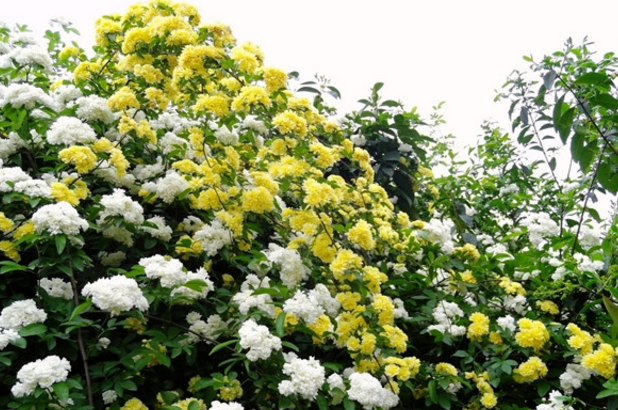
How to grow Orange Jessamine (Murraya paniculata) and things to note, and when does it bloom?
Orange Jessamine is famous for its fragrance, with a rich, highly enticing floral scent. Orange Jessamine (Murraya paniculata) has a graceful plant shape and elegant branches and leaves, with high ornamental value, and can also be made into bonsai for viewing. Do you still remember the song "Orange Jessamine" that Jay Chou made famous back in the day? Hearing this name now brings back a wave of memories. So you know the song,
-

What are the management measures for rice during the jointing and panicle elongation stage?
Currently, rice growth across the city has successively entered the jointing and panicle elongation stage, an important period of transition from vegetative growth to reproductive growth and a critical period that determines yield. Doing a good job of field management in the middle and late stages of rice is crucial for ensuring sufficient panicles, striving for large panicles, shaping a high-yield plant type, and building a good foundation for high yield. I. Seedling growth characteristics According to a survey on July 21, the average leaf age of machine-transplanted rice was 12.31 leaves, 0.49 leaves more than the same period last year; the average leaf age of direct-seeded rice was 10.31 leaves, 0.56 leaves more than the same period last year; the total number of stems and tillers was 38.63 for machine-transplanted rice
-
Management Measures and Technical Points for Rice during the Jointing and Panicle Elongation Stage
The jointing and panicle elongation stage refers to the period from jointing and the beginning of young panicle differentiation to just before heading, generally 25-36 days for middle-season rice. 1. Growth and development characteristics and growth appearance during the jointing and panicle elongation stage (1) Growth and development characteristics During this period, on the one hand, stem elongation is the center, completing the growth of the last few leaves and root system and other vegetative organs; on the other hand, reproductive growth centered on young panicle differentiation takes place. During this period some tillers gradually die, and the total number of stems and tillers declines compared with the earlier stage, so it is an important period for preserving tillers and increasing panicles. From
-
Cold damage prevention and control methods and key technical points for rice at the panicle elongation stage
Rice pollination at the panicle elongation stage greatly needs temperature and oxygen. During this period, cold winds blowing from the northeast are very likely to occur, causing poor pollination, empty and shriveled grains, and reduced yield. Prevention and control techniques for cold damage. First, accelerate rice pollination. From late July to early and mid-August, due to meteorological causes of atmospheric circulation, the temperature generally drops to around 17, causing rice flowers to remain closed and not open, affecting rice pollination and producing empty and shriveled grains. For this kind of obstructive cold damage, scientific management of the paddy field should be strengthened so that rice accelerates through the pollination period and avoids
-
16% Exianqing is the first choice for controlling rice "small panicle head"
For many years, in some major rice-producing areas such as Jiangsu, the phenomenon of "small panicle head" (also called small-grain distorted panicle) has appeared continuously over many years under multiple varieties, multiple planting levels, and multiple ecological conditions in large-scale production. Its characteristics are: small panicles, small glumes, cracking of the inner and outer husks after grain filling, partial exposure of rice grains, and small grains with dark brown color. It is especially severe in the Lixiahe area, coastal areas, along the Huai River, along the Yangtze River, and hilly areas of Jiangsu Province. It is estimated that in recent years the affected area in Jiangsu Province alone has been about 100,000 hectares each year, reducing rice output by more than 100 million kg, and cumulatively causing about 500 million kg of rice yield loss.
-

Egg prices rise because last year's floods reduced laying hens, not because of an epidemic; no need to panic-buy
The egg shortage has nothing to do with an epidemic, so don't rush to stock up on eggs! Last year's floods reduced the number of laying hens, and the price of one egg has risen by 0.3 yuan
-

How to grow Panicled Codonopsis (Codonopsis convolvulacea)? Master these key growing techniques
Growing techniques for Panicled Codonopsis
-

Cultivation Techniques and Planting Methods for Cynanchum paniculatum
Cultivation Techniques for Cynanchum paniculatum
-
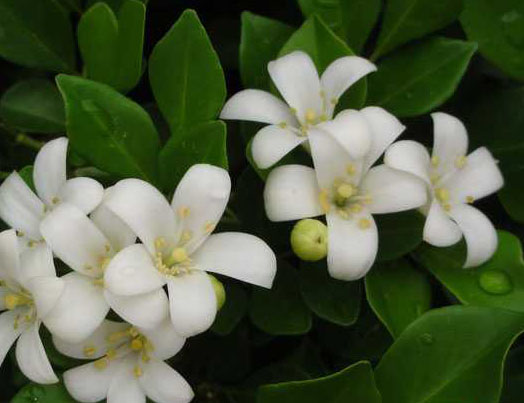
What are the main measures for making Murraya paniculata bloom abundantly with a strong fragrance?
Murraya paniculata, also known as qianlixiang and yueju, is an evergreen shrub or small tree. Its small cymes are terminal or axillary, white, with an extremely strong fragrance and strong diffusion, and the flowering period is in autumn. To make its fragrance spread far, pot cultivation should use sandy soil rich in humus, loose and fertile. During the young tree stage, change the pot once every year in early spring.
-
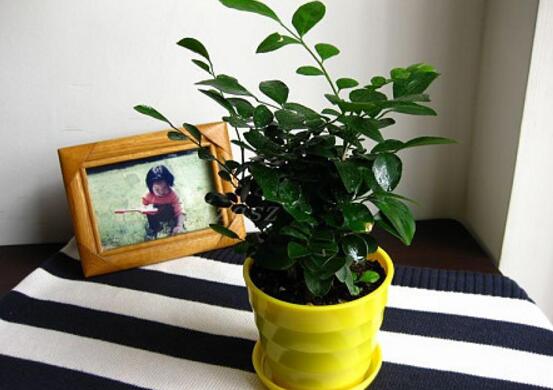
How to propagate Murraya paniculata? Three propagation methods, with layering offering a high survival rate
Murraya paniculata, an ornamental plant with a graceful form and a rich floral fragrance, is deeply loved by gardening enthusiasts. And because Murraya paniculata has many effects and uses, especially its medicinal value in treating various diseases, it has been widely propagated. So how do you propagate Murraya paniculata? According to what I know
条件筛选