What are the main measures for making Murraya paniculata bloom abundantly with a strong fragrance?
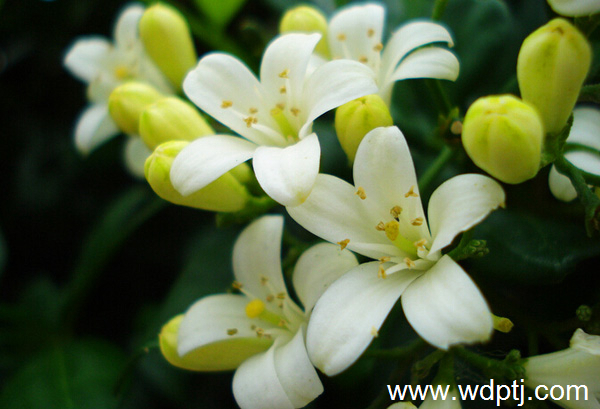
Murraya paniculata, also known as qianlixiang and yueju, is an evergreen shrub or small tree. Its small cymes are terminal or axillary, white, with an extremely strong fragrance and strong diffusion, and the flowering period is in autumn.
To make its fragrance spread far, pot cultivation should use sandy soil rich in humus, loose and fertile. During the young tree stage, change the pot once every year in early spring; when it reaches the flowering stage, plant it in a wooden tub to promote root development. Murraya paniculata is relatively drought-tolerant, and during the growing period it should not be watered too much; it is enough to keep the soil slightly moist regularly. In the high-temperature summer season, watering should be sufficient, but there must be no water accumulation in the pot (tub). At this time, it is also necessary to frequently spray water on the branches and leaves, which can both cool and increase humidity and help the branches and leaves stay glossy green. During the peak growing season, apply a dilute cake fertilizer solution once every 3-4 weeks. During the growing period, keep it under light shade, and it will bloom abundantly with a strong fragrance.
[Growing Environment]
Murraya paniculata likes a warm environment, and the most suitable temperature is between 20-32 degrees. It is not cold-tolerant and belongs to sun-loving tree species. It is best planted in a place with sufficient sunlight and air circulation, so that it can have lush leaves, abundant flowers, and a strong fragrance. When it blooms, we can place it on a windowsill, which will fill the room with fragrance. After the flowers fade, it still needs to be placed in a place with sufficient sunlight, and growth in semi-shade is not as robust as in a sunny place. The fragrance of the flowers will also be weaker. Common Murraya paniculata grows in shrub thickets on flat ground, gentle slopes, and small hills not far from the coast.
[Cultivation Methods]
Murraya paniculata is not suitable for being placed indoors; it is best placed in semi-shade. In summer, attention must be paid to preventing exposure to strong sun, and in winter it also needs to be placed in a greenhouse, and the temperature must not be lower than 5 degrees. The place where it is kept needs frequent spraying, and the air humidity must be maintained. Murraya paniculata likes moisture, so it should be watered in time, otherwise it will wither and die from lack of water. Although bonsai trees certainly need continuous watering, it cannot be too much either. Excessive water will also cause excessive vegetative growth, and long-term overly wet potting soil will make its roots breathe poorly, leading to root rot and death.
For watering Murraya paniculata, one should grasp the principle of "do not water if not dry, and water thoroughly when watering." Generally, in high-temperature summer weather, it can be watered once in the morning and once in the evening; in spring, it can be watered once a day or every other day; in spring it can be watered every other day; in winter it can be watered once every several days; and finally, during the plum rain season, it does not need to be watered.
It is worth noting that watering can also be combined with fertilizing; generally, after applying topdressing, water it promptly. If tap water is used, it needs to be stored in a water vat for one day before use, and the watering tool used is best a watering can with a rose head. Fertilizing: the nutrients in potting soil are limited, so in order to supply the necessary nutrients for the growth of bonsai trees, attention should be paid to supplementing appropriate fertilizer. However, bonsai trees grow slowly, so too much fertilizer should not be applied, lest it cause excessive vegetative growth and thus affect their beauty.
Fertilizing Murraya paniculata should be done in appropriate amounts, and one needs to master the types of fertilizer and their nutrient content. The nutrients needed for plant growth mainly include fertilizer that can promote the growth of branches and leaves, and of course can also promote the growth of flowers and fruits. It can also effectively promote the growth of stems and roots.
After pruning and shaping, Murraya paniculata still needs to continue growing. Bonsai trees will have their growth inhibited, and to promote the development and flattening of side branches, we can remove the tender tips of the branch ends for it.
[Price]
Generally speaking, the price of thick and sturdy Murraya paniculata will be above 3000, while ordinary ones will be around 1200. However, depending on differences in demand in some markets and market influences, there will be fluctuations to a certain extent, but they will not be very large. If you want to buy one, you can go to the corresponding flower and plant market, and it depends on the specific situation.
[Related Reading]
Cultivation methods of red water lily Cultivation methods of Reineckea carnea Cultivation methods of rhododendron Cultivation methods of cactus Cultivation methods of Kalanchoe
Murraya paniculata Murraya exotica L. Murraya paniculata illustrated guide: how to grow Murraya paniculata / how to propagate Murraya paniculata
Murraya paniculata profileMurraya paniculata Murraya exotica L.
Cultivation methods and precautions for Murraya paniculata Introduction to Murraya paniculata
Murraya paniculata is also known as shilajiao, jiuqiuxiang, jiushuxiang, qilixiang, qianlixiang, wanlixiang, guoshanxiang, huangjingui, shanhuangpi, qianzhiyan, and yueju. Latin name: Murraya exotica L. It is an evergreen shrub of the Rutaceae family and the genus Murraya, sometimes able to grow into a small tree form, with a graceful plant shape, elegant branches and leaves, and a rich floral fragrance.
Murraya paniculata consists of the dried leaves and young leafy twigs of the Rutaceae plants Murraya paniculata and Murraya paniculata var. paniculata. It can be harvested throughout the year; remove old branches, and dry in the shade. The young twigs are cylindrical, 1-5 mm in diameter, with a grayish-brown surface, longitudinal wrinkles, tough texture, not easy to break, and an uneven fracture.
The chemical components contained in the roots, stems, and leaves are similar to those of Murraya paniculata, and it is produced in southern parts of the five provinces and regions of Taiwan, Fujian, Guangdong, Hainan, and Guangxi.
It is commonly found in shrub thickets on flat ground, gentle slopes, and small hills not far from the coast. It prefers growing in sandy soil and sunny places. In southern regions it is often used as hedge material, or as an ornamental accent for flower gardens and hotels, and also as bonsai material.
Murraya paniculata is an evergreen shrub, sometimes able to grow into a small tree form. Its plant shape is graceful, its branches and leaves are elegant, and its floral fragrance is rich. In addition, Murraya paniculata also has extremely high medicinal value. The essential oil in its flowers, leaves, and fruits can be used to make cosmetic essences, food essences, and so on. Its branches and leaves are used as medicine and also have the effects of promoting qi and relieving pain, and invigorating blood and dispersing stasis.
Morphological Characteristics of Murraya paniculata
Murraya paniculata is an evergreen shrub or small tree that can reach up to 8 m tall. The branches are white-gray or pale yellow-gray, but the current-year branches are green.
The leaves of Murraya paniculata have 3-5-7 leaflets. The leaflets are obovate or obovate-elliptic, often asymmetrical on both sides, 1-6 cm long and 0.5-3 cm wide, with a rounded or obtuse apex, sometimes slightly concave, a short-tipped base, one side slightly skewed, entire margins, and flat; the petiolules are very short. The inflorescence is usually terminal, or both terminal and axillary, with many flowers gathered into an umbel-like form, being a shortened paniculate cyme; the flowers are white and fragrant; the sepals are ovate, about 1.5 mm long; the petals are 5, long elliptic, 10-15 mm long, and reflexed at full bloom; the stamens are 10, of unequal lengths, slightly shorter than the petals, with white filaments, and the anthers have 2 fine oil dots on the back; the style is slightly more slender than the ovary, with no obvious boundary between it and the ovary, both pale green, and the stigma is yellow and thick. The fruit is orange-yellow to vermilion, broadly ovate or elliptic, with a short pointed apex, slightly skewed, sometimes spherical, 8-12 mm long and 6-10 mm in transverse diameter; the flesh has a sticky mucilaginous liquid, and the seeds have short cottony hairs. The flowering period is April-August, and it also blooms after autumn; the fruiting period is September-December.
The bark is grayish, with many branches, smooth and hairless. The odd-pinnate compound leaves are alternate; the leaflets are 3-9, ovate, obovate to nearly rhombic, 2-8 cm long and 1-3 cm wide, with an obtuse or obtusely acuminate apex, sometimes slightly concave, a broadly cuneate or nearly rounded base, entire margins, dark green and glossy above, blue-green below, densely glandular-punctate, the glandular dots turning brown-black after drying, the midvein prominent, all hairless, papery or thickly papery.
The cymes have 3 to several flowers, terminal or axillary, and the floral axis is nearly hairless; the flowers are large, up to 4 cm in diameter, extremely fragrant; the pedicels are slender; the sepals are 5, triangular, about 1-2 mm long, persistent; the petals are 5, white, oblanceolate or narrowly oblong, 2-2.5 cm long, with transparent glandular dots; the stamens are 8-10, alternating in length; the ovary is superior, 2-loculed, with 2 ovules per locule, the style 4-6 mm long, and the stigma extremely enlarged, often wider than the ovary. The berry is rice-red, spherical or ovate, 12-20 mm long and 5-10 mm thick, with a sharp apex; it has 1-2 seeds, and the seed coat has cottony hairs.
Traits
The dried stems are slender and round, generally cut into sections 3-6 cm long, with a maximum diameter not exceeding 7 mm; the exterior is grayish-yellow, with fine longitudinal lines, the cork layer peeling off to reveal flesh-colored xylem; the center of the cross-section is lighter in color, and the texture is hard. The dried leaves are leathery, ovate or elliptic, about 2-7 cm long and about 1-3 cm wide, yellow-green, with a cuneate base, entire margins, and the main vein clearly prominent on the back. The petiole is extremely short. The odor is fragrant.
Murraya paniculata var. paniculata differs from Murraya paniculata in: odd-pinnate compound leaves with 3-7 leaflets; the leaflets are smaller, obovate, 2-4.5 cm long and 1-2 cm wide, the midvein not prominent on either side, and the leathery texture thicker; the inflorescence has more flowers, the flowers are smaller, 2-3 cm in diameter, and both stamens and pistils are shorter and smaller; the anther back has 2 protruding small glands. The ovary has only 1 ovule per locule. The fruit is smaller, 8-10 mm long.
Characteristics: Its fruit has mucilage
The chemical components contained in the roots, stems, and leaves are similar to those of Murraya paniculata, and the content of yuehchukene is about 1 times higher than that of Murraya paniculata. The content of transcaryophyllene is as high as 50%.
Ecological Habits of Murraya paniculata
Murraya paniculata likes warmth, and the most suitable temperature for growth is 20-32°C. It is not cold-tolerant.
Murraya paniculata is a sun-loving tree species and should be placed in a place with sufficient sunlight and air circulation (at least five or six hours of direct light every day) to have lush leaves, abundant flowers, and fragrance. When flowering, it can be moved to a windowsill, filling the room with fragrance. After the flowers fade, it still needs to be placed in a place with sufficient sunlight. Growth in semi-shade is not as robust as in a sunny place, and the fragrance of the flowers is also weaker. If too shaded, the branches become slender and soft, the leaf color becomes lighter, and there are few or no flowers. When brought indoors in winter, it should also be placed in a place with sufficient sunlight.
It is commonly found in shrub thickets on flat ground, gentle slopes, and small hills not far from the coast. It prefers growing in sandy soil and sunny places.
Cultivation Techniques of Murraya paniculata
Murraya paniculata does not have high soil requirements; selecting sandy soil rich in humus, loose, and fertile is sufficient. Watering should follow "water when dry and stop when wet," and there should not be water accumulation in the pot, so as not to damage the roots. Murraya paniculata likes slightly acidic soil, and it is best to apply "alum fertilizer water" twice a year at intervals. It is also necessary to promptly prevent and control diseases and pests such as powdery mildew, rust disease, red spider mites, and scale insects to ensure healthy plant growth.
Site Selection and Land Preparation
Choose flat and fertile land or sunny hilly slopes. Before planting, the land needs to be prepared, beds made, and planting holes dug. It can also be planted as a hedge using the areas beside homes and around the front and back of houses in combination with greening.
Planting
In areas with irrigation conditions, planting can be done in spring; where conditions are lacking, planting should be done in the rainy season. As a spice plant, for convenient flower harvesting, it is suitable to cultivate it intensively in areas with good soil, water, and fertilizer conditions. When mainly harvesting flowers, it can be planted appropriately sparsely, with a spacing of 50 cm × 50 cm; when the purpose is harvesting leaves combined with hedge cultivation, it can be planted densely, with a spacing of 25 cm x 30 cm.
Maintenance and Management
Murraya paniculata likes sufficient sunlight and also tolerates semi-shade. It likes warmth, and the most suitable temperature for growth is 20-32°C. It is not cold-tolerant. In winter, when the minimum temperature drops to about 5°C, move it indoors at a low temperature (5-10°C) to overwinter; doing so too early is not conducive to hardening its cold tolerance. If the room temperature is too low, it easily drops leaves and affects the next year's growth; below 0°C it may freeze to death. If the room temperature is too high, the plant cannot enter dormancy well and may even sprout indoors; when taken outside, a cold wind may cause the buds to retract, and when new buds emerge again, it affects that year's growth. If the winter room temperature is too high, it consumes the plant's nutrients, which is unfavorable for the next year's growth and flowering. During the growing period, avoid direct sunlight and keep it under light shade; only in this way can Murraya paniculata bloom abundantly with a strong fragrance.
Murraya paniculata does not have strict soil requirements, and it is suitable to choose sandy soil rich in humus, loose, and fertile. Newly planted or repotted Murraya paniculata should be watered thoroughly, first placed in the shade for about 10 days, and then placed in a sunny, well-ventilated place for cultivation.
When planting, place a few pieces of animal hoof and horn slices at the bottom of the pot as base fertilizer. In addition to applying base fertilizer when planting, when potting or repotting and changing soil, it is suitable to mix some bone meal or nitrogen-phosphorus-potassium compound fertilizer into the culture soil. During the growing period, apply a decomposed organic liquid fertilizer once a month. Do not apply nitrogen fertilizer alone, otherwise the branches and leaves will grow excessively and no flower buds will form. From April to June, to promote flower bud differentiation, spray a 0.2% potassium dihydrogen phosphate solution on the leaves once a month, and the leftover can be poured on the roots. Because Murraya paniculata is native to the south and likes slightly acidic soil, it is best to apply "alum fertilizer water" twice a year at intervals. However, do not fertilize during the winter dormancy period. If cultivating young trees, fertilizer and water can be appropriately increased to promote faster growth and development, so as to reach the height and thickness required for shaping as soon as possible.
Murraya paniculata is drought-tolerant, and watering should follow "water when dry and stop when wet." Do not let water accumulate in the pot. During continuous rainy weather, the pot should be laid on its side or placed in a rain-sheltered place. If watered too much, it often causes root rot. If the leaves curl and lose their luster, this is a signal of root rot, and attention should be paid to taking remedial measures as soon as possible. First, control watering and observe the changes. If after 2-3 days there is still no improvement and it instead becomes more serious, then remove the plant from the pot, wash away the soil from the roots with water, let it dry, then soak it in a 1:5000 potassium permanganate solution for disinfection, and then place it in a 1:2000 naphthaleneacetic acid rooting solution for 8 hours before repotting.
During the growing period, watering should not be too much; it is enough to keep the soil slightly moist regularly. In the high-temperature summer season, watering should not be too much, but there must be no water accumulation in the pot (tub). At this time, it is also necessary to frequently spray water on the branches and leaves, which can both cool and increase humidity and help keep the branches and leaves glossy green. After being brought indoors in winter, water less; just keep the potting soil moist.
In spring, pruning should be carried out in combination with planting or repotting. Overdense branches and excessively vigorous branches should be shortened or thinned at any time. Major pruning should be carried out in late October or November. Do not prune heavily during the flowering period, so as not to affect ornamental value.
Bonsai Making
Processing
Murraya paniculata is suitable for shaping by pruning. Old tree stumps collected from the wild can be appropriately carved and processed to make the trunk and branches and leaves proportionate, but care should be taken not to leave traces of artificial cutting. For seedlings cultivated from a young age, the main trunk can also be slightly bent and shaped, and then pruned. The pruning period is preferably April-May in spring. Generally, the "branch-storing and trunk-cutting method" is used, that is, when the main branches of the trunk are cultivated to a suitable thickness, a section is cut off from each branch. If these cut branches are called "first-section branches," then the secondary branches that later grow on them are called "second-section branches." When the "second-section branches" grow to a suitable thickness, another section is cut off to produce "third-section branches," and so on, carrying out shaping and processing. Usually only 1-3 branchlets are kept on each section of branch, with differences in length. After years of pruning in this way, the branches can achieve a natural, twisting, and vigorous effect. Of course, during pruning and processing, some flexible handling should also be done according to the needs of shaping, to achieve a balanced density and a rich pictorial quality.
Precautions
1. Organic fertilizer and cake fertilizer must be fully decomposed before use; otherwise, fermentation in the potting soil can easily burn the roots.
2. Liquid fertilizer should not be too concentrated and must be diluted before use; otherwise, fertilizer damage can easily occur.
3. For trees that have just been potted, do not fertilize when new roots have not yet grown.
4. When the potting soil is dry, water after fertilizing; fertilizing before rain is better, and fertilizing on rainy days is not suitable.
5. Liquid fertilizer water should not be sprinkled on the leaf surface.
6. During the growing season, topdressing should use quick-acting fertilizer; during the dormancy period, slow-release fertilizer should be used; generally do not fertilize during the plum rain season and autumn.
Pruning
After shaping, Murraya paniculata still continues to grow. If allowed to grow naturally without suppression, it will inevitably affect the tree's shape and cause it to lose its artistic value. Therefore, it should be pruned in time: long branches shortened, dense branches thinned, so as to maintain a graceful tree shape and appropriate proportions. In particular, Murraya paniculata has strong branch sprouting ability, so to maintain a certain tree shape, attention must be paid to frequent pruning.
1. Pinching: To suppress the height growth of bonsai trees and promote the development and flattening of side branches, the tender tips of the branch ends can be pinched off.
2. Bud removal: When many adventitious buds grow on the base or trunk of a bonsai tree, the buds should be removed at any time, so as to avoid the sprouting of forked branches and affecting the beauty of the tree shape.
3. Branch pruning: Bonsai trees often produce many new branches. To maintain their beautiful shape, attention must be paid to frequent pruning, and the pruning method should be determined according to the tree shape. Dead branches, parallel branches, crossing branches, and others that hinder beauty should all be cut off in time. Useful branches can be left until April-May in spring for another pruning in combination with shaping.
Repotting
Murraya paniculata can be repotted once every 2-3 years, with October-November in autumn being the best period; late spring April-May is also fine; winter is generally not suitable for repotting. For repotting, the original pot can be used or a pot one size larger can be used, determined according to the size of the tree. When repotting, root pruning and soil replacement can be combined. Roots that are too dense or too long should be pruned. When removing from the pot, peel off 50-70% of the old potting soil around the root ball, cut off rotten roots and some old roots, and then handle it according to the potting process.
If more of the original soil is retained, repotting can be done at any time, not restricted by season. If most or all of the old soil needs to be replaced, the appropriate repotting period must be strictly selected.
Harvesting and Storage
During the vigorous growth period, leaves are harvested in combination with pinching and shaping pruning. For established stands, branches and leaves are harvested 1-2 times per year and dried in the sun.
Cultivation Methods of Murraya paniculata
Murraya paniculata is not suitable for being placed indoors; it is suitable for being placed in semi-shade. In summer, attention must be paid to preventing exposure to strong sun; in winter, it needs to be put in a greenhouse, and the temperature must not be lower than 5°C. It likes a warm and humid climate, is drought-tolerant, and is not cold-tolerant. The most suitable annual average temperature is 15-18°C, the highest monthly average temperature is 27-29°C, the lowest monthly average temperature is 1-2°C, it can withstand an extreme minimum temperature of -7°C, and the suitable annual rainfall is 1000-1600 mm. It is suitable to choose slightly alkaline soil with sufficient sunlight, deep soil layers, and loose fertility for cultivation.
Watering
The place where Murraya paniculata is kept should be sprayed frequently to maintain air humidity. Watering: Murraya paniculata likes moisture, but because Murraya paniculata grown in pots has
limited soil, it dries out very easily. If not watered in time, it will die from lack of water. Although bonsai trees certainly need continuous watering, it should not be too much either. Excessive water will cause excessive vegetative growth, and long-term overly wet potting soil will cause poor root respiration, easily leading to root rot and death.
Therefore, for watering, one should grasp the principle of "do not water if not dry, and water thoroughly when watering." Generally, in the high-temperature summer period, water once in the morning and once in the evening; in spring and autumn, water once a day or every other day; in winter, water once every several days; during the plum rain season or on rainy days, do not water.
Watering can be combined with fertilizing; after applying topdressing, water promptly. Tap water should be stored in a water vat for one day before use. The watering tool is best a watering can with a rose head. Fertilizing: the nutrients in potting soil are limited. In order to supply the necessary nutrients for the growth of bonsai trees, attention should be paid to supplementing appropriate fertilizer. However, bonsai trees grow slowly, and too much fertilizer should not be applied, which would cause excessive vegetative growth and affect their beauty.
Fertilizing
Murraya paniculata should be fertilized in appropriate amounts, and one should master the types of fertilizer and their nutrient content. The nutrients needed for plant growth mainly include fertilizer that can promote the growth of branches and leaves, can promote the growth of flowers and fruits, and can promote the growth of stems and roots. Therefore, the choice of fertilizer can be determined according to the growth conditions of the Murraya paniculata bonsai and the needs of different growth stages.
After pruning and shaping, Murraya paniculata still continues to grow. To suppress the height growth of bonsai trees and promote the development and flattening of side branches, the tender tips of the branch ends can be pinched off.
Field Management
The cultivation site should be selected in a sunny area where water does not accumulate. Fertilization should pay attention to the combined application of nitrogen, phosphorus, and potassium, and nitrogen fertilizer alone must not be applied; before flowering and bud formation, applying more phosphorus and potassium fertilizer is beneficial for producing more flowers and a strong floral fragrance. If there is too much nitrogen fertilizer and a lack of phosphorus and potassium fertilizer, then branches and leaves will grow excessively without forming flower buds. Before bud formation, watering should be appropriately reduced to allow bud formation. During the flowering period and after buds have formed, normal watering and normal fertilization should be carried out. For potted Murraya paniculata, some slow-release fertilizer containing phosphorus and potassium fertilizer should be placed as base fertilizer. When cultivating old Murraya paniculata stumps to make stump bonsai, after they have survived in the pot, generally watering should not be too much, and fertilizing should be little or none. Because too much water and fertilizer can very easily sprout useless tender branch tips and affect beauty.
Propagation Methods of Murraya paniculata
1.Seed Propagation
For Murraya paniculata, pick fully mature vermilion fresh fruits, rub them in clean water, remove the fruit skin as well as impurities and shriveled seeds floating on the water surface, and dry them in the shade for later use. Sowing can be done in both spring and autumn. Generally, spring sowing is mostly used. Spring sowing is March-April, and May is also acceptable. When the temperature is 16-22°C, germination occurs 25-35 days after sowing; autumn sowing is preferably in September-early October. Before sowing, choose a plot with good water and fertilizer conditions as a nursery, deep plow, break up the soil, rake it level, and make beds 1-1.2 m wide. Both drilling and broadcasting can be used. For drilling, use a row spacing of 30 cm; for broadcasting, mix the seeds evenly with fine sand and spread them uniformly on the seedbed. After sowing, cover with 1.2 cm of soil, cover with grass on top, and irrigate. After seedlings emerge, uncover the covering grass in time. When 2-3 true leaves appear, thin the seedlings, keeping a plant spacing of 10-15 cm. In combination with weeding, apply human and livestock manure as topdressing. When the seedlings are 15-20 cm tall, plant them out.
2.Cutting Propagation
Cuttings of Murraya paniculata are suitable in spring or during the rainy season in July-August. Cut vigorous, moderately mature, gray-green 1-year-old or older branches as cuttings; current-year tender branches should not be used. The cuttings are 10-15 cm long and have 4-5 nodes; the cut should be smooth. Insert them obliquely into the seedbed. A layer of clean river sand can be spread on the seedbed. The row spacing is 12 cm × 9 cm. After inserting, water and keep the soil in the bed moist. Spring-sown seedlings can be planted out in the same year, while autumn-sown ones are planted out the following year.
3.Layering Propagation
Generally carried out in the rainy season. A part of a semi-lignified branch is ring-barked or cut and buried in the soil. After it roots and sprouts, it can be separated in late autumn or the following spring and then planted out.
Disease Control of Murraya paniculata: Powdery Mildew
It occurs on the leaves and can be controlled by spraying agents such as azoxystrobin, triadimefon, and thiophanate-methyl. Rust disease is a common trunk disease that causes the core of the trunk to rot, and can be controlled by spraying triadimefon. Red spider mites occur when the temperature is relatively high. They suck the sap of branches and leaves. After the leaves are damaged, gray spots appear, and in severe cases they turn yellow and fall off. They can be controlled by spraying propargite, hexythiazox, or pyridaben. Scale insects suck the sap of trees and can also cause sooty mold, making the trees grow poorly, with branches and leaves turning yellow and early defoliation. In addition to manual brushing to eliminate them, they can be killed by spraying dimethoate, trichlorfon, or dichlorvos. Longhorn beetles are relatively harmful to the plants; adults can be removed manually, or control can be carried out by applying lime sulfur mixture.
Red Spider Mites
They damage leaves, attaching to Murraya paniculata leaves and piercing and sucking sap, causing malnutrition in the plant, resulting in leaf chlorosis and yellowing, and leading to massive defoliation.
Control method: They are prone to occur in high temperature and drought. Pay attention to checking the leaves. When tiny red insects the size of needle heads are found crawling on the leaf surface or leaf back, continuously spray 2-3 times with 1000 times chlorpyrifos aqueous solution, or 1500 times miedisi aqueous solution, or 2000 times mieshaoli aqueous solution for control, spraying once every 10-15 days. For household potted Murraya paniculata, spray with 25-30 times red chili aqueous solution, or 25-30 times dried tobacco leaf infusion, or after moistening the leaves with clean water, sprinkle a layer of sulfur powder.
Twig Longhorn Beetles
They damage branches and twigs, boring in from the epidermal layer to cause damage, forming insect galleries, weakening tree vigor, and in severe cases causing branches and twigs to break, or even die.
Control method: During the growing season of Murraya paniculata, pay attention to frequently checking the branches and twigs. When insect frass is found discharged, find the insect hole, then use cotton dipped in undiluted dichlorvos to plug the opening of the insect hole, so that the twig longhorn beetle is suffocated to death inside the gallery. During the egg-laying and hatching season of twig longhorn beetles, generally in autumn, spray chlorpyrifos aqueous solution, or 1000 times dusiben aqueous solution, on the branches and twigs once every 7-10 days, continuously spraying 2-3 times, which can kill the eggs and newly hatched larvae.
Scarab Beetles, Swallowtail Butterflies
They damage leaves, mainly gnawing on tender leaves, reducing leaves, weakening tree vigor, and affecting normal growth.
Control method: During the growth period of tender leaves, spray once with 800 times trichlorfon aqueous solution, or 1000 times yibianjing aqueous solution for control. For household potted Murraya paniculata, manual capture can be used for control, and the captured pests can be killed by scalding with hot water.
Leaf Roller Moths, Aphids
They damage tender leaves, causing Murraya paniculata leaves to curl and then die, or causing growth points to shrink and stop growing, affecting normal leaf growth.
Control method: During the growth period of tender leaves, spray once with 1500 times yashijing aqueous solution, or 1500 times dagongchen aqueous solution, or 1500 times anlubao aqueous solution for control, killing the larvae.
Precautions
Strengthen fertilizer and water management, cultivate robust plants, and improve disease resistance. Loosen the soil in time, pay attention to matching water and fertilizer supply at each growth stage, and spray xingaozhimo to preserve soil moisture, preserve fertilizer efficiency, and prevent water loss, ensuring that the plant has a good growing environment and conditions.
Prevent in time, combining prevention and control. In combination with the production season and weather changes, apply pesticide in time, and add xingaozhimo to enhance efficacy, prevent pest and disease invasion, and effectively kill pests and diseases. For plant twigs already infected with disease, promptly prune and clean them, and apply wound healing and antiseptic film to the cut edges to prevent pathogen infection and invasion. Before overwintering, the soil should be treated to kill pests and diseases, and xingaozhimo should be sprayed to prevent cold and preserve warmth and prevent pest migration.
Thicken branches and leaves, spray zhuangjingling, promote thick plant stems, thick leaves, fresh and tender leaf color, and lush plants, which can improve disaster resistance, reduce the amount of pesticides and chemical fertilizers, and lower residual toxicity.
Distribution Areas of Murraya paniculata
Murraya paniculata is produced in: Yunnan, Guizhou, Hunan, Guangdong, Guangxi, Fujian, Hainan, Taiwan, China, and other places, as well as some other tropical and subtropical regions of Asia.
Produced in southern parts of the five provinces and regions of Taiwan, Fujian, Guangdong, Hainan, and Guangxi.
Medicinal or Dietary Therapeutic Value of Murraya paniculata
The medical information and healthy dietary therapy information on Hugarden Network is for reference only and cannot be used as a basis for diagnosis or medical treatment. For any health problem, consult professional medical staff, and for the treatment of any disease, please follow a doctor's advice.
Ultimate flower-protecting mission: Love yourself, start from reality, and strictly follow a doctor's advice. For illness, do not be careless, do not delay, do not give up hope; face it bravely, warm the silent world with love, and care for the flower field in your heart with your heart.
Medicinal Value
The stem and leaf decoction has a local anesthetic effect. At a 12.5% concentration used for infiltration anesthesia, the effect is fairly good, but local irritation is relatively strong. It has no significant effect on the blood pressure or respiration of anesthetized dogs.
A nitrogen-free crystalline component (decomposition point 91-92°C) was isolated from the petroleum ether extract of this product. It has a clear relaxing effect on isolated rat intestine and can counteract smooth muscle spasms caused by histamine and barium chloride, but has no antagonistic effect on smooth muscle spasms caused by acetylcholine.
A glycoprotein isolated from Murraya paniculata, when injected intraperitoneally at 10 mg/kg or into the amniotic cavity at 3 mg/embryo in pregnant rabbits at 12-16 days of gestation, can terminate pregnancy in the pregnant rabbits.
Inspection
Moisture: not more than 15.0% (Appendix IX H, Method 2).
Total ash: not more than 12.0% (Appendix IX K).
Macroscopic Identification
Murraya paniculata (Orange Jasmine): The young twigs are cylindrical, 1-5 mm in diameter. The surface is grayish-brown, with longitudinal wrinkles. The texture is tough and hard to break, and the fractured surface is uneven. The pinnately compound leaves have 3-9 leaflets, most of which have already fallen off; the leaflets are obovate or nearly rhombic, widest above the middle, about 3 cm long and about 1.5 cm wide; the apex is obtuse, acute or concave, the base is slightly oblique, and the margin is entire; they are yellowish-green, thinly leathery, with transparent glandular dots on the upper surface; the petiolules are short or nearly absent, and the lower part is sometimes covered with soft hairs. The odor is aromatic, and the taste is bitter and pungent, with a numbing sensation on the tongue.
Decoction Piece Processing Method
Remove impurities and cut into pieces. Store in a dry place.
Nature and Flavor: Pungent; slightly bitter; warm in nature; slightly toxic.
① Sheng Cao Yao Xing Bei Yao: Pungent in taste, warm in nature.
② Fujian Zhong Cao Yao: Pungent, bitter, warm.
Meridian Entry
Enters the heart, liver, and lung meridians.
① Guangxi Zhong Yao Zhi: Enters the heart, liver, and lung meridians.
Functions and Indications
Promotes the flow of qi and invigorates the blood; dissipates blood stasis and relieves pain; removes toxins and reduces swelling. Mainly used for stomach duct pain; traumatic swelling and pain; sores and abscesses; snake and insect bites.
Indications: traumatic swelling and pain, rheumatic bone pain, stomach pain, toothache, tetanus, epidemic encephalitis B, insect and snake bites, and local anesthesia. Used for stomach pain and rheumatic arthralgia; externally for toothache, traumatic swelling and pain, and insect and snake bites.
① Sheng Cao Yao Xing Bei Yao: Relieves pain, reduces swelling and toxins, opens the orifices, can stop sore itching, remove skin wind, and kill scabies and mites.
② Lingnan Cai Yao Lu: For bai zi tan da, take a pinch of leaves, pound them into a paste and cook them into porridge, and take it mixed with sugar.
③ Guangxi Zhong Yao Zhi: Promotes the flow of qi and relieves pain, invigorates the blood and dissipates stasis. Treats traumatic swelling and pain, rheumatism, and qi pain.
Supplementary Formulas
① For eczema: Fresh branches and leaves of Murraya paniculata, decoct in water and wash the affected area. (Fujian Zhong Cao Yao)
② For bai zi tan da, take a pinch of leaves, pound them into a paste and cook them into porridge, and take it mixed with sugar. (Lingnan Cai Yao Lu)
③ To treat abdominal abscess, pound Murraya paniculata herb and soak it in wine and take it; this is suspected to be the same item. (Bencao Gangmu quoting Fu Zi's Yi Xue Ji Cheng)
Discussions by Various Authors
Sheng Cao Yao Xing Bei Yao: Relieves pain, reduces swelling and toxins, opens the orifices, can stop sore itching, remove skin wind, and kill scabies.
Lingnan Cai Yao Lu: For bai zi tan da, take a pinch of leaves, pound them into a paste and cook them into porridge, and take it mixed with sugar.
Guangxi Zhong Yao Zhi: Promotes the flow of qi and relieves pain, invigorates the blood and dissipates stasis. Treats traumatic swelling and pain, rheumatism, and qi pain.
Bencao Gangmu quoting Fu Zi's Yi Xue Ji Cheng: To treat abdominal abscess, pound Murraya paniculata herb and soak it in wine and take it; this is suspected to be the same item.
Usage and Dosage
6-12 grams.
Clinical Application
Used for local anesthesia and surface anesthesia. Murraya paniculata injection was used for local anesthesia in 100 cases of major and minor surgeries. Preliminary observations showed stable effects, no adverse reactions, stable blood pressure, pulse, and respiration during and after surgery, no liver, kidney, or other damage or other complications, and no bleeding, edema, necrosis, or similar phenomena; the analgesic time was long. In 49 cases of subtotal gastrectomy, except for 2 cases, there was no obvious pain. The disadvantages are relatively strong local irritation, relatively tense abdominal muscles during abdominal surgery, and still relatively difficult for deep surgery. Dosage: for one subtotal gastrectomy, 150-200 ml of 12.5% injection (incision infiltration), 150-200 ml of 6.25% injection (visceral block); for minor surgery, several dozen ml, varying. About 10-20 minutes after injection, anesthesia takes effect, and the longest surgical time was 3 hours. No preoperative medication was used for minor surgery. For subtotal gastrectomy, generally sodium phenobarbital 0.1 g or dolantin 50-100 mg was given intramuscularly before surgery; for more nervous patients, half or full dose of hibernation No. 1 was added during surgery. A surface anesthetic made from Murraya paniculata was applied to the mucosal surface of the throat for 108 cases of tonsillectomy, with good results. Several minutes after application, anesthesia appeared and pain sensation decreased. The anesthesia time can be maintained for about 10 minutes.
The flowers, leaves, and fruits of Murraya paniculata all contain essential oil, with an oil yield of 0.25%. The essential oil can be used in cosmetic fragrances and food fragrances; the leaves can be used as a flavoring spice; the branches and leaves are used as medicine, with the effects of promoting the flow of qi, relieving pain, invigorating the blood, and dissipating stasis. They can treat stomach pain and rheumatic arthralgia, and when used externally can treat toothache, traumatic swelling and pain, and insect and snake bites. In addition, in medicine it is also used as a tonic and stomachic.
Processing Method
This product is washed, dried in the shade, and cut into sections for later use; it can also be pounded and soaked in wine and taken.
The Effects and Uses of Murraya paniculata
Ornamental Value: Murraya paniculata has an elegant tree form, vigorous branches and trunk, remains evergreen all year round, blooms with pure white and fragrant flowers, and has bright red fruits, making it an excellent bonsai material. It is suitable for viewing all year round, and the effect is best in early summer when new leaves unfold. In southern regions it is mostly used as hedge material, or as a decorative item for flower beds and hotels, and also as bonsai material. Murraya paniculata is produced in Yunnan, Guizhou, Hunan, Guangdong, Guangxi, Fujian, Taiwan, China, and other tropical and subtropical regions of Asia. It likes a warm climate and is not cold-tolerant; in northern regions it is all grown in pots, and the overwintering room temperature must not be lower than 5°C. It also likes a moist environment and is relatively shade-tolerant. In many shady places where flowers and trees are difficult to grow, it still grows lush and dense with abundant flowers, and is very suitable for cultivation on relatively shady balconies and courtyards. It is slightly drought-tolerant, dislikes waterlogging, and has no strict requirements for soil, but for pot cultivation a loose, fertile, neutral culture soil containing a large amount of humus and with strong permeability is best. In South China, Murraya paniculata can be planted in the ground and is also suitable for pot cultivation, and it is also a good material for making bonsai. In the Yangtze River basin and to its north, it can only be potted and moved indoors for overwintering. It is not very selective about soil, and grows best when planted in deep, fertile, loose neutral sandy loam. For pot cultivation, choose a slightly deeper and larger pot with better air permeability. If using a plastic tube pot, it is advisable to place a layer of broken hard plastic foam blocks at the bottom of the pot to enhance air and water permeability. Around Qingming each year, repot and change the soil once, cut off dead branches and diseased and insect-infested branches, shorten overgrown branches and excessively long branches, and thin out overly dense branches. Summary of Effects: Murraya paniculata is an evergreen shrub, sometimes able to grow into a small tree form. Its plant form is graceful, its branches and leaves are elegant, and its flowers are strongly fragrant. In addition, Murraya paniculata also has extremely high medicinal value. The essential oil in its flowers, leaves, and fruits can be used to make cosmetic fragrances, food fragrances, and so on. Its branches and leaves are used as medicine and also have the effects of promoting the flow of qi, relieving pain, invigorating the blood, and dissipating stasis.
Variety Classification and Variety Verification of Murraya paniculata
Murraya paniculata is recorded in Lingnan Cai Yao Lu, and in Sheng Cao Yao Xing Bei Yao it is named Qian Li Xiang and Man Shan Xiang. Handbooks of Chinese herbal medicine in southern regions record it extensively. The 1977 edition, part one, of the Pharmacopoeia of the People's Republic of China also includes it. (Only the true species is included, not the varieties.)
Cultural Background of Murraya paniculata: Poetry - Murraya paniculata
Pure snow-white small flowers hidden among green leaves
Without wind, it naturally has an ancient fragrance
Unlike orchids growing in secluded valleys
Why envy plum blossoms that defy snow and frost
By the wall in a quiet courtyard, content with solitude
Each green strip is even more fragrant
Dotted here and there, adorning the autumn colors
Clusters upon clusters, with deep meaning
References
Sheng Cao Yao Xing Bei Yao: Compiled by He Jian of the Qing dynasty. Published in 1711.
Fujian Zhong Cao Yao: Compiled by the Fujian Provincial Institute of Traditional Chinese Medicine.
Guangxi Zhong Yao Zhi: Edited by the Health Department of Guangxi Zhuang Autonomous Region.
Lingnan Cai Yao Lu: Written by Xiao Budan.
Although Murraya paniculata is not as delicate and precious as night-blooming jasmine, nor as magical as night lily, it is indeed one of the most widespread flowers and trees in the south. The Qing dynasty Lingnan poet Qu Dajun wrote in a poem that every household has the custom of Murraya paniculata. In my hometown, villagers often regard Murraya paniculata as a guardian spirit. It is said to have the effect of driving away evil and removing toxins, so almost every household plants it. There is no other floral fragrance in the world that can conquer my sense of smell more than that of Murraya paniculata. Because I grew up beside its hedge from a very young age, its fragrance has long seeped into the very marrow of my life. As the saying goes, fragrant flowers are colorless and colorful flowers are not fragrant, and moreover, plain flowers like to gather in groups, while gorgeous flowers like to remain quietly alone. This saying is very appropriate when applied to Murraya paniculata. The flowers of Murraya paniculata are small and not dazzling, scattered among the green leaves, yet they give off an alluring fragrance. When in bloom, Murraya paniculata is like a group of young girls in green skirts and plain clothes, shy and incomparably graceful. I remember when I was in my early teens, the first time I spoke with a girl on campus was beside that Murraya paniculata hedge. In my hesitant words, I was afraid that all my thoughts would be spread by the flowers and the wind.
The Flower Language of Murraya paniculata
Flower language of Murraya paniculata: In a silent era, a voiceless black-and-white love
Murraya paniculata, also called Qi Li Xiang, as the name suggests, what is most outstanding about Murraya paniculata is naturally its fragrance. Although Murraya paniculata is very ordinary, its fragrance carries the mission of spreading its fame. It is precisely because its fragrance is rich and far-reaching that it is famous far and wide. The fragrance of nine li is very strong; whenever Murraya paniculata blooms, the fragrance can drift several li away.
Murraya paniculata represents love, related to that lingering fragrance and to the long, lingering aroma in memory. From its flowering, I felt a love affair that haunts the soul. Jay Chou's Qi Li Xiang is a kind of stubborn first love, carrying the innocence and abruptness of youth. He sings, the full ears of rice have made this season happy; and your cheeks are like ripe tomatoes in the field. You suddenly say to me that the name Qi Li Xiang is very beautiful; and at this moment I only want to kiss your stubborn mouth.
Pictures of Murraya paniculata