-
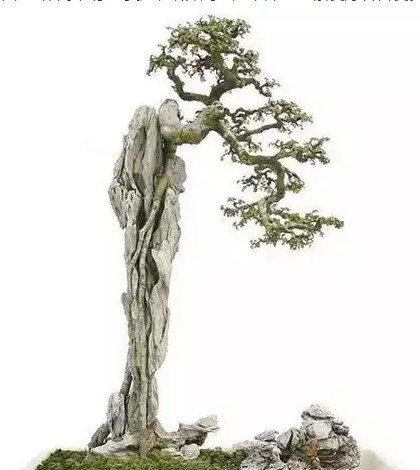
The exquisite beauty of rock-clinging bonsai, revealing the charm of nature within a tiny space
China's bonsai art has been passed down for more than a thousand years and is praised as "three-dimensional painting" and "silent poetry." Rock-clinging bonsai is a further inheritance and development of bonsai art; the perfect blend of the firmness of stone and the softness of trees deeply attracts stone enthusiasts and bonsai lovers. As usual, below are exquisite rock-clinging bonsai presented for your appreciation.
-
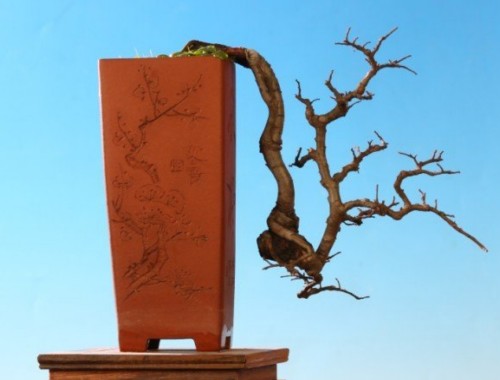
An Analysis of the Complexity of Four-Dimensional Space in Penjing Artistic Creation
People know that penjing is a three-dimensional spatial art with length, width, height and depth, and it is praised as a three-dimensional painting. In penjing artistic creation, mastering only the three-dimensional space of "solid" is not enough, because any object (a single tree or a single stone) is a three-dimensional space
-

Introduction to the Space Sesame Jinzhi No. 8 Variety
Jinzhi No. 8 is a new super-high-yield sesame variety recently developed by Chinese research experts using high-tech space breeding technology. It is disease-resistant and waterlogging-tolerant, with a high oil yield, and has great promotional value. Its main characteristics are introduced as follows: Super-high yield: Jinzhi No. 8 is an indeterminate-growing sesame variety per plant, with an average plant height of about 2 m, reaching 2.5 m in plots with good fertilizer and water conditions. Due to a series of high-tech breeding methods such as space radiation, the plants are exceptionally sturdy, with large leaves and a low capsule-bearing position. The average number of capsules per plant is about 150, with a maximum of 27
-
Hangzhi No.1, a new sesame variety, is the only variety in China developed through spaceflight technology.
Variety origin: "Hangzhi No.1" originated from the key project "Ninth Five-Year Plan Crop Spaceflight Technology Breeding" supported by the Ministry of Agriculture. In 1996, parent sesame seeds provided by the Oil Crops Research Institute of the Chinese Academy of Agricultural Sciences were carried aboard China's 17th recoverable satellite, stayed in space for 15 days and then returned to Earth. Since 1997, continuous multi-year ground selection was carried out. Through comparative trials on genetic stability, yield, quality and resistance, it was significantly superior to the control. From 2001 to 2002, it was advanced to the national sesame
-
Camellia uraku is a top choice for evergreen trees that bloom in winter in the green spaces of the Yangtze River Delta region
Camellia uraku, of the family Theaceae and the genus Camellia. An evergreen small tree. The plant can reach 5 m in height. The leaves are glossy, the flowers are single-petaled and pink, and the flowering period runs from December to March of the following year. Plants of the genus Camellia mostly prefer acidic soil, so when planting camellias in Shanghai, the soil often has to be replaced with acid soil such as hill soil. Camellia uraku is highly adaptable to the slightly alkaline soil of Shanghai, growing and flowering well, and is worth promoting.
-
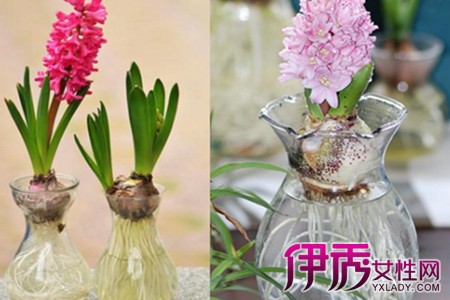
The hydroponic cultivation method for hyacinths is simple, clean, attractive and space-saving
Hyacinths are especially beautiful when in bloom, but some people have very little space at home. If they want to grow several pots of hyacinths, the space feels very crowded. These friends really want to know how to grow hyacinths hydroponically, because this saves more room space
-
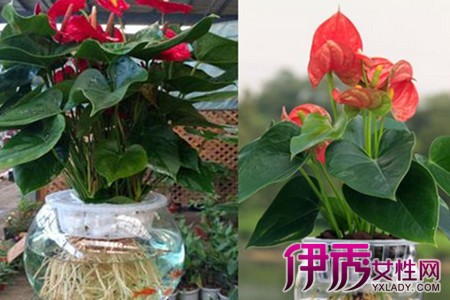
A Detailed Guide to Growing Anthurium in Water: Saving Space and Growing Flowers Is This Simple
The anthurium is a strikingly beautiful flower with its clear contrast of red and green, and some flower enthusiasts are especially fond of it. But homes today are not large, so wanting to grow several pots quickly becomes a space problem. That is why some people have started figuring out how to grow anthuriums in water.
-
How to make your own moss bonsai, so cute placed in a small living space
How to make your own moss bonsai, so cute in a small living space
-
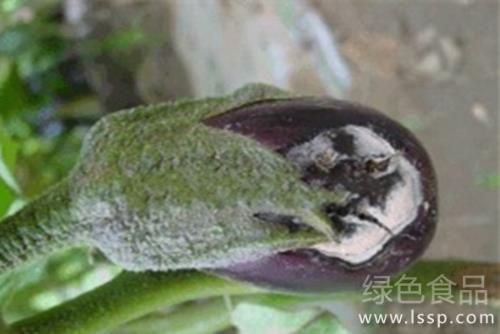
In rainy summers, eggplants are prone to fruit rot, so disease prevention measures must keep pace during the rainy season
Eggplants are prone to disease in rainy summers: measures to prevent eggplant fruit rot during the rainy season
条件筛选