-
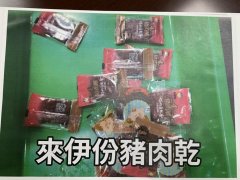
African swine fever appears in Vietnam for the first time; how should the latest outbreak be prevented?
African swine fever has developed particularly severely in China, so screening at airports is also very strict, and the baggage of passengers at ports is also subject to very strict checks. But what about it? On the Vietnamese side, no news of African swine fever had been reported, so the screening of the baggage of tourists traveling from Vietnam was not subject to such high requirements. However, on February 15, a piece of pork from Vietnam was confirmed positive for African swine fever, the first case of African swine fever from Vietnam.
-

-
Soybean aphid outbreak forecast issued, growers need to take timely preventive measures
Based on the survey results from all forecasting stations across the province, combined with a comprehensive analysis of crop growth and meteorological conditions, soybean aphids are expected to occur at a moderate level overall across the province this year, with some cities and counties that have received less rainfall and had high early-season aphid populations reaching moderate-to-severe occurrence. The peak period of soybean aphid damage will be from mid-July to early August. 1. Occurrence is earlier than in normal years. According to monitoring by all forecasting and plant protection stations across the province, the first aphid sighting was on June 10, later than last year but still about 10 days earlier than in normal years. 2. Meteorological conditions are unfavorable for soybean aphid
-
Key Points of Special Management Measures During Chicken Disease Outbreaks
Since disease in chickens causes physiological dysfunction, which affects their ability to adapt to the environment, their demand for nutrients, and endocrine regulation to a certain extent, if special management measures are taken at this time to provide auxiliary treatment, the results will be twice as effective with half the effort. Disease in feed chickens often leads to elevated body temperature and metabolic disorders; therefore, it is necessary to change the nutrients in the feed, their content, and the feeding method. First, increase the energy level; according to the degree of reduction in feed intake of sick chickens, the energy level should be raised to 1.2 times the normal level. Second, increase vitam
-
What are the characteristics of garlic disease outbreaks this year? Key control points explained in one article
Due to long-term drought, in many places this year garlic root development before the New Year was poor, garlic seedlings had weak cold resistance, and the severity of various diseases was greater than in previous years. The author recently visited garlic-growing townships such as Cangshan, Jinxiang and Shanghe in Shandong, and concluded that current garlic production should focus on controlling the following four major diseases: 1. Garlic viral disease. In past garlic production, garlic viral disease was ignored by many garlic farmers. This year, due to the drought weather in the earlier period, the severity of garlic viral disease in some areas was more serious than in previous years.
-
What are the treatment methods for a sudden outbreak of canine distemper in a fox herd?
Antiviral serum once a day, one dose per animal, for 2-3 consecutive days; analgin twice a day, 5 ml per animal each time; cefotaxime sodium 2 times a day, 0.5 g per animal each time; Kaiwei Xiaoshi Ling 2 times a day, 1.5 ml per animal each time; for those with vomiting, inject Aimaol, 1 dose per animal each time, for 3-5 consecutive days.
-
How to prevent and treat fish outbreak of hemorrhagic disease in autumn
Fish are prone to outbreak hemorrhagic disease in autumn. This disease has a sudden onset, spreads quickly, lasts a long time in its epidemic period, and has a high mortality rate and causes great losses. Once it breaks out, it is difficult to control, and the condition easily recurs. Fish farmers should strengthen their awareness of prevention to prevent the occurrence of this disease. 1. Fish fry disinfection: Before fish fry are put into the pond, they must be disinfected by soaking in 1%-2% salt water. The soaking time depends on the fish's physique and the temperature. When conditions permit, fish fry can be soaked with outbreak hemorrhagic disease vaccine. 2. Timely water changing and oxygen increasing: Keep the water quality fresh and change the water frequently. If
-
Prevention and Treatment Methods for a Sudden Canine Distemper Outbreak in a Fox Population and Related Experience
1. Outbreak situation: On August 5, 2004, a farmer in this livestock community purchased a batch of Arctic foxes from elsewhere and placed them into cages in the community without isolation or observation. On August 10, the original young foxes became ill, and the disease rapidly spread to the whole group. In about 10 days, all of the more than 100 foxes in stock died. Because the owner did not report the epidemic in time, the outbreak further expanded. By August 20, of the more than 10,000 foxes in stock in the entire community, 980 were affected, an incidence rate of 9.8%. Through collective consultation, the strategy of emergency vaccination and symptomatic treatment was determined.
-
What are the symptoms of a sudden canine distemper outbreak in a fox group?
In the early stage, the sick animal's body temperature rises (40°C to 41°C), with listlessness, reduced food intake, sometimes vomiting, and a dry nose. Two to three days after onset, the typical clinical symptoms of canine distemper appear: the conjunctiva begins to become congested and swollen, progressing finally to purulent conjunctivitis, with hair loss around the eyes; in severe cases, the upper and lower eyelids are stuck together by purulent discharge. The skin of the nose becomes cracked, the nasal mucosa becomes inflamed and swollen, and purulent discharge flows out, blocking the nostrils and causing difficulty breathing. When the lungs are affected, coughing occurs, initially a dry cough and later a wet cough, and at the same time catarrhal inflammation develops in the digestive organs
-
Cotton red leaf blight is prone to outbreak after heavy rain, growers need to be vigilant
Recently, cotton regions have generally experienced heavy to torrential rain, and for cotton that has endured a long drought, red leaf blight is extremely prone to outbreak. Cotton red leaf blight is a physiological disease. It starts from the main stem growing point or the top of the fruiting branch, and generally develops from top to bottom and from outside to inside. The main stem withers and dies, but the dissected vascular bundles show no discoloration. The root system is thick and short, with few fibrous roots and poor development. The causes of cotton red leaf blight outbreaks are: first, extensive farming in cotton fields, resulting in poor cotton root development; second, cotton fields with poor drainage; third, excessive application of nitrogen fertilizer, vigorous cotton growth,
条件筛选