-

Causes of Tea Geometrid Outbreaks and Pollution-Free Control Methods
Tea geometrid, also known as the arching worm, measuring worm, and hanging-silk worm, belongs to the order Lepidoptera, family Geometridae. In Liandu District, this pest is mainly distributed in tea areas such as Bihu and Lixin, and is a voracious pest. If control is not timely, it often causes severe reductions in summer and autumn tea yields, and leads to decline in tree vigor, seriously affecting tea production. In previous years it occurred every year, but the damage was not great. In August 2007, this pest broke out over a large area in the Huanglingshang tea garden of Lixin Township, not only severely affecting the tea yield of that season, but also causing decline in tree vigor and poor cold resistance
-
Disease Outbreaks and Emergency Treatment After Introducing Inferior Quality Rice Field Eels into Eel Ponds or Net Cages
(1) Disease outbreak situation: After inferior quality rice field eels are introduced into eel cages or eel ponds, they generally develop disease within 2 to 7 days, and mass mortality occurs around 12 days. When disease breaks out, a method combining Chinese herbal medicine and chemical fishery drugs should be used for treatment to control the infection. (2) Emergency handling: ① Search for and remove floating-head eels, exposed-body eels, and dead eels 2 to 3 times during the daytime each day; ② Change the water once every morning and thoroughly inspect for and remove dead eels; ③ At night each day, use electric light for illumination and search for and remove diseased eels from aquatic plants 1 to 2 times.
-
Case Analysis of Fish Disease Outbreak Prevention and Control in a Small Reservoir
In early October 2005, an outbreak of hemorrhagic disease occurred in the fish farmed in Tuonan Reservoir in our town. Through our active treatment, the disease was basically brought under control. The prevention and control situation is summarized as follows: 1. Basic information. Under normal conditions, Tuonan Reservoir has a water area of 100 mu, and 150 mu during the high-water period, with an average water depth of 3 m and a maximum depth of 6 m. Artificial aquaculture in this reservoir began in the early 1990s, mainly with conventional fish species, with supplementary stocking of freshwater shrimp, yellow catfish, and others. The reservoir water is clear and has no history of epidemic disease.
-
-
-
-
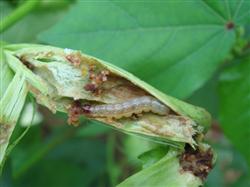
What are the causes of corn borer outbreaks?
What are the causes of corn borer outbreaks? Please explain. The causes of corn borer outbreaks are as follows: (1) Insect population base: the size of the insect population base from the previous generation is an important factor affecting the severity of corn borer damage. A large insect population base, under suitable environmental conditions, often causes severe damage. ...
-

Rice planthopper outbreaks: how to apply pesticide more effectively?
Summary: When rice planthoppers are severe, timely chemical control is the only option. Rice planthoppers are one of the pests and diseases in rice, and the pests reproduce rapidly, with a tendency toward outbreaks. Therefore, the control of rice planthoppers is definitely not something that can be solved by pesticide alone...
-
Summary of the Characteristics of Aquatic Disease Outbreaks in Autumn and Winter
Autumn and Winter Aquatic Disease Summary
-
Diagnostic Methods for Coccidiosis Outbreaks on Rabbit Farms
Diagnosis of Coccidiosis Outbreaks on Rabbit Farms
条件筛选