-

Reducing Corn Planting Area Becomes Agricultural Adjustment Priority
Pan Wenbo, deputy director of the Department of Crop Production Management of the Ministry of Agriculture, recently told Economic Observer Online that the overall approach for a new round of agricultural adjustment led by the Ministry of Agriculture has been formed. In the next step, in accordance with the food security strategy of "storing grain in the land" and "storing grain in technology," the government will adhere to
-
Corn planting area to be reduced as a priority, overall approach to agricultural adjustment has taken shape
Pan Wenbo, deputy director of the Planting Industry Management Department of the Ministry of Agriculture, recently disclosed that a new round of overall thinking on agricultural adjustment, led by the Ministry of Agriculture, has been formed. In the next step, in accordance with the food security strategy of "storing grain in the land" and "storing grain in technology," it will adhere to being
-
Comprehensive Market-Oriented Design for Corn Leads the Direction of Grain Price Reform
Reducing corn planting area, lowering the temporary state reserve purchase price for corn, steadily digesting existing stockpiles, and separating prices from subsidies - policies on corn have been introduced in succession over the past days. For this agricultural product, which currently has the most severe imbalance between production, supply and marketing, its price reform has become the top priority for both the government and the market.
-
Striving to cut grain loss rate by 40% in the next 5 years, the National Development and Reform Commission sets a clear target
A relevant official of the National Development and Reform Commission said today that by 2020, China will strive to reduce losses and waste in the post-production grain circulation stage by more than 13 million tons per year, cut the loss and waste rate by more than 40%, make grain consumption more scientific and reasonable, and form a long-term mechanism for the whole society to save grain
-
The number of major crop varieties subject to approval was reduced from 28 to 5
On April 20, the much-anticipated draft amendment to the Seed Law was first submitted to the Standing Committee of the 12th National People's Congress for deliberation. The draft comprehensively regulates aspects such as strengthening the protection of germplasm resources, improving the institutional mechanisms for breeding innovation, and strengthening oversight and management of the seed industry. Germplasm resources are the material foundation of modern
-
Corn-producing areas see reduced surplus grain, supply-demand conflict to emerge after the New Year
As the year-end approaches, farmers in producing areas are actively selling grain, the pace of temporary storage purchases is steadily rising, feed enterprises are beginning to prepare pre-New Year stockpiles, and trading activity in the corn market is heating up, but corn prices have not been boosted. It is expected that after the Spring Festival, with large volumes entering temporary storage, traders' inventories
-
Non-staple crops should be gradually liberalized, with subsidies and state purchasing and storage moderately reduced
Recently, the Central Economic Work Conference was held, calling for an accurate grasp of the new normal in economic development. When deploying the main tasks for next year's economic work, it called for accelerating the transformation of the agricultural development model. Against the backdrop of advancing new urbanization, the development of agricultural modernization has become a key link.
-
New mechanism for saving grain and reducing losses to be established, China strives to reduce grain loss and waste
On the occasion of the upcoming 34th World Food Day and the 24th National Grain Love and Grain Saving Publicity Week, the State Administration of Grain, at a press briefing held jointly with the Ministry of Agriculture and other departments, stated that China will vigorously promote the establishment of a new mechanism for saving grain and reducing losses featuring government leadership, demand-driven orientation, participation of all citizens, and coordinated social
-
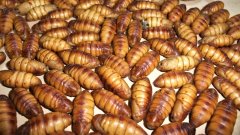
Antibacterial substances from silkworm pupae can be added to animal feed to reduce antibiotic use
In recent years, the Miaoli District Agricultural Research and Extension Station (hereinafter referred to as the Miaoli Station) has found through research that antibacterial substances produced by silkworm pupae can be further developed into functional animal feed additives, a move expected to effectively reduce the amount of antibiotics added when raising economic animals.
-
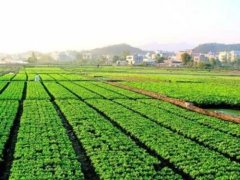
Organic Farming Prospects and Current Status Analysis: Will It Reduce Global Food Production?
Organic farming yields less and requires more farmland, so what can be done? We can both increase crop yields and avoid the farmland problem. Let's take a look together. The latest research shows that organic farming may cause some crop yields to be lower than conventional farming methods.
条件筛选