-
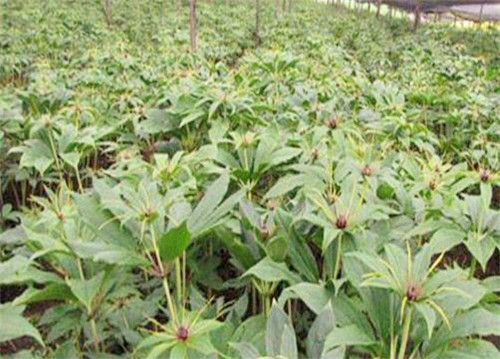
Paris polyphylla (seven-leaf-one-flower) planting techniques and pest and disease control methods
Paris polyphylla, also known as seven-leaf-one-flower, is a perennial herb with anti-inflammatory and analgesic, blood-activating and stasis-dissolving, and heat-clearing and detoxifying effects, and is a powerful medicinal Chinese herb. As wild Paris polyphylla is continuously depleted while demand for it keeps growing, its price has also risen, and many people have chosen to cultivate it
-

Lianzhou returnee from abroad uses drones to focus on pest and disease control
Lianzhou returnee from abroad brings drones home to focus on pest and disease control
-

-
Smart agriculture: one computer controls over 800 mu of parkland
Smart agriculture: one computer controls over 800 mu of parkland
-
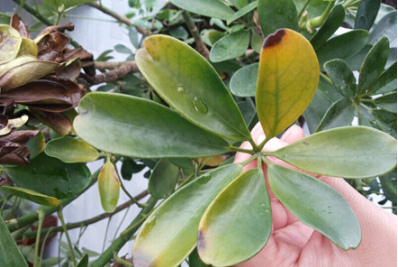
What to Do When the Leaves of the Money Tree Turn Yellow: Pests and Diseases and Their Control
The money tree is a perennial evergreen herbaceous plant and a highly ornamental foliage plant. Let's learn more about the money tree. What to do when the leaves of the money tree turn yellow? The money tree is a perennial evergreen herbaceous plant and a highly ornamental foliage plant. So what should you do if the leaves of the money tree turn yellow?
-
It is the right time for honeysuckle pest and disease control, and Xiushan County, Chongqing Municipality is strictly implementing it
Honeysuckle, formerly known as Japanese honeysuckle, also called silver flower, honeysuckle flower, or double flower, is a twining vine of the Caprifoliaceae family. The county has developed a honeysuckle base of 60,000 mu. Because the base farmers manage extensively and supporting technologies have not kept up, especially pest and disease control management, the yield of honeysuckle is low and the quality is poor. According to a survey by the county plant protection station, honeysuckle pests and diseases occur relatively commonly in our county, among which honeysuckle powdery mildew, brown spot disease, aphids and red spiders are relatively serious in occurrence and damage. At present, it is the best period for controlling honeysuckle powdery mildew, brown spot disease, aphids and red spiders and other pests and diseases
-
Tea plants are prone to banjhi (dormant buds) after autumn, so effective prevention and control are very important
Banjhi in tea plants refers to the phenomenon where tea buds are slow to grow, or bud break is delayed with a low sprouting rate and the new shoots produced are rather small. When tea plants are in the banjhi state, it is extremely favorable for flower bud differentiation, causing the tea plants to produce a large number of tea flowers from late October to mid-November, which consumes a great deal of nutrients, directly affects the growth of tea leaves the following year, and accelerates the aging of the plant. Therefore, preventing banjhi in tea plants is very important. To prevent banjhi in tea plants, the tea garden soil should be fully tilled 3-5cm deep in summer and autumn, so as to cut the soil capillaries and
-
What to do when silkworms are poisoned? Prevention and control measures for silkworm poisoning
First, ensure safe feeding: do not feed "four-side mulberry" (mulberry from the edges of fields), test mulberry leaves before feeding, and only use large quantities of leaves after confirming they are non-toxic. Mulberry trees with pesticide residues should be sprayed 1 to 2 days in advance with 0.5% edible alkaline water or 1% fresh limewater, or mulberry leaves can be soaked for 1 hour in 1% edible alkaline water or 1% fresh lime slurry. Note that the sprayer must be thoroughly cleaned, and the edible alkaline water or fresh limewater must be applied generously (about 6-8 buckets per mu). If silkworms are found to have been poisoned, promptly take detoxification measures: immediately scatter burnt ash or lime powder so the silkworms stop
-
Identification of Honeysuckle Disease Symptoms and Control Methods
Brown spot disease is a common leaf disease that causes plants to grow weakly. It mostly occurs in the middle and late growth stages, with August and September being the peak period of onset, and it is severe under rainy and humid conditions. In the early stage of onset, small brown spots form on the leaves, then expand into brown round lesions or irregular lesions. Grayish-black mold-like substances grow on the underside of the lesions. When the disease is severe, the leaves fall off, affecting plant growth and flowering. Control method: prune diseased leaves, then spray with 1:1.5:200 Bordeaux mixture, once every 7 to 10 days, for 2 to 3 consecutive times. Powdery mildew occurs under warm and dry
-
Why are there cone-like objects on young spruce trees? Control of the larch adelgid
On young spruce trees, round objects resembling small cones often appear in June. They are actually galls formed by the damage of the larch adelgid (Adelges laricis). Completing one life cycle of the larch adelgid requires several transformations through different forms on two tree species, spruce and larch. For its life process, see "156. What are the white hairs on larch leaves". Before the galls split open, remove the galls on spruce by hand. Strengthen preventive measures to prevent the transport and planting of infected seedlings. Spruce and larch must not be planted mixed or close together; the isolation distance
条件筛选